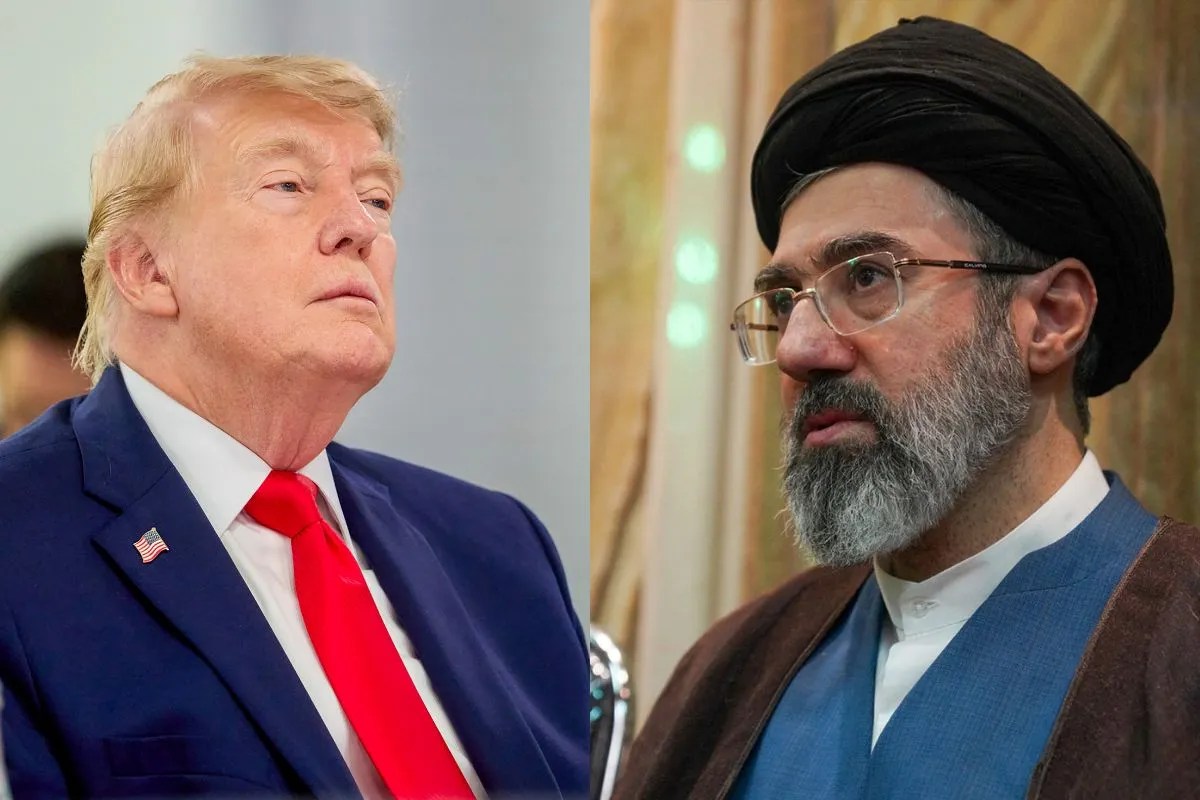
Geopolitical crises involving critical maritime choke points are routinely analyzed through the lens of immediate tactical movements rather than structural mechanics. When military assets concentrate near the Strait of Hormuz, the standard public narrative reduces the situation to an impending kinetic exchange. This abstraction obscures the underlying economic, logistical, and strategic variables that dictate whether a military buildup translates into active engagement or prolonged deterrence stalemates.
Analyzing force posture shifts requires decomposing the theater into distinct operational constraints. The strategic value of the Strait of Hormuz rests on a specific economic dependency: approximately one-fifth of global petroleum liquids and liquefied natural gas traverse this narrow corridor. Consequently, any aggregation of air and naval power in the region functions primarily as an instrument of economic coercion rather than a precursor to total territorial conquest.
The Logistics of Power Projections
Deploying tactical air force assets and carrier strike groups into the immediate vicinity of the Persian Gulf creates a high-friction environment for both state actors. The operational cost function is defined by three primary variables:
- Radius of Action and Maintenance: Advanced tactical aircraft stationed at regional bases or aboard carrier platforms require continuous maintenance cycles, specialized ordnance logistics, and airborne refuelers. The density of these assets strains host-nation infrastructure and elevates the vulnerability of fixed command-and-control nodes to asymmetric counter-measures.
- Asymmetric Denial Geometry: Iran's defensive architecture relies on anti-ship cruise missiles, fast attack craft, and subterranean missile installations positioned along a rugged coastline. This geography transforms the maritime corridor into a high-risk zone, forcing external actors to commit disproportionate resources to mine clearance, air defense, and electronic warfare suppression.
- Escalation Dominance Thresholds: The deployment of additional squadrons or naval task forces alters the local balance of power, but it also increases the probability of accidental miscalculation. When two hostile forces operate within confined maritime and airspace boundaries, the margin for operational error compresses, turning routine patrols into trigger events.
The Cost Function of Maritime Interdiction
A naval blockade or an enforced restriction of commercial shipping is fundamentally an exercise in economic attrition. When state actors attempt to regulate or halt maritime traffic through the strait, the immediate consequence is a systemic shock to global supply chains and energy pricing frameworks.
The mechanics of this friction operate through distinct channels:
- Insurance and Freight Premiums: Shipowners operating through high-threat zones face exponential spikes in war-risk insurance premiums. These costs are immediately transferred to commodity markets, creating inflationary pressures regardless of whether physical blockades succeed in halting actual physical passage.
- Alternative Routing Bottlenecks: While regional pipelines offer marginal relief, they possess finite throughput capacity. They cannot fully substitute for the volume carried by supertankers navigating the strait, creating an inelastic supply curve that amplifies price volatility.
- Enforcement Asymmetry: Maintaining an open-ended maritime exclusion zone demands continuous asset rotation. The aggressor or the enforcer must absorb the ongoing financial and operational cost of presence, whereas a localized defender can sustain a posture of disruption at a fraction of the cost.
Strategic Outcomes and Structural Limitations
Military buildups in confined waterways rarely resolve underlying political deadlocks. Instead, they institutionalize a state of controlled instability. The efficacy of air force redeployments and naval patrols must be measured against their ability to alter adversary calculus without triggering systemic escalation that disrupts global markets beyond acceptable tolerances.
When analyzing force movements in this corridor, observers must look past surface-level posturing and evaluate the endurance of supply chains, the vulnerability of regional infrastructure, and the specific thresholds where economic pain outweighs political resolve. The trajectory is governed not by rhetorical escalation, but by the mathematical limits of sustained force projection in a contested environment.


