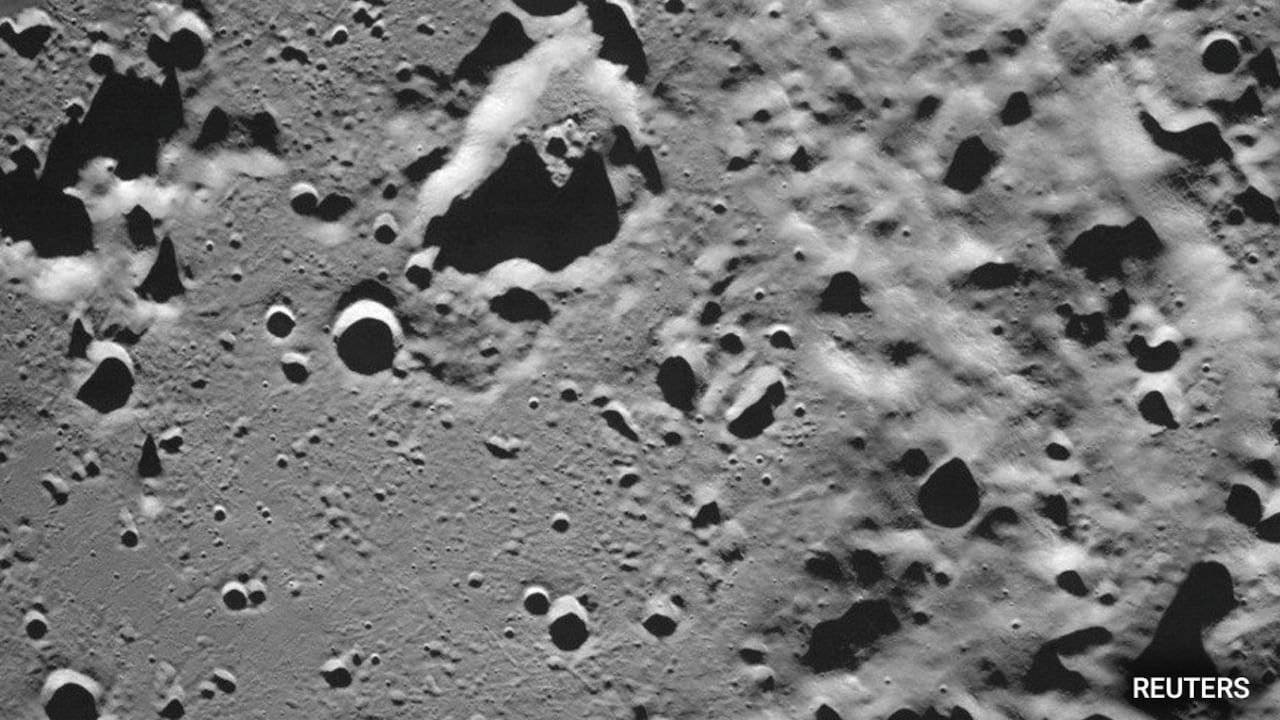
Water ice sequestered within the Permanently Shadowed Regions of the lunar south pole represents the single most valuable industrial asset in the inner solar system. This distribution of volatiles transforms the Moon from a destination of scientific curiosity into a strategic logistical node. Traditional spaceflight economics are constrained by the Tsiolkovsky rocket equation, where exponential mass penalties apply to every kilogram lifted past Earth gravity. Extracting hydrogen and oxygen locally alters this cost function entirely, turning the lunar south pole into a refueling station for deep-space transit. Two distinct state-backed architectures are currently competing to establish operational primacy over these volatile deposits, creating a race defined not by flags or footprints, but by infrastructure control and extraction efficiency.
The Physical Constraints of the Lunar South Pole
The geography of the lunar south pole dictates the operational parameters for any extraction architecture. Unlike equatorial landing sites, the polar regions feature extreme topographical relief characterized by deep impact craters shielded from solar radiation and adjacent high-elevation ridges that receive near-continuous illumination.
Thermal conditions inside these Permanently Shadowed Regions remain at cryogenic temperatures, dropping below forty Kelvin. This environment preserves volatile compounds, including water ice mixed with regolith, carbon dioxide, ammonia, and sulfur compounds. However, these same thermal conditions present severe engineering failure modes. Lubricants freeze, batteries lose discharge capacity, and specialized mechanical actuators face high failure rates due to thermal contraction mismatches.
Solar geometry introduces a secondary constraint. Continuous power generation is only viable on specific elevated ridges, forcing a separation between power-generation assets and resource-extraction sites. Energy must be beamed or transmitted via surface grids across kilometers of rugged terrain, introducing transmission losses and single points of failure. The physical accessibility of the ice is further complicated by the abrasive nature of lunar regolith. Sharp, unweathered dust particles infiltrate mechanical seals, degrade optical surfaces, and accelerate abrasive wear on excavation machinery.
The Economic Mechanics of Propellant Refueling
To understand the urgency driving national space programs toward the lunar south pole, one must evaluate the cost structure of orbital mechanics. Launching payload from the surface of Earth requires overcoming a deep gravity well, demanding massive propellant mass fractions. Moving fuel from Earth surface orbit to cislunar space multiplies mission costs exponentially.
Liquid hydrogen and liquid oxygen produced from lunar water ice fundamentally rewrite mission architectures. By establishing an ISRU propellant depot at a Lagrangian point or in lunar orbit, spacecraft bound for Mars or deep space can refuel outside Earth gravity well. The economic breakeven point for lunar ISRU depends on capital expenditure for initial transport of processing equipment versus the marginal cost of Earth-launched heavy-lift rockets.
The production chain requires three distinct phases:
- Excavation and transport of ice-bearing regolith from shadowed craters to processing facilities on illuminated ridges.
- Thermal processing, sublimation, and fractional distillation to separate water from toxic mineral impurities.
- Electrolysis to split water molecules into hydrogen and oxygen, followed by cryogenic liquefaction and long-term storage under vacuum insulation.
Each phase introduces systemic thermodynamic and mechanical challenges. Transporting regolith up steep crater walls requires high-traction robotic rovers capable of operating in low gravity and zero visibility. Thermal processing demands high thermal energy inputs, necessitating large-scale solar concentrators or compact nuclear fission reactors deployed directly on the surface.
Divergent Operational Architectures
The United States and China approach the resource acquisition problem through structurally divergent institutional frameworks. These strategies reflect differing philosophies of state-directed industrial policy versus public-private market creation.
The United States relies on a decentralized, hybrid model executed through the Artemis program. NASA acts as a anchor customer and standards setter, contracting commercial entities for specific mission segments through programs like Commercial Lunar Payload Services. This approach distributes financial risk across private aerospace firms while fostering competitive bidding for landers, communications relays, and prospecting rovers. The primary structural vulnerability of this model lies in bureaucratic friction, budget volatility tied to legislative cycles, and coordination overhead among multiple independent contractors.
China employs a centralized, vertically integrated state-directed architecture executed via the Chang'e program sequence. Managed through military-civil fusion pathways, the Chinese lunar exploration roadmap progresses through methodical, incremental phases. Chang'e-7 targets detailed surface mapping, volatile detection, and impact profiling of shadowed regions, while Chang'e-8 focuses on technology testing for 3D printing and in-situ resource utilization. This command economy model allows for rapid resource allocation, long-term strategic continuity, and unified system engineering without the friction of commercial contract negotiations.
The Geopolitical Chokepoint and Regulatory Vacuum
Control over the lunar south pole resembles historical maritime choke points. Because illuminated ridges suitable for continuous power generation are limited in number, and high-concentration ice deposits are concentrated in specific crater floors, first-mover positioning creates operational exclusion zones.
The Outer Space Treaty of 1967 prohibits national appropriation of celestial bodies by claim of sovereignty, establishing the Moon as the province of all mankind. However, the treaty remains silent on resource extraction, property rights, and spatial safety buffers. This legal ambiguity has given rise to competing frameworks for operational deconfliction.
The United States-led Artemis Accords introduce the concept of "Safety Zones," which allow operators to designate areas around their installations to prevent harmful interference by other actors. Critics argue these zones function as de facto territorial claims. Conversely, China and partner nations advocate strictly within United Nations Committee on the Peaceful Uses of Outer Space mechanisms, arguing that unilateral safety zones violate the foundational premise of non-appropriation.
Without an enforceable international regime for resource allocation, operations at the lunar south pole risk security dilemmas. Close proximity operations, mutual interference with communications relays, and dual-use capabilities—such as robotic arms capable of both excavation and orbital asset inspection—create acute escalation risks in an environment lacking immediate diplomatic communication channels.
Technical Bottlenecks in Autonomous Extraction
Executing resource extraction without human presence requires robust autonomous systems capable of real-time adaptation. Communications latency to the Moon is approximately 1.3 seconds each way, precluding remote teleoperation for delicate mechanical tasks. Autonomous excavators must navigate unstructured terrain, manage power budgets dynamically, and diagnose mechanical faults independently.
Power scarcity remains the primary operational ceiling. Solar arrays deployed on ridge lines must contend with changing sun angles and local topography, resulting in intermittent power availability unless backed by high-capacity energy storage or nuclear systems. Small fission surface power projects are currently under development, but their deployment mass makes them difficult to land safely within current payload limits of medium-to-heavy lift vehicles.
Furthermore, the physical state of the ice deposits is poorly constrained by remote sensing. Orbital spectroscopy indicates high hydrogen concentrations, but the actual distribution, crystal structure, and overburden thickness vary wildly from meter to meter. Prospecting missions must deploy drill strings capable of penetrating meters of dry regolith to sample core columns before commercial-scale mining infrastructure can be engineered with appropriate material tolerances.
Strategic Outlook
The race for the lunar south pole is entering a transitional phase from scientific prospecting to infrastructure deployment. The actor that first establishes an operational, scalable ISRU extraction facility will set the technical standards for cislunar commerce and secure the primary logistical hub for deep-space expansion. Success will not be determined by political rhetoric, but by thermal engineering efficiency, autonomous systems reliability, and the capitalization speed of supply chains operating hundreds of thousands of kilometers from Earth.