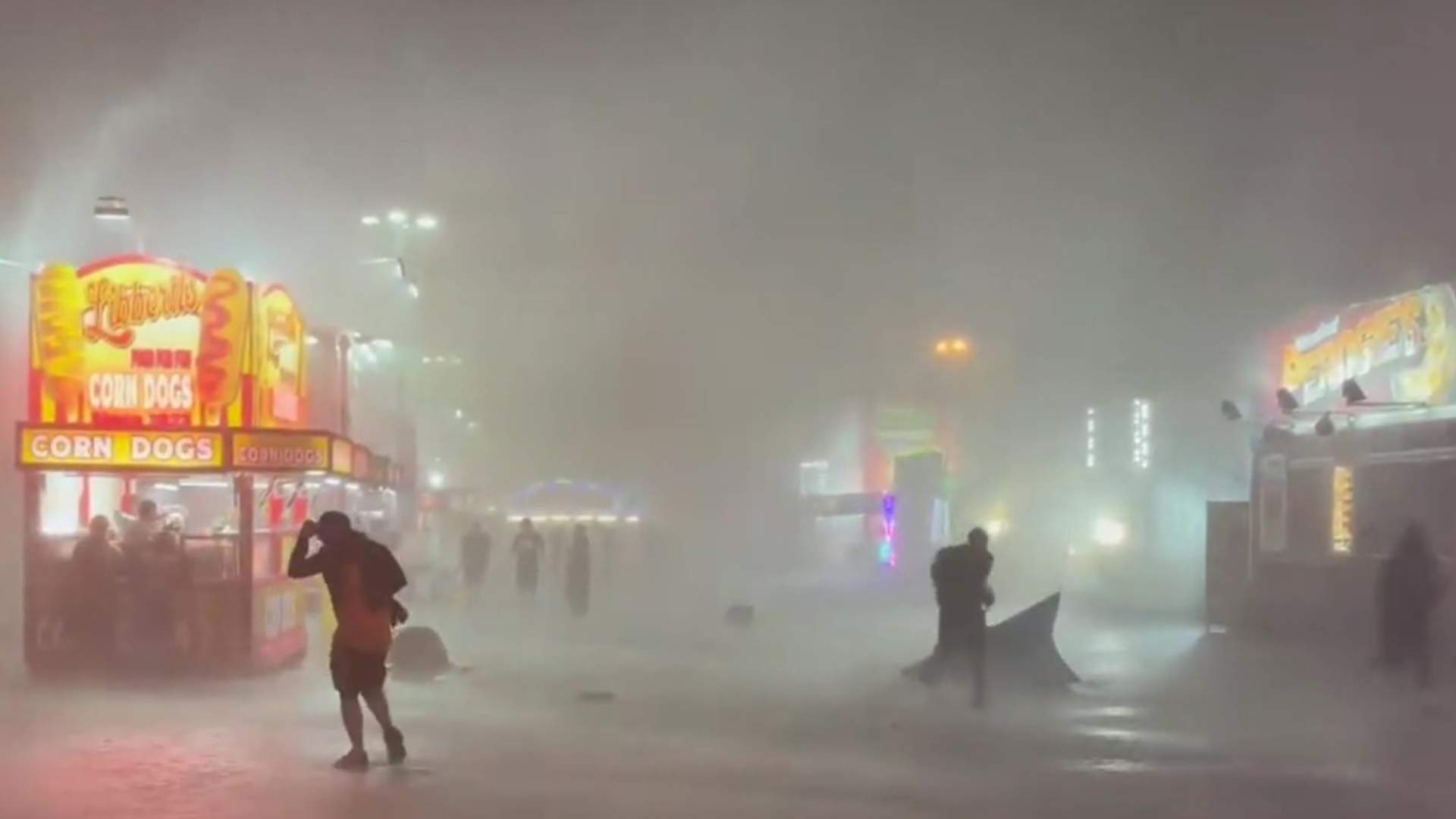
Every July, the narrative in local media writes itself. Dark clouds gather over the North Saskatchewan River, a sudden downpour halts a headliner's set, and organizers take to the airwaves to bemoan the cruelty of the skies. The lazy consensus is comforting: Edmonton festival producers are noble victims of a meteorological war zone, fighting a heroic battle against summer storms that no human plan could possibly survive.
It is complete nonsense.
I have spent two decades watching event balance sheets bleed out in boardrooms across Western Canada. I have seen founders point trembling fingers at radar apps while quietly ignoring the actual root cause of their financial collapse. The weather in Alberta does not hate your indie music showcase. You just built a fragile business model that dissolves at the first sign of a thunderhead, and you are using Mother Nature as a convenient shield for your lack of operational redundancy.
Stop blaming the clouds. You are failing at basic math, risk allocation, and contingency engineering.
The Weather Excuse Is A Financial Crutch
Let us look at the standard operational playbook for a mid-sized summer gathering in the capital region. Organizers lock in a massive open-air park space, sink eighty percent of their capital into three marquee booking acts, sell single-day tickets that require physical attendance for revenue realization, and buy zero meaningful weather insurance because the premiums cut into executive bonuses.
Then, a localized cell drops twenty millimeters of rain in forty minutes. The grounds turn to muskeg. Patrons stay home. Bar sales crater because nobody wants to stand in a knee-deep mud pit for an eight-dollar lukewarm craft beer.
The standard media response is a sympathetic profile about how climate change is ruining culture. The reality? Bad risk management is ruining culture.
If your entire revenue engine depends on zero precipitation between the hours of four PM and midnight on a Saturday, you are not running an entertainment business. You are running an expensive, highly volatile lottery ticket.
Industry veterans love to talk about stochastic variables as if they dropped from the moon. They are not random. Alberta experiences severe convective storms every single July. This is not a historical anomaly. It is a predictable seasonal parameter. If you build a skyscraper on a known fault line and complain when the earth shakes, nobody calls you unlucky. They call you negligent.
Redesigning The Structural Vulnerability
To fix outdoor cultural programming in high-risk climate zones, we have to strip away the romanticism. Festivals are supply-chain logistics disguised as fun.
First, let us look at capital distribution. The conventional model puts fifty to seventy percent of upfront cash into talent acquisition. This creates a high-beta financial structure. If attendance drops by thirty percent due to a heavy storm, the fixed cost of the talent remains static, wiping out operating margins instantly.
Smart operators invert this curve. They lower headliner dependency by building deep, multi-tiered experiences that hold value even when the main stage goes dark for ninety minutes.
"If your patron experience relies entirely on an artist standing on a wooden box under a clear blue sky, your product has zero structural integrity."
Imagine a scenario where a torrential downpour shuts down outdoor amplification. In a brittle festival setup, panic ensues, refunds are demanded, and the bar shuts down. In a resilient setup, localized modular zones take over. Covered pavilions, acoustic pop-ups, subterranean or semi-enclosed visual art installations, and hyper-local culinary pop-ups absorb the crowd instantly. The ticket holder does not feel cheated; they feel sheltered, engaged, and most importantly, they keep drinking and spending.
Insurance markets offer parametric weather derivatives for a reason. They pay out automatically based on objective meteorological data—such as rainfall volume or wind speed recorded at the nearest weather station—rather than the tedious, drawn-out claims process of traditional indemnity policies. Yet, local producers routinely skip these instruments because they treat risk mitigation as an overhead expense rather than a core asset.
The Economics Of The Mud Pit
Let us address the physical infrastructure of Edmonton events. For decades, producers have relied on turf protection mats that were designed in the nineteen-nineties. They lay down flimsy plastic mesh over grass parks, watch it sink into the clay within two hours of heavy foot traffic, and then spend thousands of dollars in remediation fees handed down by the city parks department come Monday morning.
This is amateur hour.
Modern site engineering requires proper load-bearing ground stabilization matrices that can handle torrential downpours without turning into a slip-and-slide hazard. If you cannot afford proper sub-grade drainage protection, you cannot afford to host ten thousand people in a natural bowl.
Furthermore, ticket architecture needs an overhaul. The reliance on gate-day ticket sales is a relic of a bygone era. When a storm rolls in at noon, walk-up traffic drops to absolute zero. If your financial survival depends on the impulse decisions of people looking out their apartment windows at dark skies, you are already dead.
The fix is ruthless diversification of revenue before gates ever open. Multi-year corporate underwriting, tiered membership models that guarantee revenue regardless of physical attendance, and digital stream monetization for sudden venue-capacity constraints must become standard operating procedure.
Dismantling The False Choice
The core defense offered by event boards is that Edmonton's short summer window forces them to take massive risks. They argue that if they do not cram every outdoor weekend with massive activations, they miss their annual revenue window.
This is a false choice born of lack of imagination.
Why must culture in northern climates remain tethered to the traditional three-month summer window? Why are we forcing every single dollar of arts programming to compete for the exact same unpredictable weekends in July and August?
European cities with volatile climate patterns shifted their cultural calendars decades ago. They embraced shoulder-season programming, indoor-outdoor hybrid festivals, and weather-agnostic urban infrastructure. They did not do this by crying about rain clouds. They did it by accepting that weather is a permanent operational variable, not an excuse for failure.
When an Edmonton festival cancels a day's worth of programming and blames the skies, examine their balance sheet. Look at their debt load. Look at their insurance deductible choices. Look at their marketing spend versus their site-engineering budget. You will almost always find a trail of poor financial choices masked by a dramatic press release about safety and Acts of God.
Stop accepting the weather alibi. Demand better math from your cultural leaders, or watch them fold one muddy tent at a time.
The clouds are not your enemy. Your refusal to do math is.