The air in the northern hills always carries a specific weight just before autumn shifts into winter. It is a mix of damp earth, ripening olives, and an undercurrent of modern anxiety that never truly dissipates. On a clear day, if you stand on the ridges overlooking the frontier between Israel and Lebanon, the geography looks deceptive. The valleys roll into one another without acknowledging the lines drawn on political maps. Birdsong does not stop at a border checkpost.
But humans do. And for decades, those living along this invisible divide have structured their entire lives around a single, agonizing equation: how much security must be traded for a semblance of peace?
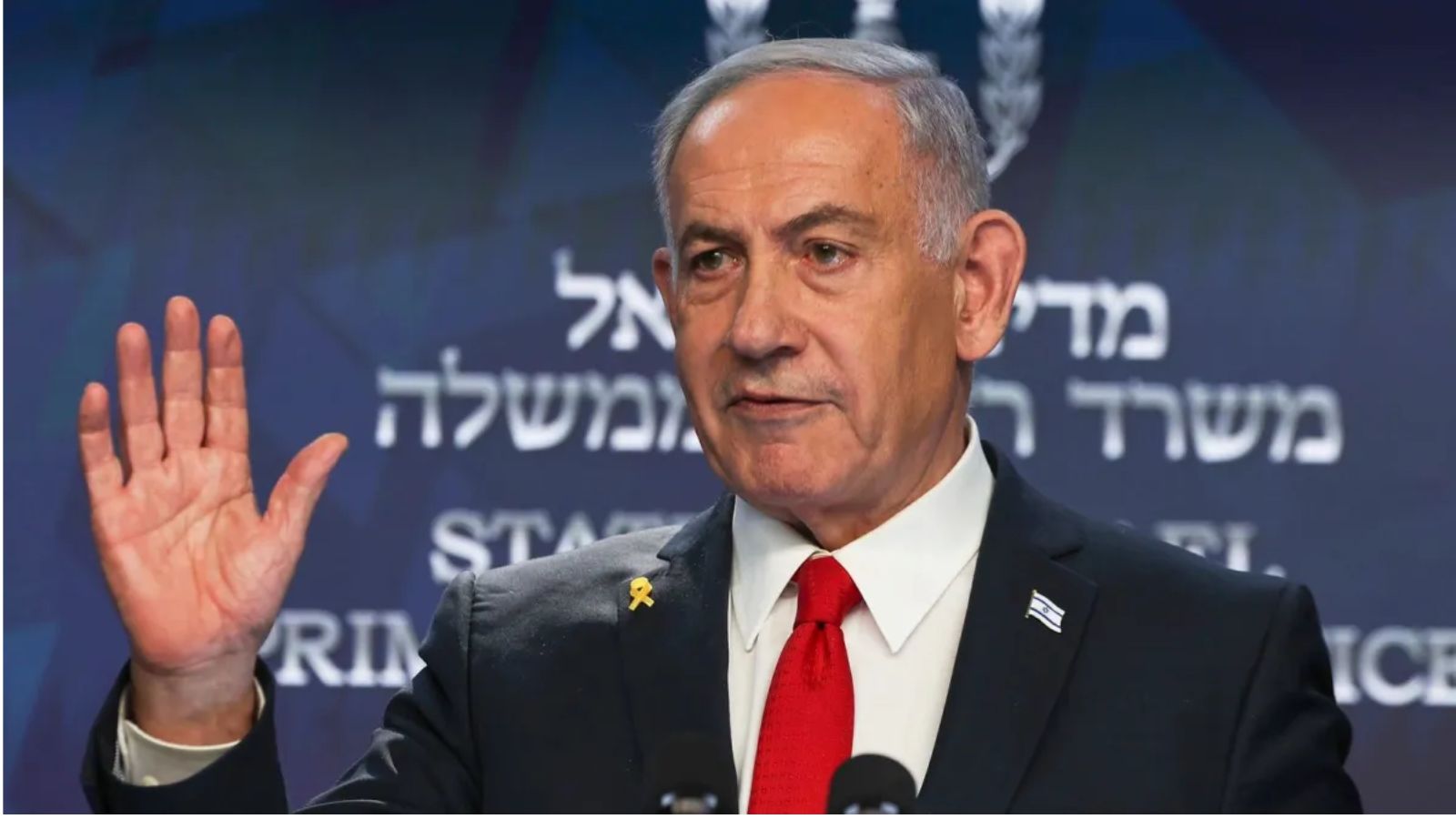
The recent declaration from Jerusalem did not arrive in a vacuum, though the headlines presented it with the cold finality of an ultimatum. Prime Minister Benjamin Netanyahu made the position unmistakable. Israeli forces will not pull back from Lebanese territory until Hezbollah is fully disarmed. To the casual observer tracking the news from thousands of miles away, this sounds like a standard geopolitical chess move. A demand made from a position of tactical leverage. A line in the sand.
To understand why this stance is taken—and why it guarantees that the tension will ripple through generations—one has to look past the podiums and the official press releases. The true gravity of the situation lives in the quiet kitchens of Metula and the fractured streets of Marjayoun.
The Anatomy of an Unseen Threat
Imagine a family living in a small border town. Let us call them the Levys, a hypothetical composite of the thousands who have called the northern Galilee home for decades. For years, their daily routine involved a calculated glance toward the treeline on the opposite ridge. They knew that beneath the canopy of those ancient trees lay an intricate network of tunnels, concrete bunkers, and thousands of precision-guided rockets.
This is not an abstract military theory. It is a neighbor that refuses to acknowledge your right to exist.
When the conflict intensified, the Levys, along with roughly sixty thousand other Israeli citizens, were forced to pack their lives into suitcases and flee south. Their schools emptied. Their businesses shuttered. The vibrant agricultural communities that defined the region became ghost towns, populated only by patrolling soldiers and the occasional stray animal.
For the Israeli leadership, the status quo had become entirely untenable. No sovereign nation can permanently accept the internal displacement of tens of thousands of its citizens due to the looming threat of an entrenched militia across the border. The demand for Hezbollah’s disarmament is presented not merely as a political objective, but as a existential prerequisite for these families to ever return home.
But turn the camera slightly to the north, across the Blue Line, and the view changes dramatically.
Consider a Lebanese family in a southern village. Let us call them the Rahals. They are not members of any militia; they are farmers, teachers, and shopkeepers. For them, the presence of Israeli troops on their soil evokes a deep, historical trauma. They remember previous incursions. They see the cratered roads and the smoke rising from neighboring valleys. When they hear the demand for total disarmament, they do not hear a formula for stability. They hear a requirement that leaves their nation vulnerable, caught between a powerful neighbor and a non-state actor that has embedded itself into the very fabric of their society.
The tragedy of the border is that both families are trapped in a cycle dictated by forces far beyond their control.
The Mirage of the Buffer Zone
History has a cruel habit of repeating itself along these ridges. This is not the first time an army has crossed the border with the promise of creating a secure perimeter. The archives are filled with similar declarations from 1978, 1982, and 2006. Each time, the objective was clear: push the threat back, secure the northern communities, and establish a buffer that ensures safety.
Yet, history shows that military presence alone rarely creates permanent security. Instead, it often creates a vacuum.
Hezbollah arose originally during the protracted instability of the late twentieth century. It grew not as a traditional standing army, but as a guerrilla force deeply intertwined with the local population. Over the decades, it transformed into a state within a state, possessing an arsenal that rivals many conventional militaries. It operates outside the control of the central Lebanese government in Beirut, creating a profound diplomatic paradox.
How do you negotiate the disarmament of a group that answers to no national parliament, recognizes no international treaties, and derives its power from a foreign benefactor?
This is the core dilemma that the current strategy attempts to confront. By stating that withdrawal is contingent upon disarmament, the Israeli government is attempting to force a fundamental structural change. They are signaling to the international community, and to Lebanon itself, that the old arrangements—where international peacekeepers stood between two heavily armed sides while rockets were stockpiled in plain sight—are permanently over.
But the mechanics of achieving that goal are fraught with immense peril. Disarming an organization like Hezbollah cannot be accomplished simply by signing a decree. It requires either a monumental shift in regional alliances or a protracted conflict that risks consuming the entire region.
The Weight of the Invisible Stakes
The debate over troop movements and diplomatic conditions often obscures the long-term human cost. Every day the deadlock continues, the fabric of life along the border erodes a little more.
Think of the children who have spent months living in temporary hotel rooms in Tel Aviv or Jerusalem, studying in makeshift classrooms, their childhoods paused. Think of the Lebanese families sleeping in crowded schools in Beirut, wondering if their ancestral homes still stand or if their fields have been ruined by munitions.
The psychological toll is a silent epidemic. Security is not just the absence of incoming fire; it is the presence of predictability. It is the knowledge that you can plant a crop and be there to harvest it. It is the certainty that when you send your children to school in the morning, they will return in the afternoon.
That certainty has vanished.
The international community frequently calls for a return to UN Resolution 1701, the framework that ended the 2006 war. That resolution explicitly called for the area south of the Litani River to be free of any armed personnel other than the Lebanese army and UN peacekeepers. On paper, it was a elegant solution. In reality, it was a fiction. The weapons remained, the tunnels were dug deeper, and the peacekeepers found themselves powerless to enforce the mandate.
The insistence on disarmament before withdrawal is an explicit rejection of that past failure. It is an admission that paper promises no longer carry any currency in the valleys of the north.
The Unforgiving Path Ahead
The road forward offers no easy exits. If the military campaign continues indefinitely to force compliance, the destruction will widen, and the grievances that fuel future conflicts will only deepen. If a premature withdrawal occurs without a verifiable mechanism to prevent the militia from rearming, the clock simply resets, counting down to the next, even more destructive conflagration.
The real challenge is not just clearing a hillside or destroying a launcher. It is creating a political reality where a non-state militia is no longer seen as a necessity or an inevitability by its supporters, and where a sovereign state does not feel compelled to cross its borders to protect its citizens.
As the diplomats argue over the wording of potential ceasefires in distant capitals, the winds continue to blow across the Galilee and southern Lebanon. The olives are ready for harvest, but many fields remain empty. The soldiers keep their watch, the drones buzz overhead, and millions of people wait in the shadows of decisions made by leaders who rarely have to live with the immediate consequences of their words.
The border remains closed, the future remains unwritten, and the silence of the abandoned towns speaks louder than any political speech ever could.


