The Weight of an Empty Chair
Dust settles differently when no one is left to sweep it away.
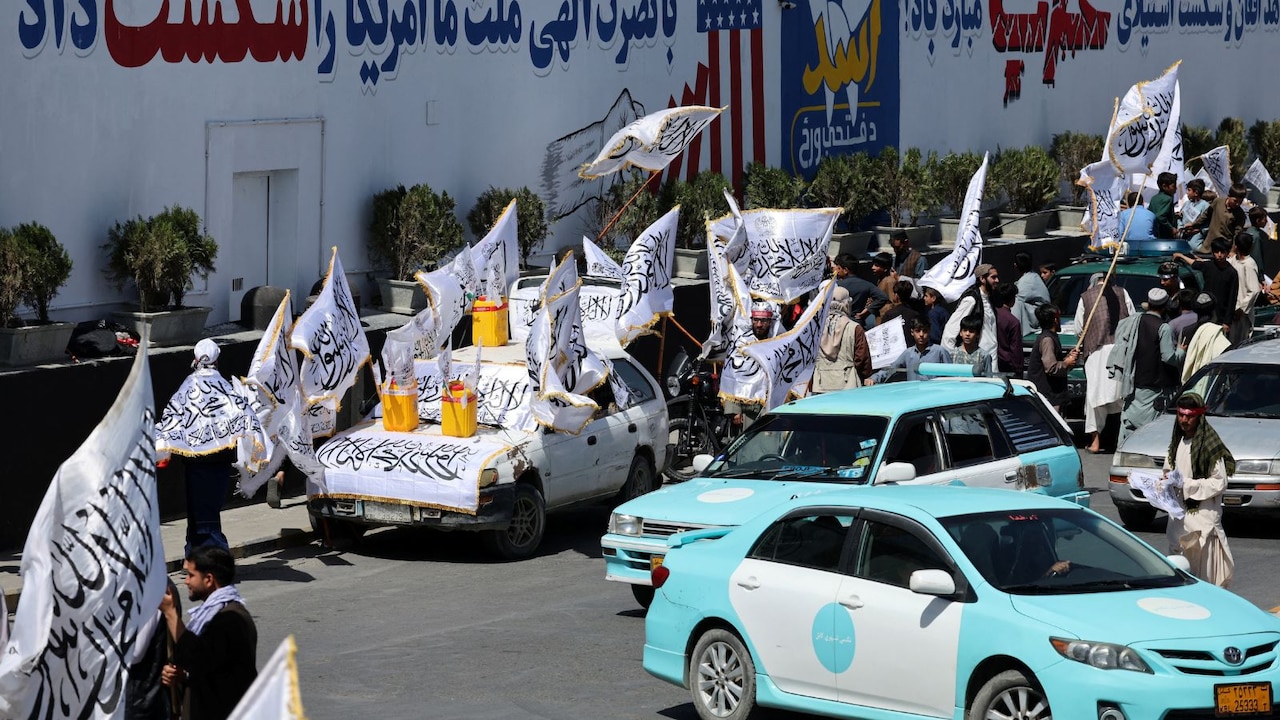
In a small apartment overlooking the terracotta rooftops of Kabul, a row of closed textbooks sits untouched on a wooden shelf. They are gathering the gray silt of a city suspended in time. Five years have passed since the banner of the Islamic Emirate swept back over the capital, five years since the cameras rolled away, since the frantic crowds at the airport became old news feed, and since the world decided to look elsewhere.
To understand what half a decade under this administration means, you cannot simply look at policy briefs or press releases. You have to look at the chalkboard where equations remain half-solved. You have to look at the empty chairs in hospital wards where female doctors once stood, hands steady, saving lives.
History rarely announces its darkest turns with a crash. More often, it arrives in the quiet click of a heavy wooden door sliding shut, locked from the outside.
Five years ago, the calendar flipped backward. The promises made in air-conditioned conference rooms in Doha dissolved into the dry autumn air of the Hindu Kush. At first, there were assurances. Moderate tones. Promises of amnesty. Whispers that things might be different this time.
They were not different.
Consider what happens when half a population is systematically edited out of public life. This is not a metaphor. This is an administrative erasure. Decrees do not arrive as thunderbolts; they arrive as edicts taped to university gates, forbidding entry to anyone wearing a hijab of a certain cut, then anyone seeking a degree, then anyone walking without a male guardian past the threshold of their own neighborhood.
The Arithmetic of Loss
Numbers numb the mind. We hear that millions face acute food insecurity, that currency reserves evaporated overnight, that foreign aid dried up like a mountain stream in August. But statistics are just human beings stripped of their names.
Let us look at a hypothetical scenario to ground the math, though every element of it is drawn from thousands of documented testimonies compiled by rights organizations across the globe.
Imagine Sahar. In 2021, she was twenty years old, halfway through her third year studying computer science at Kabul University. She had a laptop, a favorite coffee mug with a chipped handle, and a head full of algorithms. She believed, with the fierce certainty of youth, that her country was stepping forward into the twenty-first century.
On a Tuesday morning in late autumn, she walked up the concrete steps of her campus and found a chain and padlock wrapped around the wrought-iron gates. A guard with a Kalashnikov slung over his shoulder did not look her in the eye when he told her to go home.
That was year one.
Year two brought the closure of beauty salons—the last remaining sanctuary of female entrepreneurship, where women could gather, speak freely, and earn an independent living.
Year three saw the restriction on parks, gyms, and public baths. The geography of the city shrank for women until it was bounded by the four walls of the family home.
Year four brought the ban on women working for non-governmental organizations and the United Nations, cutting off the fragile lifeline of humanitarian aid delivered by women to women in a society where gender segregation makes male aid workers useless in domestic spaces.
And now, we are in year five. Sahar’s laptop battery died years ago. The charger was sold to buy flour.
This is the hidden cost of isolation. It is not just the poverty—though poverty is a relentless, grinding presence that turns every meal into a negotiation. It is the theft of potential. A nation that locks half its population indoors is amputating its own limbs and expecting to run a marathon.
The Architecture of Control
How does an administration maintain its grip when the treasury is empty and the global community refuses formal recognition?
Through absolute consistency of pressure.
The strategy is simple and brutal. First, dismantle civil society. Journalists who once broadcasted hard news find themselves broadcasting religious programming or fleeing across the border into Pakistan or Iran, only to face the precarious limbo of deportation threats. Judges and lawyers who upheld the previous republic's constitution are replaced by clerics whose legal code brooks no debate.
Second, control the narrative of survival. When international organizations attempt to negotiate exceptions—begging for female aid workers to be allowed to distribute food, or for girls' secondary schools to reopen—the authorities treat these pleas not as humanitarian necessities, but as political bargaining chips. Every concession is doled out in drops, while the core architecture of exclusion remains untouched.
It is a masterclass in endurance through stubbornness. The leadership in Kandahar knows that the international attention span is short. They know that wars in Europe and the Middle East will pull the headlines away. They know that weariness is the greatest ally of tyranny. Year after year, they wait out the world, betting that eventually, pragmatism will override principle, and foreign embassies will reopen their doors simply because geography cannot be ignored.
The Voices in the Dark
Yet, to paint Afghanistan solely as a canvas of despair is to misunderstand the fierce, stubborn pulse of its people.
Listen closely. In the narrow alleyways of Herat and Mazar-i-Sharif, beneath the hum of overhead power lines, something extraordinary is happening in the shadows.
Basement schools.
They are illegal. They operate without textbooks, illuminated by single overhead bulbs or the glow of smuggled smartphones. Teenage girls sit shoulder-to-shoulder on cracked linoleum floors, whispering chemistry formulas and reciting English poetry. Older women, once professors and judges, risk their lives every single morning to teach them.
If you are caught, the consequences are immediate and severe. Detention, interrogation, public humiliation, or worse. And yet, the basements fill up.
Why do they risk it? Because education, once tasted, cannot be unlearned. Hope, once ignited, cannot be easily smothered by a decree. These underground classrooms are not grand military rebellions; they are quiet, persistent acts of defiance. They are a declaration that the human mind cannot be permanently occupied by force.
The Reckoning of Silence
Five years on, the international community finds itself trapped in a moral quagmire.
Do you engage, providing funds and recognition that legitimize a regime built on the subjugation of women and minorities, hoping that moderate factions will eventually prevail? Or do you isolate, watching the economy implode and ordinary citizens bear the full weight of starvation while the leadership remains comfortably insulated in ideological purity?
There are no clean answers here. The truth is messy, uncomfortable, and heavy with regret. The hasty withdrawal of 2021 left behind millions of allies who trusted the promises of global democracy, only to be abandoned to their fate. That guilt lingers in foreign capitals, disguised as diplomatic fatigue.
Rights groups sound the alarm year after year, publishing exhaustive reports detailing arbitrary detentions, systemic discrimination against the Hazara minority, public floggings, and the total dismantling of freedom of expression. The reports are read, filed away, and largely ignored by a world preoccupied with its own domestic crises.
Meanwhile, the seasons change over the mountains. The almonds bloom in spring; the dust storms howl in summer; the bitter cold sets in by winter.
In that quiet apartment in Kabul, the dust settles a little deeper on the closed books. But outside, in the narrow streets where the shadows lengthen against the mud-brick walls, a girl pulls her headscarf tight, tucks a handwritten notebook beneath her arm, and walks down the steps toward a basement door.
The story of Afghanistan is not finished. It is being written in the dark, one whispered syllable at a time.