Structural Asymmetry in Maritime Chokepoints
The Strait of Hormuz processes approximately 20 to 21 million barrels of petroleum per day, representing roughly 20% of global petroleum liquid consumption. Military strikes by external powers against regional state actors systematically trigger a predictable escalation sequence: asymmetric interdiction of commercial shipping, regional risk-premium repricing, and tactical diversion of maritime assets.
The primary vulnerability of maritime trade in narrow corridors stems from an inherent operational asymmetry. Defending a commercial vessel against low-cost kinetic threats—such as limpet mines, uncrewed surface vessels (USVs), or anti-ship cruise missiles—requires disproportionate naval resource allocation. Conversely, execution of an interdiction strategy requires minimal capital expenditure to inflict substantial friction on global logistics.
When military strikes destabilize this corridor, kinetic events against commercial vessels serve three primary tactical functions:
- Maritime Cost Amplification: Force commercial fleets to re-evaluate protection costs, elevating Hull and Machinery (H&M) as well as War Risk insurance premiums beyond profitable thresholds.
- Logistical Rerouting: Force commercial operators to halt transit or reverse course, reducing active global tanker capacity through extended transit times around alternative routes.
- Geopolitical Signal Projection: Demonstrate physical dominance over a trade chokepoint without engaging in direct naval fleet-to-fleet combat.
The Tri-Stage Logistics Escalation Mechanism
The operational disruption of energy logistics following kinetic interventions follows a distinct three-stage cascade.
Kinetic Strike / Direct Threat
       │
       ▼
1. Kinetic Interdiction ───────► Physical damage to commercial vessels
       │
       ▼
2. Operational Disruption ────► Fleet reversals and extended route diversions
       │
       ▼
3. Financial Containment ─────► War risk premium spikes and insurance withdrawal
Stage 1: Kinetic Interdiction and Asset Impairment
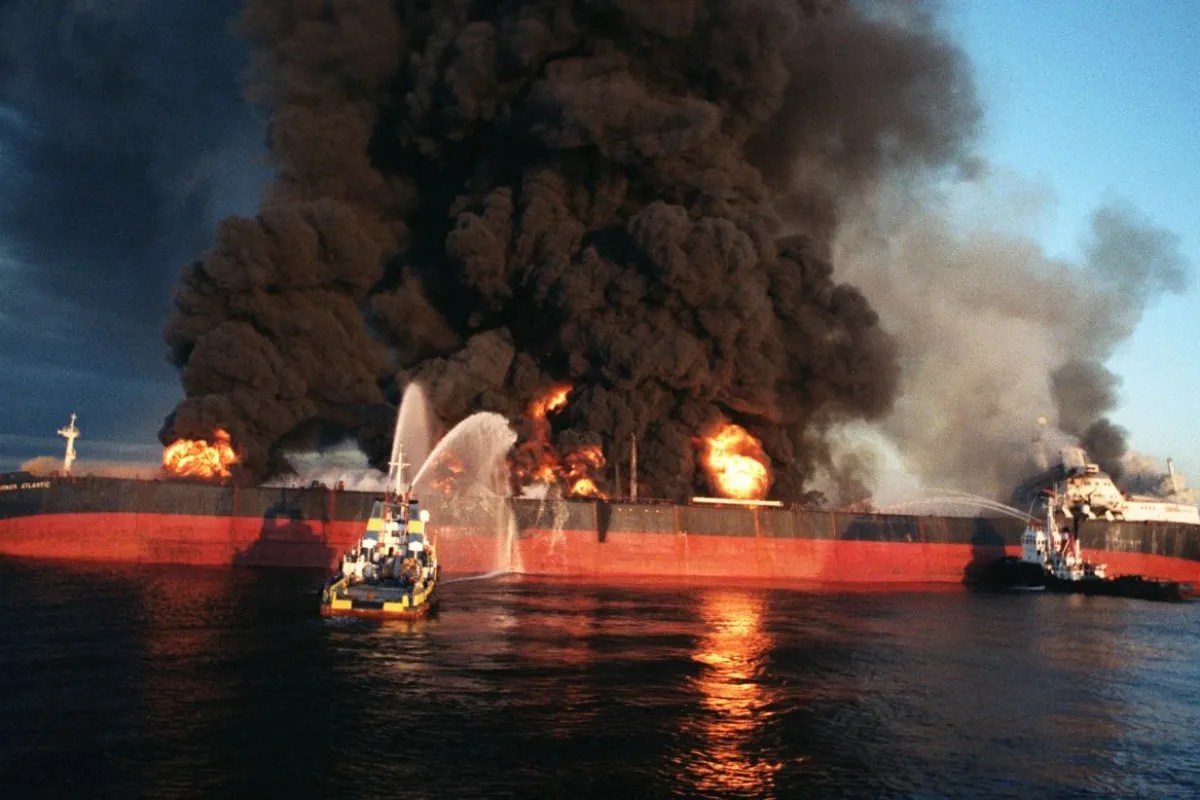
Kinetic interdiction targets the physical vessel to trigger immediate operational freezes across the sector. Explosions aboard energy tankers, whether via limpet mines, drone strikes, or targeted projectiles, create localized structural damage that triggers automatic emergency protocols. Maritime safety codes require immediate halting of cargo operations, deployment of damage control, and anchorage in safe zones.
The damage threshold required to cause systemic trade disruption is exceptionally low. A vessel does not need to be sunk; operational impairment or localized hull breach is sufficient to halt traffic across the entire convoy line while surrounding vessels assess threat vectors.
Stage 2: Operational Disruption and Tactical Diversion
Following an initial kinetic event, regional maritime traffic experiences immediate tactical diversions. Commercial operators perform risk assessments based on automated identification system (AIS) data, intelligence briefs, and direct naval advisories.
When a vessel reverses course mid-transit, it creates a compounding downstream bottleneck:
- Port Congestion: Unscheduled returns strain anchorage facilities at supply ports, occupying berths meant for incoming unladen ships.
- Supply-Chain Latency: Diverting a crude carrier around the Cape of Good Hope adds approximately 10 to 14 days to European or Western destinations compared to direct transit, reducing global effective tanker capacity by removing operational vessels from circulation for extended periods.
- Refinery Inventory Depletion: Just-in-time refining models rely on strict delivery windows. A 48-to-72-hour delay caused by fleet reversals forces refineries to run down local crude reserves, inflating prompt physical crude prices relative to futures contracts (backwardation).
Stage 3: Financial Containment and Insurance Exclusion
The decisive operational bottleneck during maritime conflict is rarely physical blockade; it is financial uninsurability. Maritime trade relies heavily on Protection and Indemnity (P&I) Clubs and marine underwriters.
When conflict escalates, underwriters adjust War Risk Breach Premiums. These adjustments occur through two primary mechanisms:
- Exponential Premium Hikes: War risk insurance rates can scale from 0.05% of hull value up to 0.5% or 1.0% per transit during active conflict, adding hundreds of thousands of dollars to a single voyage's operational expenditure.
- Coverage Cancellation: Underwriters reserve the right to give seven days' notice of cancellation for war risk coverage in designated high-risk areas. Without war risk coverage, vessel owners are legally prohibited by charterers and flag states from entering the zone, forcing effective operational halts across entire fleets regardless of actual physical threat levels.
Deterrence Failure and Risk Mitigation Limits
State actors targeting commercial shipping rely on maritime domain awareness (MDA) assets to track, identify, and target specific commercial flag states while allowing friendly or neutral shipping to pass. This selective target selection complicates collective security measures.
Naval escort operations—such as convoy systems—mitigate direct surface attacks but introduce severe operational inefficiencies. Convoys force high-speed vessels to match the velocity of slow-moving bulkers, increasing total transit duration and creating dense target profiles in narrow channels. Furthermore, tactical defense systems aboard modern warships, while effective, face inventory depletion when intercepting high-volume, low-cost saturation attacks.
Energy exporters attempting to bypass disrupted maritime chokepoints face structural capacity constraints. Onshore pipelines (such as Saudi Arabia’s East-West Pipeline or the UAE’s Habshan-Fujairah Pipeline) possess operational limits that can only absorb a fraction of the total daily volume passing through the Strait of Hormuz. The remaining volume remains bound to sea lines of communication.
Tactical Realignment for Energy Operations
Energy traders, fleet managers, and industrial consumers cannot rely on rapid diplomatic stabilization during active kinetic cycles in primary trade corridors. Operational continuity requires immediate structural adjustments:
Energy procurement strategies must pivot from spot-market maritime purchases to long-term supply contracts tied to alternative delivery nodes located outside designated war risk zones. Fleet operators transiting high-risk chokepoints must implement autonomous, non-AIS tracking protocols alongside dynamic risk-contingency budgeting that caps war-risk premium exposures before initiating transit. Institutional investors must hedge short-term physical crude spikes using options structures linked to prompt-month physical spreads rather than broad crude futures, isolating localized operational supply shocks from broader macroeconomic pricing trends.

/https://i.s3.glbimg.com/v1/AUTH_e84042ef78cb4708aeebdf1c68c6cbd6/internal_photos/bs/2026/g/B/3vpkvHQKizRKAfzDxjXA/vini-jr-antes-e-depois.jpg)