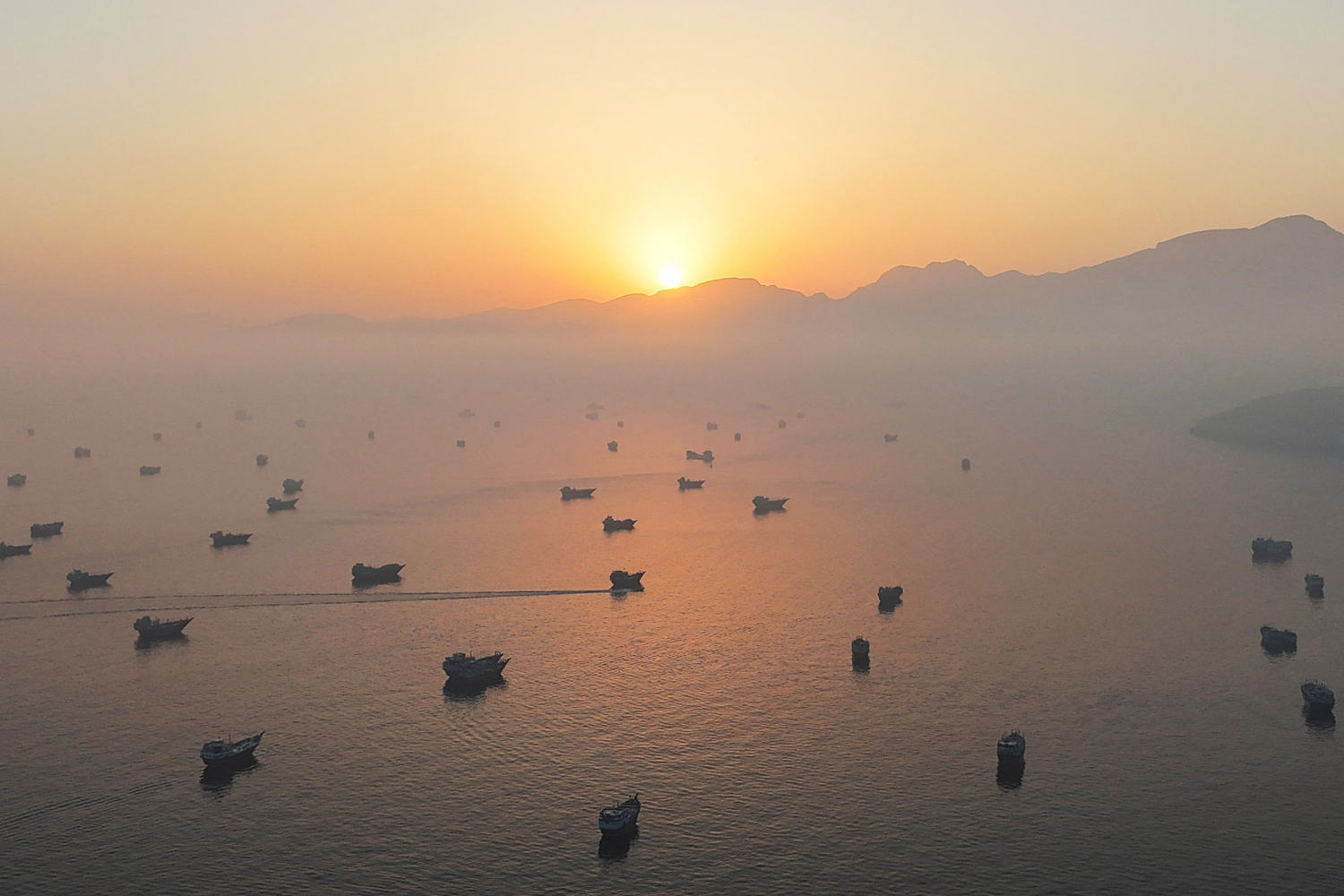
The United States has initiated a fresh wave of military strikes against Iranian-linked targets in response to escalating hostilities in the Strait of Hormuz. While official channels frame these actions as defensive measures to secure global shipping lanes, the reality is far more complex. This isn't just about protecting oil tankers; it is a high-stakes kinetic chess match where both Washington and Tehran are trapped in an escalation loop that neither side can easily exit. The primary objective of these strikes is to re-establish a baseline of deterrence, but historical precedent suggests they may achieve the exact opposite, pushing the region closer to a chokehold on global energy markets.
To understand the current crisis, one must look past the immediate headlines of drone intercepts and missile exchanges. The Strait of Hormuz is a narrow waterway through which roughly a fifth of the world's petroleum passes daily. It is a geographic vulnerability that Iran has spent decades learning to exploit. When the U.S. applies economic or military pressure, Iran rarely responds with a conventional head-on deployment. Instead, it utilizes asymmetric warfare, using fast-attack craft, sea mines, and proxy forces to increase the cost of doing business in the Gulf.
The traditional American playbook relies on overwhelming fire power to force compliance. This approach assumes the adversary calculates risk using the same cost-benefit matrix as a Western military superpower. It is a flawed assumption. For the leadership in Tehran, maintaining a posture of defiance is tied directly to domestic political survival and regional credibility. Every American missile that hits an Iranian-backed radar site or command center provides the regime with political capital, allowing them to justify economic hardships at home as the cost of resisting foreign intervention.
The Friction of Asymmetric Warfare
Conventional military doctrine struggles against a decentralized opponent. The U.S. Navy operates multi-billion-dollar destroyers equipped with advanced air defense systems. These ships are highly capable, but they are currently burning through expensive munitions to intercept cheap, mass-produced drones and anti-ship cruise missiles. The economic asymmetry of this conflict favors the disruptor. A drone costing less than twenty thousand dollars can effectively tie up a warship and force the expenditure of a missile that costs millions.
This creates a serious sustainability problem for the coalition forces patrolling the region. Maritime security operations are grueling. Crews face intense operational tempos, and the constant threat of loitering munitions demands continuous vigilance. Washington cannot keep a massive carrier strike group stationed in the Gulf indefinitely without degrading its readiness for other global theaters. Iran knows this. Their strategy is built around patience, waiting for the political will in Western capitals to erode under the weight of an indefinite, costly deployment.
The shipping industry is already pricing in this prolonged instability. Insurance premiums for vessels traversing the Gulf have surged, forcing some maritime logistics companies to consider the lengthy detour around the Cape of Good Hope. This diversion adds weeks to transit times and drives up fuel costs, creating an inflationary pressure that eventually hits global consumers. The strikes have not restored confidence; they have merely signaled to the markets that the waterway remains a active combat zone.
The Intelligence Blind Spots
Executing precise military strikes requires flawless intelligence, an asset that is notoriously difficult to maintain in a fluid environment. Pentagon briefers frequently emphasize the precision of their munitions, noting that specific radar installations or storage facilities were neutralized. What they omit is the rapid adaptability of the target network.
Iran's proxy architecture is built to withstand exactly these types of operations. Command structures are redundant, and weapons caches are dispersed across civilian infrastructure or hidden within hardened underground networks. When a U.S. strike destroys a launch site, another often becomes operational a few miles away within hours. The assumption that air campaigns can permanently degrade these capabilities ignores the last two decades of conflict in the Middle East.
Furthermore, the risk of miscalculation is exceptionally high. In a congested maritime corridor, the line between an armed reconnaissance drone and a commercial unmanned system can blur under stress. A single mistake—a strike that hits a civilian vessel or an Iranian asset inside its own territorial waters—could trigger an immediate, uncontrolled expansion of the conflict. The command-and-control loops on both sides are operating under compressed timelines, leaving very little room for diplomatic intervention before the next round of retaliation occurs.
The Regional Diplomatic Fallout
Washington's military response is also complicating relationships with its regional partners. Gulf Arab states find themselves caught in a dangerous geographical middle ground. While countries like Saudi Arabia and the United Arab Emirates rely on secure shipping lanes for their economic survival, they are highly wary of a full-scale war on their doorstep. Memories of the 2019 drone attacks on Saudi Aramco facilities remain fresh, serving as a reminder of how easily regional infrastructure can be targeted if a conflict escalates.
Consequently, these nations are publically distancing themselves from the American military campaign, refusing to allow their territory to be used as launching pads for offensive strikes. They are pursuing a delicate dual-track strategy, maintaining security ties with the West while simultaneously engaged in quiet diplomacy with Tehran to insulate themselves from the fallout. The U.S. finds itself operating with dwindling regional consensus, relying on a coalition that looks robust on paper but is politically fragile in practice.
This lack of unified regional backing weakens the diplomatic leverage needed to forge a long-term solution. Military force can disrupt an adversary's operations temporarily, but it cannot alter the underlying geopolitical realities that drive the conflict. Without a viable diplomatic off-ramp, the current campaign risks becoming an ongoing war of attrition with no clear exit criteria.
The cycle of action and reaction has acquired its own momentum. Washington feels compelled to strike to maintain its global credibility and reassure international markets. Tehran feels compelled to resist to maintain its domestic grip on power and regional influence. Each round of strikes raises the baseline of acceptable violence, conditioning both sides to accept risks that would have been unthinkable a few years ago. The danger is not that either country actively wants a catastrophic war, but that the machinery of escalation they have set in motion will eventually leave them with no other choice.