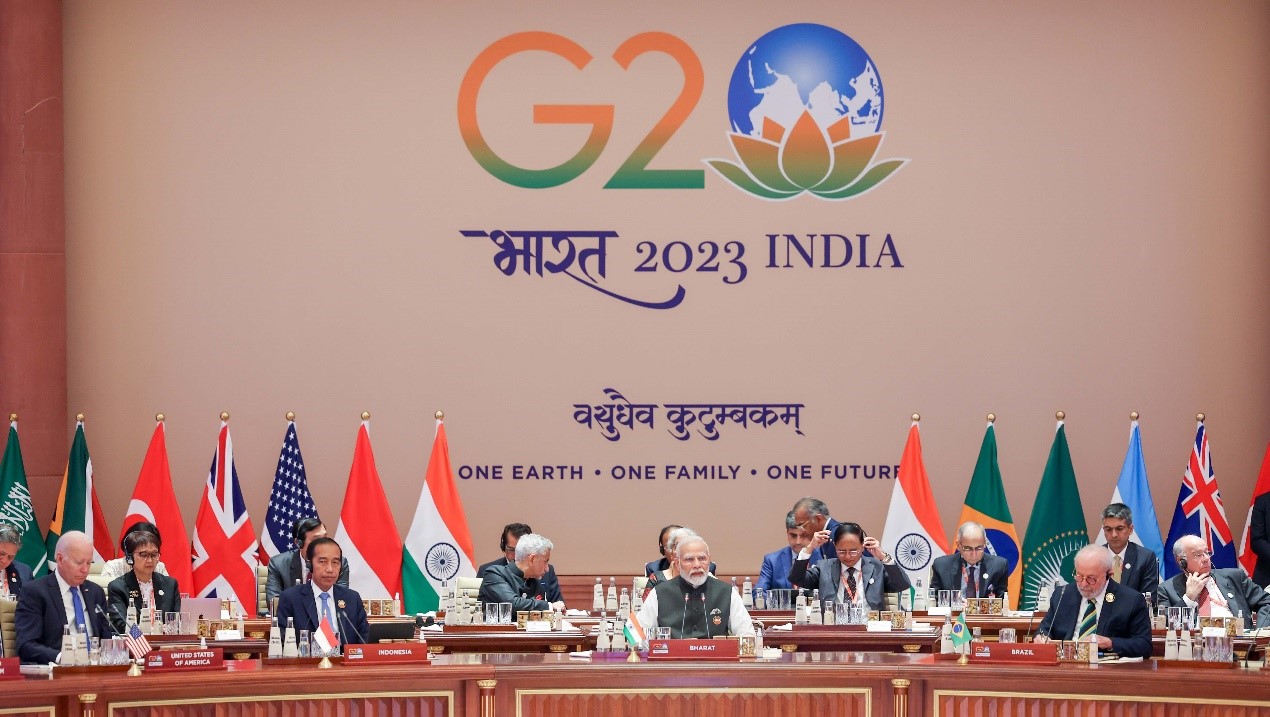
Someone in Brussels typed "landmark associate membership" into a press briefing and half the trade press acted like Canada just won a seat at the G7 of Europe.
It is not a seat at the table. It is a waiting room with fluorescent lights.
The standard story pushed by breathless commentators is predictable. The European Union proposes a deeper associate membership for Canada. Trade desks cheer. Op-eds hail a historic bridge across the Atlantic. Politicians talk about shared values, tariff relief, and a bold new era of transatlantic alignment.
That reading misses almost everything that actually matters in international trade law and supply chain economics.
An associate membership for Canada is not a shortcut to European Union membership. It is not a magic eraser for North American trade friction. Worse, if Ottawa treats it as a strategic prize instead of a regulatory snare, Canadian firms will spend years chasing alignment rules they cannot vote on while sitting on top of the world's largest contiguous market.
The Lazy Consensus Behind "Landmark" Association
Watch how the lazy consensus works. A headline lands claiming the EU wants a landmark associate membership for Canada. Immediately, writers assume three things: first, that Europe is offering a quasi-insider status; second, that Canadian exporters will suddenly get near-frictionless access to 27 national markets; third, that Canada gains diplomatic clout inside Brussels.
Every one of those assumptions collapses on contact with EU treaty architecture.
Under Article 217 of the Treaty on the Functioning of the European Union (TFEU), the EU may conclude association agreements involving reciprocal rights and obligations, common action, and special procedures. Notice what is missing from Article 217. There is no mention of voting rights in the Council of the European Union. There is no representation in the European Parliament. There is no seat on the European Commission.
In EU legal practice, "association" covers everything from narrow trade frameworks to the European Economic Area (EEA) model used by Norway, Iceland, and Liechtenstein. Look closely at the EEA model before anyone pops champagne. Norway adopts vast swathes of EU single-market legislation—the acquis communautaire—through a joint committee mechanism, yet Oslo has zero formal vote when Brussels drafts those directives.
Canada already has a Comprehensive Economic and Trade Agreement (CETA) with the EU, provisionally applied since 2017, which eliminated roughly 98% of tariff lines. If tariffs were the bottleneck, CETA already solved most of it. Calling a new associate membership pitch a "landmark" breakthrough confuses political theater with commercial substance.
Rule-Taking Without a Seat at the Table
Trade scholars from Jagdish Bhagwati to Dani Rodrik have spent decades pointing out an uncomfortable truth about deep integration agreements: once tariffs fall near zero, the real battle moves behind the border. Standards, technical regulations, conformity assessments, data governance, subsidy rules, and environmental compliance become the actual gatekeepers.
When a non-member enters an associate framework with the EU, the asymmetry is baked into the plumbing.
Brussels sets its regulatory standards internally through Commission proposals, Parliament amendments, and Council negotiations shaped by 27 member states' domestic politics. An associate partner is then invited to harmonize. In practice, harmonization means adopting EU rules so goods can move without technical friction.
Imagine a scenario where a Canadian industrial equipment maker builds high-voltage switchgear. Under current North American practice, the firm designs to CSA and UL standards, tests once, and ships across Canada, the United States, and Mexico. Now suppose an EU associate membership pulls Ottawa into a formal alignment track for electrical safety and circular-economy product passports. The company now faces a choice: build a separate European production line with distinct components, documentation, and conformity audits, or redesign its core North American product to satisfy Brussels.
Neither option is free. Both add fixed engineering and compliance overhead.
I have watched corporate boards burn tens of millions of dollars chasing cross-Atlantic compliance programs because an executive team fell in love with a diplomatic announcement. Legal teams bill hours mapping regulatory deltas. IT teams build traceability modules. Sales teams wait for a wave of European orders that never materializes because procurement in Munich or Lyon still prefers domestic suppliers or entrenched German and French incumbents.
The press release lasts a day. The compliance overhead lasts a decade.
The North American Gravity Problem
Geography does not care about diplomatic communiqués.
Canada's economic center of gravity is overwhelmingly North American. Roughly three-quarters of Canadian merchandise exports go to the United States, anchored by deeply integrated supply chains governed by the Canada-United States-Mexico Agreement (CUSMA). Auto parts, aerospace assemblies, agricultural commodities, energy, and chemicals cross the Canada-US border multiple times before becoming finished goods.
Rules of origin are where grand transatlantic visions run into brick walls.
Under CETA, a Canadian-manufactured vehicle or industrial assembly must meet strict rules of origin to qualify for preferential treatment. If key sub-components come from the United States or Mexico, those inputs do not automatically count as "Canadian" or "EU" originating content for CETA purposes. Associate membership does not automatically rewrite US trade law or turn North American value chains into European ones.
Think about what happens if Canada binds its regulatory regime closer to Brussels while Washington pursues aggressive industrial policy, domestic content mandates, or tariff threats of its own.
Canadian exporters get caught in a pincer. Satisfy Brussels's regulatory conditions and you risk friction with North American supply partners whose standards diverge. Stay locked to North American standards and the promised EU associate membership turns into an expensive paper exercise.
Trade negotiators love complex frameworks because complexity creates jobs for negotiators. Operating companies need predictability, low unit cost, and clear market access. Those two priorities collide fast when a mid-sized economy tries to orbit two regulatory suns at once.
What People Actually Ask About EU-Canada Association
When an announcement like this hits the wire, search queries follow a predictable script. Most of them start from the wrong premise.
Does associate membership make Canada a partial member of the EU?
No. Membership in the EU is governed by Article 49 of the Treaty on European Union, which requires full accession, ratification by all member states, and acceptance of the entire political and legal order. Associate membership is a bilateral or multilateral contractual relationship. You can be deeply integrated in specific sectors and still have zero authority over the legal system governing those sectors.
Would Canadian companies get automatic Single Market access?
Not automatically. Even inside the EU, Single Market participation requires strict adherence to state-aid rules, competition enforcement, free movement rules, and Court of Justice interpretation mechanisms. Without accepting supranational enforcement—which no Canadian government could politically survive—market access stays bounded by negotiated chapters, quotas, and mutual recognition limits.
Why would the EU propose this to Canada in the first place?
Look at Brussels's incentives rather than Ottawa's vanity. The EU faces sluggish growth, fierce industrial competition from China, energy restructuring costs, and security pressure from Russia. Securing formal alignment with a G7 ally that has critical minerals, energy, and clean-tech inputs gives Brussels diplomatic momentum and supply security signaling. It costs the EU very little in institutional power while putting Ottawa on the defensive to prove its commitment.
The Uncomfortable Truth About Trade Deals
Trade agreements rarely create demand out of thin air. They remove friction where two economies already want to trade.
Where commercial demand is strong, firms find ways to sell even across regulatory divides. Where commercial demand is weak, no amount of diplomatic architecture forces buyers to sign purchase orders.
Consider what actually moves bilateral trade between Canada and the European Union. Maritime shipping costs, port congestion, air-cargo capacity, language and cultural distance in mid-market procurement, and the sheer scale advantage of selling into a single English-speaking market of 340 million consumers right across the border all matter far more than an associate membership label.
Yet every time Brussels floats a new institutional wrapper, Ottawa treats the wrapper as the product.
What Canadian Operators Should Do Instead
If you run a Canadian company, manage supply chains, or advise boards on cross-border strategy, ignore the diplomatic fireworks and treat the EU associate membership pitch as a diagnostic test.
- Audit actual revenue exposure before hiring compliance consultants. Pull your trailing three-year invoice data by destination. Separate genuine recurring EU customer demand from one-off distributor inquiries. If EU revenue sits below 10% of total sales, building dedicated EU regulatory infrastructure ahead of binding legal text is capital destruction.
- Map rules-of-origin bottlenecks SKU by SKU. Do not rely on general assurances from trade associations. Trace where inputs originate for your top 20% of SKUs by gross margin. Identify any product where North American content would disqualify a shipment from preferential EU treatment.
- Demand specific market-access deliverables, not process committees. Any serious engagement with Brussels should be judged on concrete wins: expanded tariff-rate quotas in agriculture and processed foods, faster mutual recognition of conformity assessments in aerospace and medtech, and clearer procurement access—not new working groups.
- Keep North American optionality as your primary moat. Protect your ability to serve US and Mexican buyers with minimal friction. North American proximity remains Canada's decisive structural advantage; do not dilute it for symbolic European status.
The Downside Nobody Admits
There is a real cost to rejecting or downplaying deeper EU alignment, and pretending otherwise would be dishonest.
If Canada stays tightly tethered to North America without building serious alternative regulatory and commercial channels, Canadian industry remains dangerously exposed to Washington's political mood swings. A single administration in Washington armed with tariffs, buy-American mandates, or unilateral sanctions can rattle Canadian exporters overnight. Relying exclusively on North American integration leaves Canada with fewer bargaining chips when US trade policy turns inward.
That risk is real. It is precisely why Ottawa keeps looking across the Atlantic.
But signing onto a vague EU associate membership does not solve vulnerability to Washington. It simply replaces unilateral exposure to one capital with rule-taking exposure to two.
Stop Chasing Titles and Fix the Plumbing
Canada does not need a shiny new label from Brussels to look important on the world stage. It needs hard-nosed commercial execution: faster ports, competitive energy and permitting timelines, sharper export financing, and trade deals judged by net margin per container shipped.
Anyone celebrating an EU associate membership proposal for Canada as a historic triumph is mistaking diplomatic choreography for economic power. Read the treaty text, count the votes Canada gets in Brussels, and then tell me who is actually in charge.