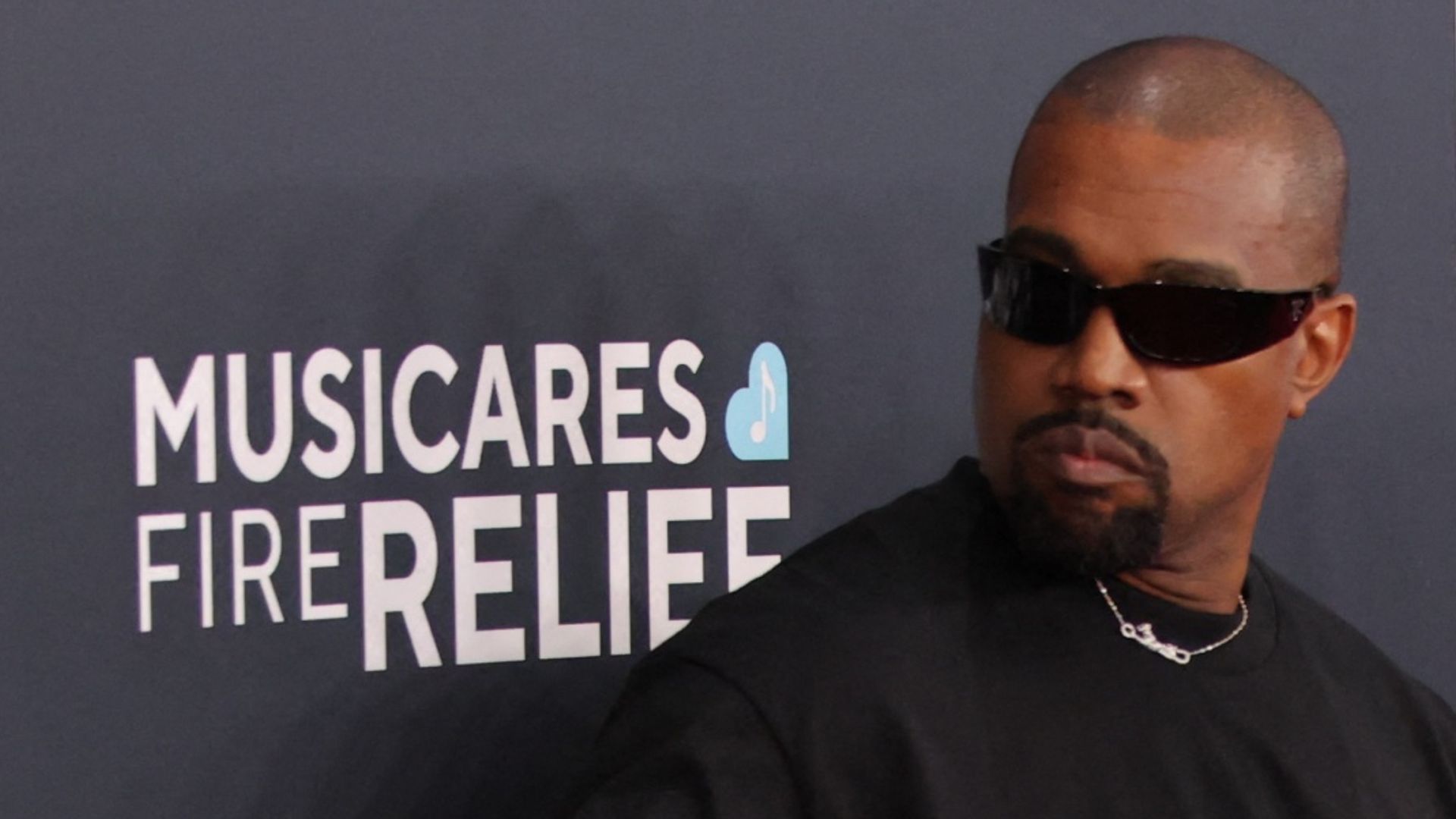
You can despise his words, but you cannot easily cancel his contract.
An Amsterdam District Court judge just threw out an emergency lawsuit from the Central Jewish Council. The group wanted to block two massive upcoming performances by Ye, the artist widely known as Kanye West. The concerts are locked in for June 6 and June 8 at the Gelredome in Arnhem. Tens of thousands of fans already have tickets. The court basically said that hurt feelings and offensive histories do not automatically equal a breach of public order.
It is a harsh reality check for activists. It also reveals a massive gap in how international borders handle the world's most toxic rock star.
The Public Order Loophole
The Central Jewish Council filed an emergency injunction arguing that Ye has no place on a Dutch stage. They pointed to his repeated praise of Adolf Hitler, his past plans to market swastika-branded merchandise, and a long pattern of public antisemitic tirades. To the local Jewish community, allowing him to perform feels like an official stamp of approval for hate speech. Chanan Hertzberger, the organization’s chair, did not mince words after the ruling. He noted that the decision makes it feel as though antisemitism is perfectly acceptable if you are famous enough.
But the law does not operate on feelings.
The Dutch court ruled strictly on the mechanics of safety. According to the bench, there are no concrete indications that the rapper's physical presence in the Netherlands poses an immediate threat to public safety or security. The legal threshold to preemptively cancel a private business event is incredibly high in Western Europe. You must prove that riots are imminent, or that the performer will actively incite violence from the stage during that specific hour. Past behavior, no matter how grotesque, rarely clears that bar.
Europe Split Legal Battleground
What makes the Dutch ruling fascinating is how much it contrasts with the rest of Europe. Ye is currently on his first major European tour in over a decade, and the map looks like a patchwork of conflicting legal philosophies.
Take a look at how different countries reacted to the exact same tour line-up this summer.
The United Kingdom blocked Ye from entering the country entirely back in April. The British Home Office has broad powers to deny entry to foreign nationals if their presence is deemed "not conducive to the public good." That executive decision instantly crushed a scheduled headlining slot at London’s Wireless festival.
Italy took a completely different path to a similar shutdown. Italian authorities banned a massive planned mid-summer concert in Reggio Emilia. Local prefect Salvatore Angieri cited very specific public order concerns. Travis Scott was booked at the exact same venue just 24 hours prior. Local police officials ruled that managing back-to-back stadium crowds exceeding 70,000 people, combined with the "concrete risk" of anti-hate protests, created an operational nightmare. They used crowd logistics, not speech laws, to pull the plug.
Poland and Switzerland saw their venues simply walk away. The Polish culture ministry aggressively pressured the Silesian Stadium in Chorzów to cancel a June date, stating that a country scarred by the Holocaust could not treat Ye as mere entertainment. In Switzerland, the management of FC Basel reviewed a stadium request for St. Jakob-Park and issued a flat refusal based on corporate values.
The Netherlands chose the path of strict statutory compliance. Dutch lawmakers actually supported a political motion to bar the rapper from entering the country. However, Immigration Minister Bart van den Brink admitted to journalists that the executive branch lacked any real legal basis to deny a visa based purely on speech.
The Economics of a Toxic Arena Tour
Why does Ye keep pushing forward despite hitting a wall of lawsuits and public outrage? Because the numbers still work.
The upcoming Dutch shows at the Gelredome have already cleared 70,000 ticket sales. Last weekend, more than 100,000 fans packed an outdoor arena in Istanbul, Turkey, to watch him perform. The demand for his music has separated itself almost entirely from his personal brand collapse.
This creates a brutal paradox for music venues and local promoters. A Kanye West tour date guarantees a multi-million-dollar economic injection into local hospitality, transit, and stadium revenue. Unless an administration can point to a literal riot on the horizon, local mayors and venue operators face massive breach-of-contract lawsuits from tour promoters if they cancel arbitrarily. The legal risk of canceling a show often outweighs the public relations mess of letting it happen.
Separate the Art from the Courtroom
If you are expecting these concert victories to clear Ye’s broader legal woes, think again. While European judges are hesitant to police his stage performances, American civil courts are currently tearing his business infrastructure apart.
The rapper is fighting multiple severe lawsuits in California. A Los Angeles Superior Court judge recently slapped him with thousands of dollars in sanctions for refusing to sit for depositions in an employment discrimination suit. Another high-profile civil suit from a former Yeezy marketing specialist alleges that Ye subjected staff to private text messages praising Nazi ideology while daring them to sue him. His legal defense team tried to argue that his workplace behavior was a form of "protected artistic expression." The judge called that defense frivolous.
There is a big difference between a civil court protecting a workplace from harassment and a criminal court banning a musical performance. The Dutch ruling simply confirms that a stadium stage remains one of the most legally protected spaces in the world.
If you are a concertgoer or an activist tracking this tour, understand that the battle lines are firmly drawn. Do not expect local courts to act as moral arbiters. If a venue wants to stop a controversial artist, it has to happen at the executive level via immigration bans, or through corporate spine at the venue management level. Once the contract is signed and the local police state they can handle the crowd, the music is going to play.