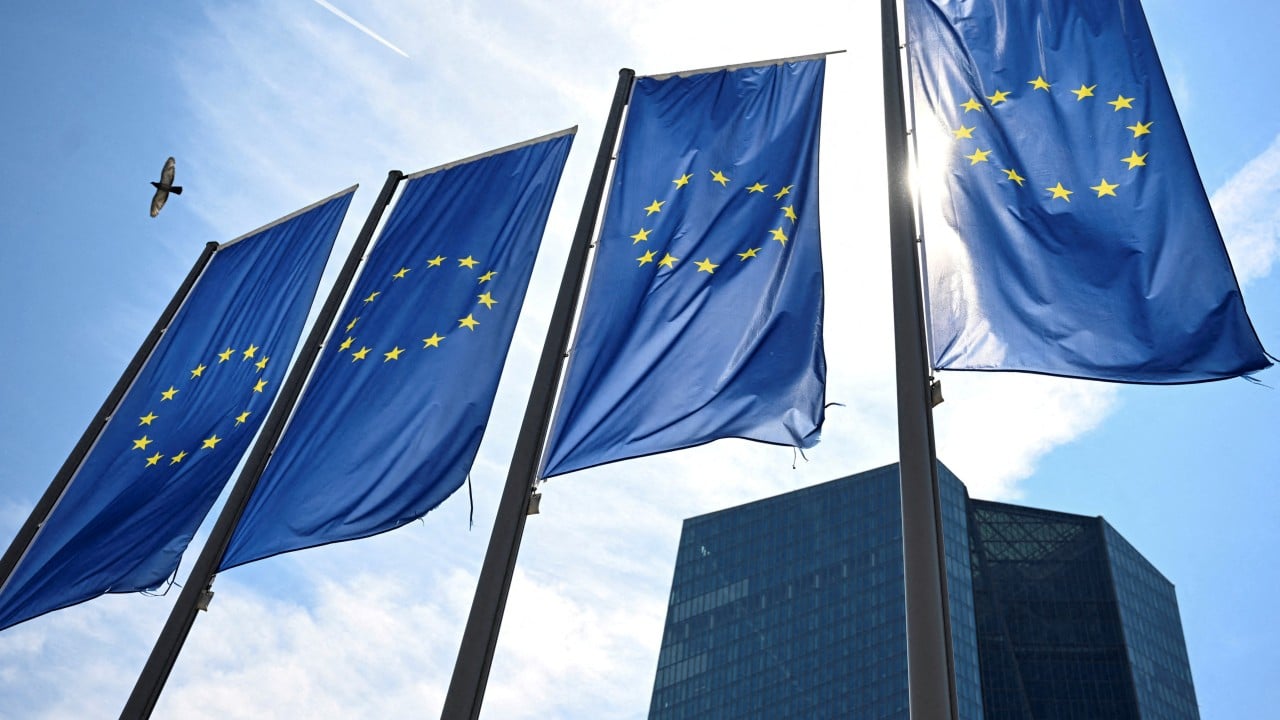
Europe is trying to pull off a geopolitical breakup while still living in the same house as its ex. It doesn't work. The European Union has spent the last two years talking a big game about "de-risking" from China, but the reality on the ground is a chaotic mix of panicked stockpiling, half-baked tariffs, and a massive internal capacity gap. Brussels wants to lead the green revolution without being beholden to the country that actually builds the hardware. It’s a noble goal that is currently running headfirst into a brick wall of economic reality.
If you look at the numbers, the dependency isn't just a "concern." It's the foundation of the European energy transition. China controls about 80% of the global supply chain for solar minerals and components. For lithium-ion battery cells, that number isn't much better. The EU's attempt to slap tariffs on Chinese electric vehicles (EVs) was supposed to protect local manufacturers like Volkswagen and Renault. Instead, it’s mostly just made things more expensive for European consumers while Chinese companies simply look for ways to build factories inside the EU's borders to dodge the taxes.
The core problem isn't just trade policy. It's a lack of physical ability to produce. You can’t just flip a switch and have a gigafactory running at 100% efficiency. You need the raw materials, the refined chemicals, the specialized labor, and—most importantly—the energy prices that don't bankrupt the operation before the first battery rolls off the line. Right now, Europe is struggling with all four.
The Stockpile Paradox
When rumors of trade wars start flying, companies do the only thing they can: they buy everything in sight. Over the past 18 months, European warehouses have been stuffed to the rafters with Chinese-made solar panels and battery components. This "panic buying" was meant to insulate companies against potential tariffs or export restrictions from Beijing.
It backfired.
Because everyone bought at once, prices for solar modules in Europe plummeted due to a massive oversupply. Local European manufacturers, who already have higher overhead, couldn't compete with the fire-sale prices of stockpiled Chinese goods. Companies like Meyer Burger have had to shutter production or move operations to the United States, where the Inflation Reduction Act offers the kind of massive, direct subsidies that Europe's convoluted Green Deal Industrial Plan just can't match.
The EU is basically subsidizing its own irrelevance. By the time the current stockpiles are used up, many of the homegrown "alternatives" might already be out of business. It’s a mess.
Mining Is Not a Popular Conversation
Everyone wants an electric car. Nobody wants a lithium mine in their backyard. This "Not In My Backyard" (NIMBY) sentiment is the single biggest hurdle to European strategic autonomy. The Critical Raw Materials Act aims to ensure that 10% of the EU’s consumption of strategic raw materials is mined domestically by 2030.
Good luck with that.
The permit process for a new mine in Europe can take over a decade. In China, it takes a fraction of that time. Projects in Serbia, Portugal, and Spain have faced massive local protests and legal challenges. If Europe won't dig its own dirt, it has to buy it from someone who will. Currently, that someone is China, which has spent decades buying up mining rights in Africa and South America. Even when the ore is mined elsewhere, the high-end refining—the part that actually requires technical skill and creates the most pollution—is almost entirely centralized in Chinese facilities.
Europe is trying to build the penthouse of a green economy without bothering to pour the concrete for the basement.
The Trust Gap and the Tariff Trap
The EU's move to impose tariffs on Chinese EVs, which can reach up to 35.3% on top of the standard 10% duty, was a loud statement. It was meant to signal that the days of "unfair" state-subsidized competition are over. But the European auto industry is far from a united front. German automakers, who sell a huge chunk of their cars in China, are terrified of retaliation. They know that if Beijing decides to squeeze them, the fallout in Wolfsburg or Stuttgart will be catastrophic.
Tariffs are a blunt instrument. They don't magically create "capacity." They just raise prices. If a Chinese EV costs €25,000 and a comparable European model costs €40,000, a 30% tariff doesn't close the gap; it just makes the Chinese car €32,500. The European car is still more expensive, and the consumer is the one who loses.
Meanwhile, Chinese firms are playing the long game. BYD is building a plant in Hungary. Chery is moving into an old Nissan plant in Spain. They aren't leaving the market; they're moving inside the walls. This creates jobs in Europe, sure, but it doesn't solve the "dependency" issue. The intellectual property, the software, and the profits still flow back to Shenzhen.
Why Diversification Is Failing
- Higher Energy Costs: Industrial electricity in Europe is consistently more expensive than in the US or China. You can't run a chemical refinery on "vibes."
- Bureaucratic Red Tape: The EU is a regulatory powerhouse, but that's a weakness when you need to build infrastructure at breakneck speed.
- Labor Shortages: There's a massive shortage of chemical engineers and specialized technicians needed for the battery supply chain.
- Fragmented Markets: Each EU member state has its own agendas, making a "pan-European" industrial strategy look like a patchwork quilt that's falling apart at the seams.
The Hard Reality of the Green Transition
The dirty secret of the green transition is that it is incredibly resource-intensive. We are trading a dependency on Russian gas for a dependency on Chinese minerals. To truly "ditch" China, Europe would need to accept lower environmental standards for mining, massive government spending that would make fiscal hawks weep, and a significantly slower pace of decarbonization.
Most politicians aren't willing to admit that. They want the green goals, the cheap prices, and the strategic independence all at once. You get to pick two.
If Europe keeps trying to have it all, it will end up with none of it. The "messy bid" to ditch China isn't just a series of policy hiccups. It’s a fundamental clash between the EU's climate ambitions and its industrial reality. Right now, the industrial reality is losing.
If you're a business owner or an investor in this space, stop waiting for a "European Champion" to magically appear and solve the supply chain. You need to look at the second-tier suppliers in countries like Vietnam, India, and Morocco. These are the places where the real diversification is happening, far away from the noisy trade wars between Brussels and Beijing. Don't bet on a policy-driven miracle; bet on the companies that are actually securing physical access to refined materials outside of the main conflict zones.
Start auditing your Tier 2 and Tier 3 suppliers today. If their "non-Chinese" components are just Chinese parts assembled in a different country, you aren't de-risked. You're just paying a middleman. Get eyes on the actual refining source, or you'll be the one left holding the bag when the next round of export controls hits.