Every time a public tragedy strikes a crowded gathering, the predictable machinery grinds into motion. The media flashes breaking updates about manhunts, politicians scramble to draft reactionary security ordinances, and the public demands metal detectors, bag checks, and heavy police visibility at every community event.
It is a comforting script. It is also entirely bankrupt.
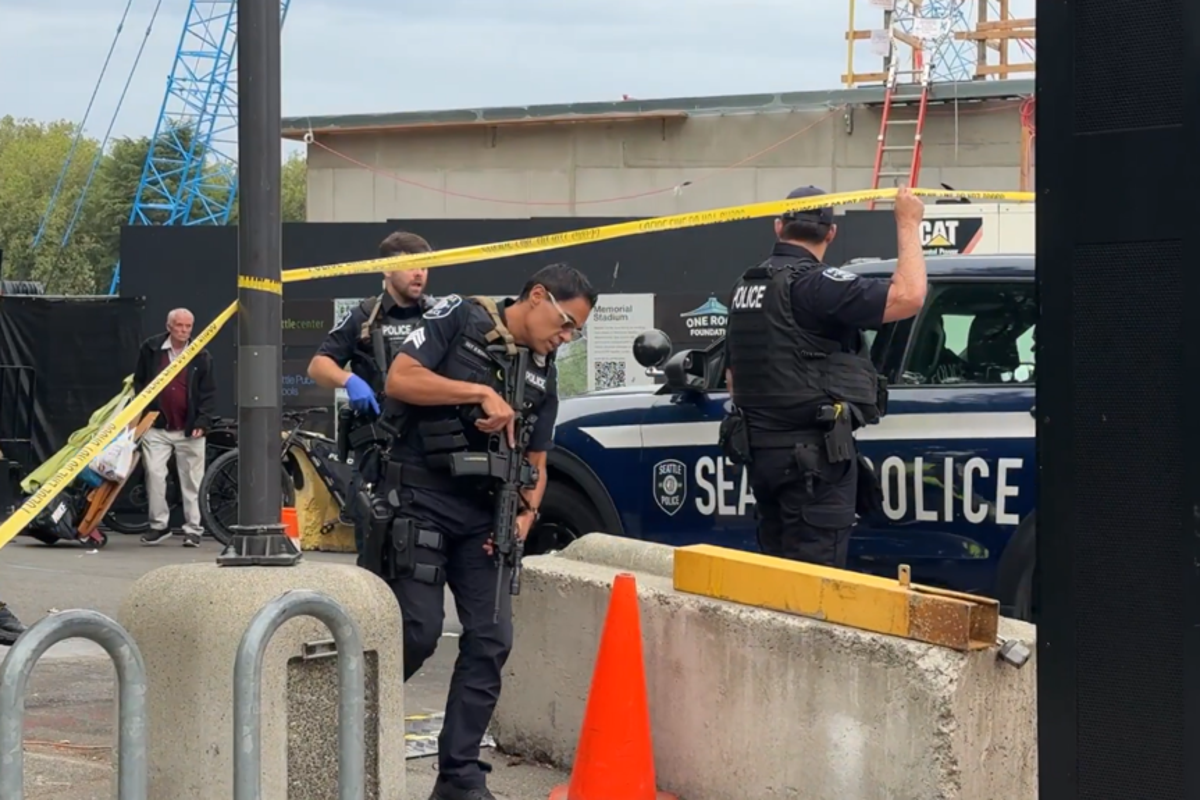
When three people were killed and multiple others injured at a packed Seattle food festival, the immediate narrative focused entirely on the search for a second suspect and the mechanical failure of event security. That is the lazy consensus. It treats violence in public spaces as a perimeter control problem. It assumes that if we just search enough backpacks and deploy enough uniformed officers, human malice will somehow be filtered out at the gate.
I have spent years consulting on high-density public event logistics and urban crowd safety, watching cities blow millions on security theater that does nothing to protect actual human beings. I have seen municipal leaders greenlight million-dollar perimeters while ignoring the basic architectural and behavioral realities of how crowds actually fracture under stress.
Security theater makes organizers feel responsible and politicians look decisive. But it does not save lives. In fact, it often creates a false sense of security that makes chaotic situations far more lethal.
The Fallacy of Perimeter Security
Let us dismantle the core myth of modern event planning: the secure perimeter.
The standard playbook for a street festival or outdoor market involves throwing up temporary chain-link fencing, funneling thousands of attendees through three or four designated entry bottlenecks, and stationing security guards with handheld metal detectors at the checkpoints.
This model assumes that threats originate outside the event and attempt to cross a linear boundary. History demonstrates the exact opposite. Public festival violence rarely involves a tactical infiltration of a heavily guarded perimeter. It usually involves localized disputes that escalate rapidly, domestic incidents spilling into public spaces, or spontaneous acts of violence generated from within the crowd itself.
When you concentrate thousands of people into tight, fenced-in choke points to check their bags, you do not keep them safe. You create a high-density target zone. If a panic erupts or shots are fired near an entry gate, those rigid fences and narrow funnels transform a temporary disturbance into a deadly crush.
We saw this dynamic play out repeatedly in urban transit hubs and open-air venues worldwide. Rigid physical barriers restrict natural dispersal routes. They trap people against metal barricades. When safety protocols focus exclusively on keeping unauthorized items out rather than enabling human beings to scatter safely, you trade one risk for an exponentially worse one.
What Event Organizers Refuse to Admit
The uncomfortable truth is that outdoor public festivals are inherently vulnerable. You cannot completely seal a city street grid without turning a community celebration into a prison yard.
Municipalities accept this risk because they want the economic boost and cultural vitality of public gatherings. But when a shooting happens, they immediately pivot to scapegoating the security contractors for failing to catch a weapon at the gate.
This is a dishonest deflection of responsibility. Handheld metal detectors operated by minimum-wage seasonal workers under fluorescent tent lights are notoriously ineffective. They miss firearms concealed in layered clothing, they fail to catch improvised weapons, and they create massive lines of frustrated citizens standing shoulder-to-shoulder outside the event boundary—ironically creating a dense, unprotected gathering of targets before anyone even reaches the ticket booth.
Imagine a scenario where a city completely abandons the illusion of the checkpoint-driven perimeter. Imagine shifting that budget away from rent-a-cops and metal detectors and investing it entirely into dynamic crowd management, clear sightlines, decentralized medical triage stations, and immediate radio connectivity between street-level staff and rapid-response law enforcement.
It sounds radical to bureaucrats who rely on theater to cover their legal liabilities. But real safety is messy, fluid, and focused on behavioral response rather than static hardware.
The Data Behind Crowd Panic
To understand why traditional festival security fails, look at the physics of human behavior under acute stress.
When gunfire rings out in a confined outdoor festival space, the initial reaction is not orderly evacuation. It is absolute cognitive freeze followed by explosive flight. People do not walk to the nearest exit; they run away from the immediate sound of the threat, trampling barriers, knocking over vendor booths, and creating human bottlenecks.
Studies in urban sociology and emergency management show that fixed architectural barriers—like the temporary steel bike racks and chain-link fencing standard at street festivals—are the primary driver of crush injuries during panic events.
When a crowd of five thousand people surges against a locked or narrow exit gate, the pressure accumulates exponentially within seconds. The individuals at the front of the crush experience compressive asphyxiation long before any law enforcement officer can clear the perimeter or identify a second suspect.
By prioritizing the exclusion of contraband over the physics of crowd dispersal, festival planners build accidental traps. We are prioritizing property security over human fluid dynamics.
Dismantling the Response Playbook
When coverage of the Seattle tragedy dominated the news cycle, the public was fed a steady diet of procedural updates: police combing through surveillance footage, descriptions of the suspects, and statements from local officials vowing a review of festival safety protocols.
Notice what is missing from every single one of those official statements? An admission that the entire model of policing open-air public spaces is outdated.
You cannot police a culture out of violence by adding more cruisers to the perimeter. You can only change how the physical environment responds when violence occurs.
1. Decentralize Access Points
Stop funneling attendees through single-digit entry gates. Wide-open, porous entry models with ambient monitoring are far safer than high-density checkpoints. If an area cannot be monitored without creating a human traffic jam, the venue layout is fundamentally flawed and should be relocated or downsized.
2. Prioritize Egress Over Ingress
Every security plan obsesses over who comes in. The only metric that matters during a critical incident is how fast everyone can get out. Sightlines must remain clear across the entire festival footprint. Vendor trucks, staging equipment, and generator placements must never block natural alleyways or street grids.
3. Train for Behavioral Triage, Not Bag Checks
Bag searches are security theater designed to placate insurance companies. True mitigation relies on roaming spotters trained in behavioral anomaly detection—people who watch for physiological signs of acute agitation, erratic movement patterns, or domestic disputes escalating in real time, rather than staring blankly at a handbag zipper.
The Cost of Comforting Lies
We keep repeating the same cycle because the alternative requires admitting a difficult reality: public life carries inherent risk, and no amount of municipal bureaucracy can legislate human violence out of existence.
As long as we pretend that a line of security guards with metal-detection wands can safeguard a public street festival, we will continue to misallocate resources, build dangerous choke points, and act surprised when tragedy breaches the gate.
Stop demanding more security theater. Start demanding better architecture, smarter urban layouts, and the courage to accept that safety comes from adaptability, not fences.