Stop calling every loud confrontation outside a European university a carbon copy of American campus politics.
That is the laziest shorthand in modern media. When protests and counter-protests erupted around a Spanish conservative campus tour modeled on Charlie Kirk's Turning Point USA format—specifically the campus appearances of figures like Vito Quiles or similar right-wing youth organizers in Spain—anglophone outlets immediately slapped the "Spanish Charlie Kirk" label on the headline and called it a day. They framed the street clashes with anti-fascist demonstrators as an imported culture war, a simple clash between "based" free-speech warriors and "violent" Antifa mobs.
Both sides of that framing are wrong. They miss the history, the political incentives, and the mechanics of how outrage actually gets manufactured in contemporary Spanish politics.
If you want to understand what happened outside those lecture halls, stop looking at Phoenix, Arizona, and start looking at Madrid, Barcelona, and the post-Franco constitutional settlement.
The Myth of the American Copy-Paste
Media commentators love a familiar template. According to coverage in outlets ranging from conservative American aggregators to European political observers, the narrative writes itself: a young, camera-ready Spanish conservative sets up a table or books a university hall to debate left-wing students, anti-fascist counter-protesters show up to shut it down, riot police intervene, and viral clips flood X and TikTok within minutes.
To an American audience, this looks identical to Turning Point USA's "Prove Me Wrong" campus tours. And to be fair, the aesthetic borrowing is intentional. Young Spanish right-wing activists—often aligned with or orbiting parties like Vox and youth networks such as Revuelta—have openly studied American digital media playbooks. They use the same vertical video framing, the same confrontational Q&A microphones, and the same algorithmic hooks.
Here is the nuance the headlines miss: borrowing a camera angle is not the same thing as importing a political ecosystem.
In the United States, campus speech battles revolve around First Amendment absolutism, private university speech codes, and the financial ecosystem of billionaire-backed non-profits. Spain has none of those structural ingredients. Spanish public universities are state-funded institutions governed by post-1978 democratic laws where the line between protected speech, hate speech, and public order is regulated by the Penal Code, not a donor-funded campus speech index.
More importantly, the street-level actors in Spain are not playing out an American script. According to Spanish political analysts and sociologists who study youth mobilization, anti-fascist groups in cities like Madrid, Pamplona, and Barcelona have decades-old roots in neighborhood assemblies, student syndicates, and anti-Francoist memory movements. They did not materialize because someone watched a YouTube clip from UC Berkeley.
How the Outrage Loop Actually Works
I have spent years watching political campaigns and digital media operations burn millions of euros trying to manufacture organic youth enthusiasm. Nine times out of ten, polished ad buys fail. What succeeds—every single time—is predictable, filmed friction.
When a provocative speaker announces an event at a public university known for left-wing student activism, nobody involved is surprised by what happens next.
- The Announcement as a Flare: The organizer announces a campus appearance, often framing it as a defense of free expression against "woke" censorship.
- The Counter-Mobilization: Local anti-fascist and left-wing student groups issue calls to block the event, viewing the speaker not as a benign debater, but as an active promoter of far-right ideology entering a historically antifascist space.
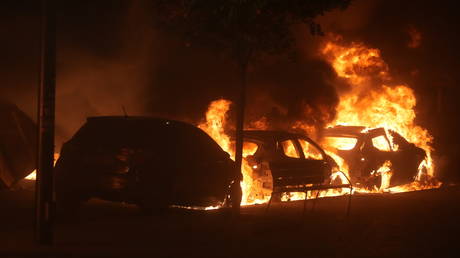
- The Camera Setup: Before a single word is spoken inside the auditorium, phones and professional cameras are already rolling outside. The physical clash—shoving, chanting, police batons, smoke flares—is not a breakdown of the event. The clash is the event.
- The Algorithmic Payoff: Within two hours, edited 30-second clips circulate globally. Right-wing accounts share footage of aggressive counter-protesters to prove the left is inherently violent and authoritarian. Left-wing accounts share footage of police charges or far-right salutes from the fringes of the crowd to prove fascism is being normalized.
Notice what disappears in step four: whatever was actually supposed to be discussed inside the room.
Dismantling the "People Also Ask" Fallacies
When clips like these go viral, search engines fill up with predictable questions. Let's look at the assumptions baked into them—and why most of those assumptions fall apart under scrutiny.
"Is Spain experiencing an Antifa uprising?"
No. Using "Antifa" as a singular proper noun—as if it were a centralized organization with a headquarters and a membership card—is an American media habit that obscures more than it clarifies. In Spain, antifascismo is a decentralized, heterogeneous current spanning radical left student unions, autonomous neighborhood collectives, and regional independence movements, particularly in Catalonia and the Basque Country. Calling every street scuffle an "Antifa riot" treats a complex, localized history of Spanish political street mobilization like a monolithic franchise.
"Are Spanish universities censoring conservative voices?"
That depends entirely on who you ask, and the legal reality is messier than viral clips suggest. University rectors in Spain frequently face an impossible bind: under Spanish law, public institutions must uphold freedom of expression and ideological pluralism, yet university administrators are also legally responsible for campus safety and preventing disruptions to academic life. When a university administration denies room access or cancels an event citing security risks, critics call it ideological censorship. When they allow it and police have to clear a plaza with riot gear, critics accuse the administration of facilitating extremism. Neither outcome satisfies anyone, because the friction itself is the desired political product.
"Why is a 'Spanish Charlie Kirk' gaining traction now?"
Because legacy Spanish media lost its monopoly on youth attention years ago. According to data from the Reuters Institute Digital News Report, trust in traditional news outlets in Spain has consistently ranked among the lowest in Western Europe, while news consumption via social platforms like TikTok, Instagram, and YouTube has surged among Spaniards under 30. Young conservatives realized that traditional party press conferences put people to sleep, whereas confrontational street interviews and campus debates generate millions of views for the cost of a wireless microphone.
The Asymmetry Nobody Wants to Admit
If you want a genuinely honest assessment of this dynamic, you have to acknowledge the uncomfortable truths that both sides try to bury.
First, for the right-wing organizers: framing these events purely as innocent exercises in Socratic dialogue is disingenuous. In political communication, venue selection is a strategic weapon. Booking a talk at a faculty known for militant left-wing activism—rather than a neutral municipal auditorium—is done precisely because the resulting blockade guarantees national media coverage. Without the counter-protest, a campus speech by a partisan commentator gets 40 attendees and zero press. With a riot police deployment outside, it becomes an international headline.
Second, for the anti-fascist counter-protesters: trying to physically blockade a speaker on a university campus is a strategic gift to your opponent. Every time counter-protesters throw objects, block entrances, or clash with police, they validate the exact narrative the speaker came to sell. You do not defeat a provocateur by giving them the exact visual evidence they need to claim victimhood and authoritarian suppression. You hand them their fundraising pitch on a silver platter.
The Blind Spot of the Contrarian View
There is a real risk in reducing these confrontations strictly to media mechanics and algorithmic incentives. If you treat everything as cynical theater, you miss the genuine political anxieties underneath.
Young Spaniards face some of the highest youth unemployment rates in the European Union, an acute housing affordability crisis in major cities like Madrid and Barcelona, and deep polarization over national identity, immigration, and historical memory. For many young people on the right, the frustration with perceived progressive orthodoxy in academia and media is real, not just a performance for clicks. For many young people on the left, the rise of hard-right rhetoric and the rehabilitation of nationalist symbols feel like an existential threat to democratic norms won after decades of dictatorship.
Ignoring those underlying grievances turns political analysis into mere cynicism. The grievances are real. The tragedy is that the medium of viral confrontation strips away every ounce of substance needed to address them.
What Actually Works Instead of Outrage Theater
If political movements, university administrators, and media consumers actually want to break out of this loop, standard institutional responses will keep failing.
- For University Administrators: Stop making ad-hoc cancellations at the eleventh hour. Last-minute bans based on vague security concerns are the single fastest way to turn a minor speaker into a free-speech martyr. Establish clear, transparent, content-neutral rules for external event bookings well in advance, enforce them uniformly, and separate peaceful protest zones from event entrances cleanly.
- For Activists and Counter-Protesters: Understand attention economics. In an algorithmic media environment, silence and empty rooms are lethal to provocations; physical confrontations are rocket fuel. Counter-programming—hosting competing events, rigorous public debates, or substantive policy forums elsewhere—denies the provocateur the visual conflict their distribution model depends on.
- For Readers and Viewers: Watch the edges of the frame. Whenever you see a 20-second clip of a campus clash labeled as proof that a country is "falling to fascism" or "burning from Antifa riots," ask what happened five minutes before the camera started recording and who owns the account that edited the cut.
Modern political outrage does not happen by accident, and it does not translate neatly across borders just because the thumbnails look the same. Until you stop rewarding the clip with your reflexive outrage, the cameras will keep rolling—and the actual conversation will never even begin.