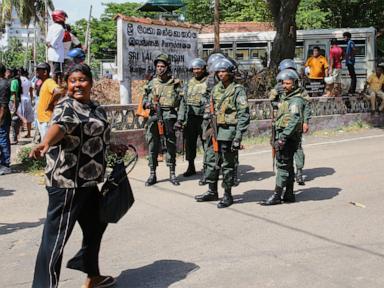
The international media loves a predictable tragedy. When the Mahara prison riot in Sri Lanka left dozens dead and over a hundred injured, the global press rolled out its favorite template. They blamed "overcrowding." They lamented "subhuman conditions." They pointed fingers at panicked inmates fearing a virus outbreak and called for vague, humanitarian policy overhauls.
It is a lazy, comfortable narrative. It is also entirely wrong.
Treating a prison riot as a spontaneous explosion of desperate people under pressure misses the entire mechanics of carceral power. Overcrowding does not cause riots. If raw density caused violence, Tokyo subway cars during rush hour would be war zones. Riots happen when the implicit contract between the state and the captive population breaks down entirely.
The bloodbath at Mahara was not an administrative failure of space management. It was the explosive consequence of a judicial system that uses indefinite detention as a substitute for actual governance, mixed with a highly lucrative, state-sanctioned shadow economy that thrives on keeping people locked up without a trial.
If you want to understand why prisons burn, you have to stop looking at the cells and start looking at the dockets.
The Overcrowding Myth: Fixing the Wrong Metric
Human rights organizations constantly scream about capacity percentages. They tell you that Mahara was holding thousands of inmates over its intended limit, as if building a bigger box would magically solve the underlying rot.
This focus on physical capacity is a red herring.
When you increase prison capacity without changing judicial incentives, the state simply fills the new space. It is the carceral equivalent of induced demand in traffic engineering. Build more lanes, get more cars. Build more wings, get more prisoners.
The real metric that matters is the ratio of sentenced prisoners to remand prisoners.
In Sri Lanka, and across much of the developing world, the vast majority of people behind bars have not been convicted of a single crime. They are waiting. They wait months, sometimes years, just for a preliminary hearing. They are legally innocent, yet they are subjected to the exact same punitive environment as convicted murderers.
Imagine a scenario where you are arrested on a minor, non-violent drug possession charge. You cannot afford bail because the system is designed to favor wealthy syndicates. You are thrown into a facility where your trial date is a moving target controlled by a bloated, indifferent bureaucracy. Your despair does not come from sharing a room with thirty other men; it comes from the absolute certainty that the legal system has forgotten you exist.
That is not a logistical problem. That is a psychological torture chamber. The riot is not a demand for better ventilation; it is a desperate, violent bid to force the outside world to acknowledge a stalled legal clock.
The Remand Trap and Judicial Sclerosis
Let us talk about the battle scars of criminal justice systems in South Asia. Having analyzed carceral data across developing jurisdictions, the pattern is uniform: the judiciary uses the prison system as a trash can for its own inefficiency.
When a police force is judged on arrest metrics rather than conviction rates, they sweep the streets. They arrest small-time users, political dissidents, and the impoverished. The courts, burdened by ancient procedural codes and a lack of digitized record-keeping, cannot process the influx.
The result is judicial sclerosis.
- Case stagnation: Files get lost. Judges get transferred. Hearings are postponed because there are not enough transport vehicles to bring inmates to the courthouse.
- The bail barrier: Statutory bail exists on paper, but judges routinely deny it out of a misplaced sense of public safety or sheer risk aversion.
- The representation vacuum: Public defenders are overworked and underpaid, meaning a remand prisoner's file sits at the bottom of a stack for years.
When the pandemic hit the prison system, it did not create a new fear; it accelerated an existing calculus. Inmates did not riot because they were afraid of getting sick. They rioted because the courts completely shut down, turning their indefinite detention into a potential death sentence without a trial. The state suspended their constitutional right to a speedy resolution while keeping the cage doors firmly locked.
To call that a "prison riot" is an insult to intellect. It was a rebellion against systemic administrative kidnapping.
The Black Market Economy Behind the Walls
The conventional critique assumes that prisons are state-run institutions that occasionally lose control. The truth is far more sinister: prisons are highly functioning capitalistic marketplaces where the currency is contraband, protection, and freedom.
Inside facilities like Mahara, a complex hierarchy dictates survival. Guard salaries are notoriously low. The economic incentive to facilitate the smuggling of narcotics, mobile phones, and tobacco is overwhelming. The very substances that the state claims to be fighting outside are traded openly inside, often with a premium markup that enriches the institutional hierarchy.
When a disruption occurs—whether it is a sudden lockdown, a transfer of power among guard factions, or a genuine threat of a disease outbreak—it threatens this internal economy.
When the state cuts off visits from family members under the guise of safety protocols, they do not just cut off emotional support; they cut off the primary pipeline for extra food, medicine, and cash. The internal market crashes. Prices skyrocket. Alliances splinter.
The explosion of violence is rarely a unified front against the guards. It is often a turf war triggered by artificial scarcity, weaponized by different factions within the prison elite to realign the black market supply chains. By reporting these events as mere "clashes with authorities," the mainstream press covers up the systemic corruption that makes these institutions profitable for the people running them.
Stop Trying to Reform the Prisons
Every time a prison burns, the immediate policy response is predictable: form a committee, write a report, promise institutional reform, and allocate funds for better infrastructure.
This approach is fundamentally broken because it treats the prison as an isolated island.
You cannot fix a prison by changing the prison. You fix a prison by starving it of bodies.
The entire framework of carceral reform must be inverted. Instead of funding better jails, governments must penalize judicial delays. If a prosecutor cannot bring a case to trial within 90 days, the prisoner must be released on personal recognizance, no exceptions. If the police cannot produce evidence, the charges must be dropped automatically.
| Metric | Current Reform Focus | The Hard Reality |
|---|---|---|
| Success Measure | Expanded bed capacity, new guard towers | Reduced pretrial detention days, swift case disposal |
| Funding Target | Concrete, surveillance tech, riot gear | Digital docket systems, public defense infrastructure |
| Policy Trigger | Human rights reports on cell conditions | Mandatory release deadlines for unconvicted inmates |
We must strip the executive branch of the power to use pretrial detention as a punitive tool. Until the cost of keeping an innocent person in jail exceeds the cost of fixing the judicial backlog, prisons will continue to overflow, markets will continue to exploit the vulnerable, and the match will eventually be struck again.
The fire next time will not be an anomaly. It will be the direct result of choosing to fund cages instead of courts.