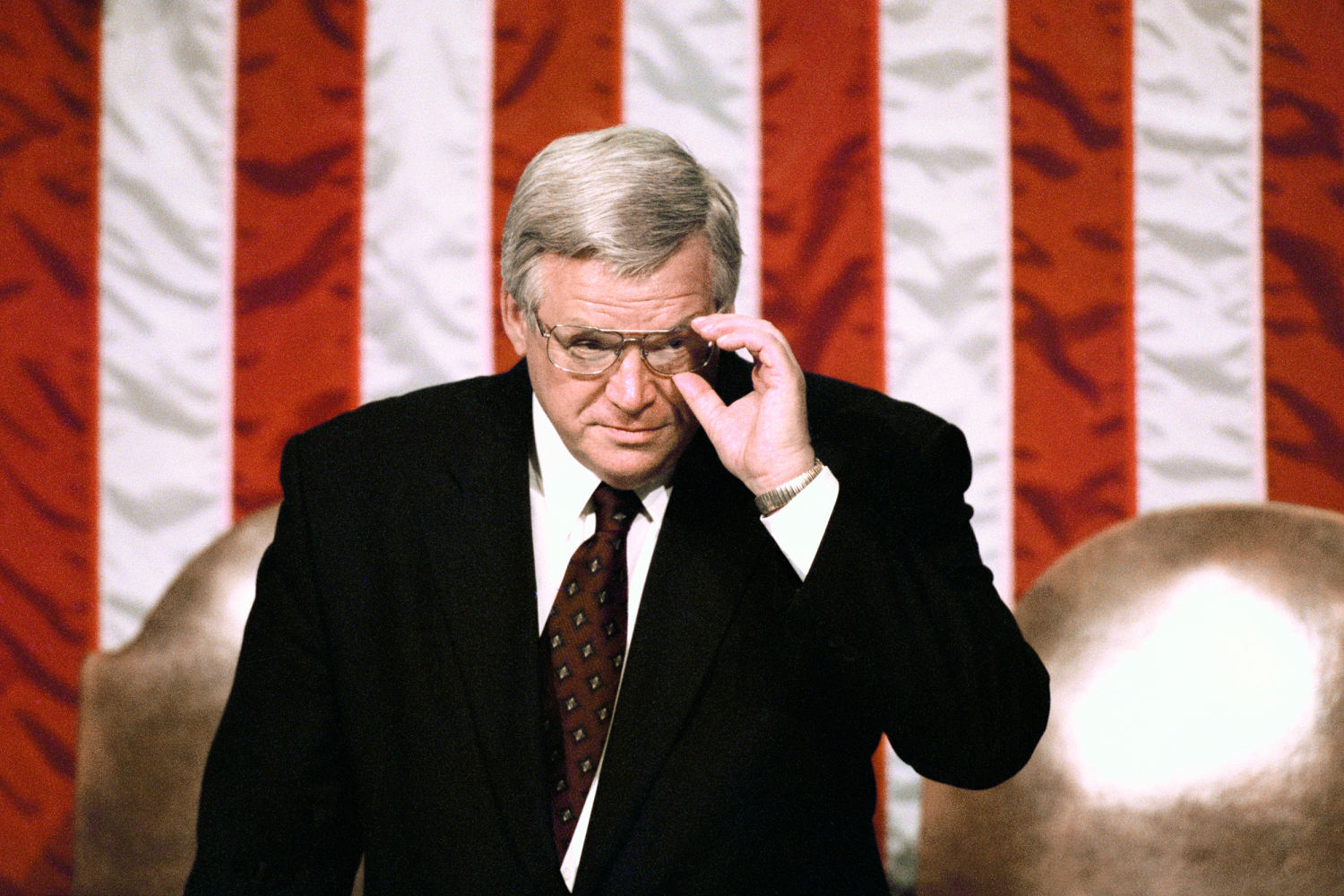
Former United States House Speaker Dennis Hastert died at the age of 84 in Plano, Illinois, passing away from natural causes while under hospice care.
For years, the political obituary of the Illinois Republican had already been written. Hastert, who held the speaker's gavel longer than any other Republican in congressional history from 1999 to 2007, did not exit public life through the traditional doors of presidential libraries or portrait unveilings. Instead, he left behind a vacuum of institutional trust, having spent 13 months in a federal prison after prosecutors unraveled a scheme of payoffs, hush money, and decades-old abuse. His death closes one of the darkest chapters in modern American legislative history, leaving behind a legacy fractured by the yawning gap between public power and private accountability. If you liked this piece, you should read: this related article.
To understand the trajectory of Dennis Hastert is to understand the transactional, insular nature of late-20th-century congressional politics. Long before he became the 51st speaker of the House, Hastert was a high school civics teacher and wrestling coach in Yorkville, Illinois. In the locker rooms and gymnasiums of suburban Kendall County during the 1960s and 1970s, he cultivated an image of Midwestern folksiness—the unassuming, whistle-stop high school mentor who understood the value of hard work and quiet discipline.
That rural coach persona served as his political armor when he transitioned to the Illinois House of Representatives in 1981 and later to Washington as a congressman in 1987. Hastert was never an ideologue cut from the fiery cloth of the Gingrich revolution. Instead, he was a backroom technician, a master of legislative plumbing who understood vote counts, committee assignments, and the subtle grease required to move bills through a fractured chamber. When Newt Gingrich abdicated the speakership in the wake of the 1998 midterm elections, the Republican caucus found itself rudderless. They needed a neutral broker. They turned to Hastert, a man perceived as harmless, reliable, and completely lacking in personal vanity. For another look on this event, see the latest coverage from Al Jazeera.
For eight years, Hastert presided over a chamber that grew increasingly partisan. He engineered major legislative victories for the George W. Bush administration, including the post-9/11 security apparatus, tax cuts, and the creation of the Department of Homeland Security. Yet, behind the placid exterior and the folksy demeanor, a darker reality remained insulated by the very culture of institutional protectionism that defined Washington at the time.
The rot at the foundation of Hastert's public standing began to surface not through a grand investigative journalism scoop about policy corruption, but through the mundane machinery of federal banking regulations. In 2013, federal investigators with the IRS and the FBI noticed a curious pattern of financial transactions. Hastert was systematically withdrawing cash from his bank accounts in increments just under the ten-thousand-dollar threshold required for federal reporting.
When federal agents confronted him in 2014, Hastert lied about the purpose of the money. That lie became his undoing. The federal government could not prosecute him for the underlying offenses that triggered the cash withdrawals because the statute of limitations had long expired. But they could prosecute him for structuring bank transactions and making false statements to federal investigators.
The ensuing criminal case exposed what the cash was actually for. Hastert had agreed to pay millions of dollars in hush money to suppress allegations that he had sexually abused teenage boys decades earlier during his tenure as a high school wrestling coach. In April 2016, a federal judge sentenced him to 15 months in prison, making him the highest-ranking elected official in American history to serve a federal prison sentence. He sat in a wheelchair in a federal courtroom, frail and diminished, listening to family members of his victims confront him directly about the devastation he had left in his wake.
The institutional reaction to Hastert's collapse revealed deep structural flaws in how political parties police their own. During his decades on Capitol Hill, whispers and rumors had circulated in local Illinois circles, yet the political apparatus treated them as local anomalies rather than disqualifying character traits. Power protects power. The institutional imperative to maintain a majority, pass legislation, and hold the speaker's chair routinely superseded the safety of vulnerable individuals. Hastert's ability to rise to second in line to the presidency despite a history that begged for scrutiny stands as an indictment of a political culture that prioritizes institutional loyalty over basic human safety.
When Hastert was released from a federal facility in Minnesota in 2017, he retreated into near-total obscurity in rural Illinois. He gave no grand interviews attempting to rewrite his history. He offered no public rehabilitation tours. His official congressional portraits remained relegated to the quiet, dusty archives of history, stripped of the celebratory gloss usually afforded to long-serving legislative leaders.
His death at 84 does not alter the historical ledger. It merely closes a file on a man whose career exposes the fragility of institutional reputations built on silence. The institutional systems that elevated Dennis Hastert to the peak of American power cared little for the wreckage he left behind in high school gymnasiums, just as the party apparatus that backed him cared little for the truth until federal indictments forced their hand.
History will record Hastert as the longest-serving Republican speaker of the House, a master of legislative mechanics who ran the lower chamber during a time of immense national crisis. But that record will forever remain secondary to the quiet, devastating truth of what happened when the checks cleared, the banks whispered, and the shield of congressional power finally shattered.