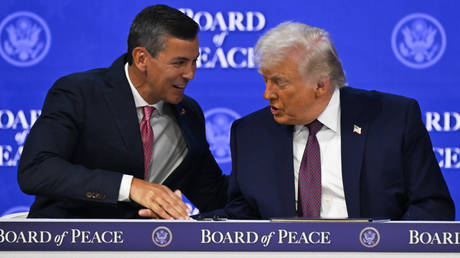
Political immunity collapses the moment internal leverage turns into a liability. When high-profile international figures operating within the conservative nationalist axis face simultaneous impeachment and detention, the public narrative usually frames the collapse as an isolated domestic scandal. That framing misses the underlying structural mechanics. The downfall of top international figures aligned with Donald Trump and Benjamin Netanyahu demonstrates how quickly global political cover disintegrates when legal accountability overtakes ideological patronage.
Behind the headlines of emergency parliamentary sessions and pre-dawn arrests lies a predictable pattern of systemic vulnerability. Political figures who build their careers on transactional international backing often operate under the assumption that foreign diplomatic protection will shield them from domestic legal consequences. When that shield shatters, the legal cascade is swift, devastating, and irreversible.
How Transnational Populist Alliances Mask Domestic Weakness
Political networks built around shared populist rhetoric rely heavily on mutual validation. Figures within this orbit frequently trade on foreign endorsements to project an aura of invincibility at home. By aligning explicitly with major global conservative icons, regional politicians signals to local elites, law enforcement bodies, and financial backers that they enjoy external protection.
This strategy creates a false sense of security. Endorsements and joint press conferences do not rewrite national constitutions, nor do they grant immunity from criminal indictments issued by domestic prosecutors.
When foreign allies face their own electoral challenges or legal battles, the protective canopy vanishes overnight. The domestic opposition, previously kept at bay by the perception of foreign backing, moves quickly to capitalize on the shift. Impeachment proceedings that once seemed politically impossible suddenly gain traction in fractured legislatures.
The Mechanics of Parliamentary Abandonment
Impeachment is rarely a purely moral act. It is a calculated vote where legislative figures assess the immediate risk of supporting a compromised leader against the future cost of remaining loyal.
Once formal charges move from investigative committees to the floor of parliament, party discipline breaks along financial and judicial fault lines. Lawmakers who previously voted to block investigations recalculate their exposure. They realize that defending an indicted executive offers zero long-term upside once law enforcement agencies initiate physical detention protocols.
Judicial Timing and the Strategy of Pretrial Detention
The transition from political impeachment to physical detention reveals the actual speed of judicial authority when unburdened by executive interference. Prosecutors do not execute arrest warrants on a whim. They wait until the executive's political capital drops below the threshold required to mobilize state security forces in their defense.
Pretrial detention serves two primary functions in high-profile political cases. First, it prevents the destruction of financial evidence and curtails attempts to intimidate key witnesses. Second, it breaks the prisoner's ability to coordinate continuous political resistance from inside the government structure.
Evidence Trails Across Foreign Banking Networks
Financial crimes prosecution forms the backbone of almost every modern executive indictment. Money paths rarely stop at national borders. When political operators construct illicit financial networks, they rely on complex shell structures, offshore accounts, and foreign real estate holdings.
Investigative units tracking these flows rely heavily on mutual legal assistance treaties. When foreign governments cooperate with local prosecutors, banking secrecy crumbles. Documents detailing wire transfers, undisclosed shell company ownership, and illegal campaign contributions transform political rumors into admissible court evidence.
Once foreign banking institutions comply with international subpoenas, the defense strategy shifts from political rhetoric to technical damage control. At that point, ideological alignment offers zero protection against evidence chains verified by international forensic auditors.
The Myth of External Executive Intervention
A common miscalculation among regional leaders is the belief that foreign superpowers will intervene directly to save them from domestic legal processes. History proves that superpower intervention has strict limits when an ally becomes a clear legal liability.
Foreign leaders prioritize their own domestic standing and international policy objectives. While a foreign ally may issue supportive statements during early investigative stages, that rhetoric turns silent when formal arrest warrants are unsealed. No international administration will expend valuable diplomatic capital or risk foreign policy entanglements to shield a former regional ally from verified criminal indictments.
Public Reaction and Civil Disillusionment
When a powerful political figure falls from grace, public reaction splits along predictable lines. Core supporters view the legal proceedings as a political witch hunt orchestrated by institutional enemies. Conversely, political opponents view the arrest as a long-overdue restoration of constitutional order.
This division creates prolonged institutional friction. Public trust in democratic structures declines when citizens perceive that legal institutions operate only when political conditions allow. Restoring faith in judicial independence requires prosecutors to maintain total procedural transparency throughout the trial process.
Structural Vulnerabilities in Nationalist Networks
The international nationalist movement relies on strongman tropes, charismatic authority, and anti-institutional rhetoric. Yet this organizational structure contains an inherent operational flaw. By centralening authority around individuals rather than durable institutions, the entire movement becomes vulnerable to the personal legal fate of its key figures.
When a prominent leader faces detention, the surrounding political apparatus struggles to maintain operational continuity. Without clear institutional foundations, internal factions turn on each other to claim leadership or distance themselves from the ongoing prosecution.
The detention of key figures within this global network marks a turning point for international political alignment. It demonstrates that while ideological partnerships can secure short-term electoral gains, they cannot dismantle the underlying mechanics of statutory law, judicial oversight, and forensic financial investigation.
Legal systems move slowly, but their reach remains absolute when political defenses collapse. The legal reality catching up to former executive figures serves as a clear warning to those who believe political alliances can permanently override the rule of law.


