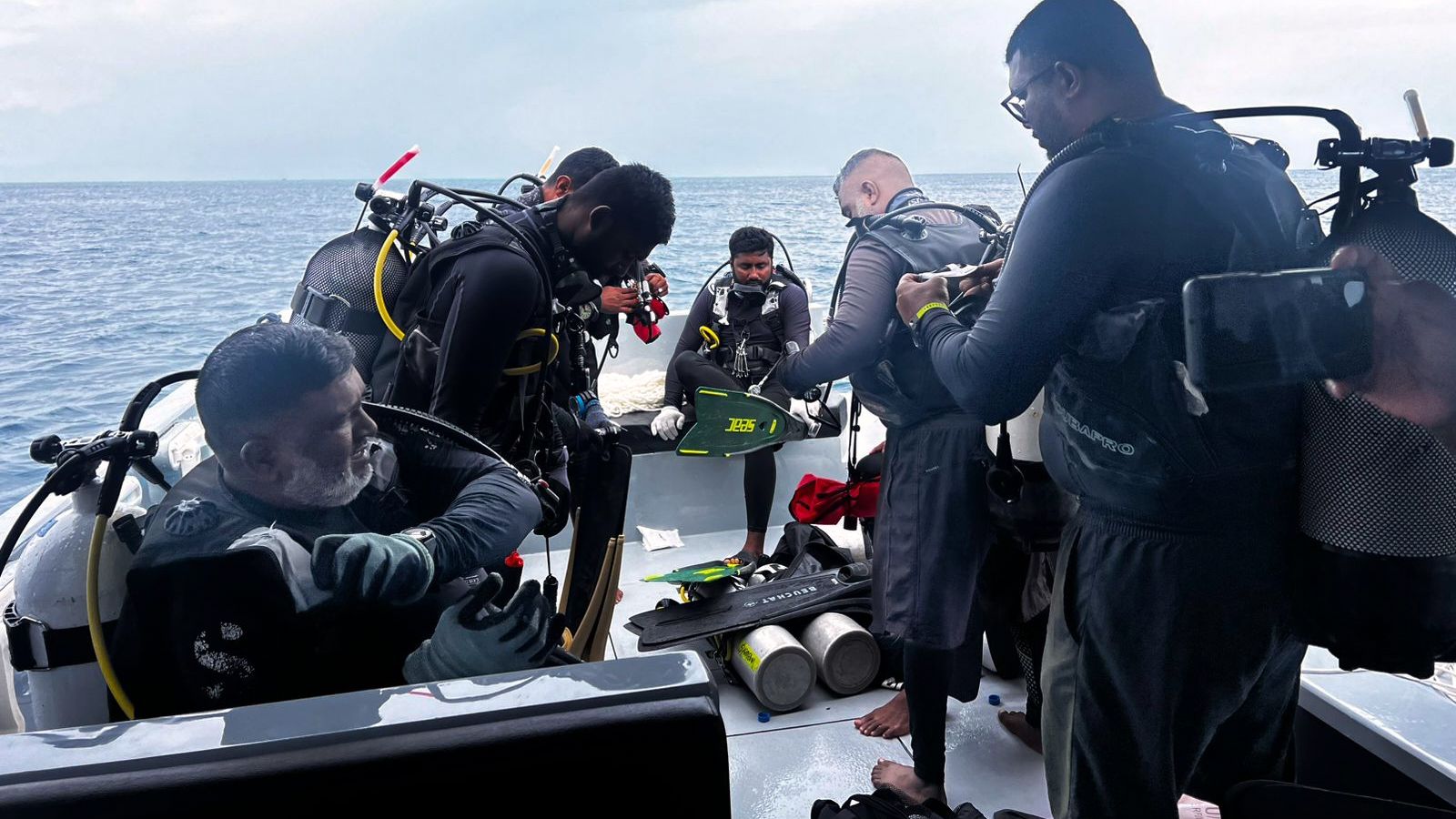
The allure of the deep ocean routinely pushes human endurance to its absolute limits, sometimes with catastrophic results. When news broke of a recovery operation in the labyrinthine underwater caves of the Maldives, 20 storeys beneath the surface, the public narrative immediately shifted to a familiar script: tragic miscalculation, hostile environments, and the inherent dangers of extreme sports. But focusing solely on the grim geography of where bodies are found misses the systemic failures that drive these incidents. The reality of ultra-deep technical diving is that the margin for error does not exist.
At a depth of 60 meters—roughly 200 feet or 20 storeys down—the physical pressure on the human body is seven times greater than at sea level. This environment changes human physiology in ways that turn standard equipment and normal breathing gases into active hazards. To understand why experienced divers perish in these systems, one must look beyond the physical claustrophobia of the caves and examine the lethal intersection of gas narcosis, equipment dependency, and the psychological trap known as the "perceived expertise" loop. If you found value in this post, you should look at: this related article.
The Anatomy of Deep Water Failure
Deep underwater caves are not merely static rock formations. They are dynamic, high-pressure environments where visibility can vanish in a single heartbeat. When a diver kicks up silt from the floor of a cave, the particles remain suspended in the water, instantly reducing visibility to zero. This is a "silt-out," a condition that turns an exit route invisible.
The physics of breathing at 20 storeys down introduce immediate neurological impairments. At these depths, the nitrogen in standard compressed air becomes highly intoxicating. This phenomenon, known as nitrogen narcosis, produces a feeling of euphoria or severe disorientation similar to alcohol intoxication. A diver suffering from severe narcosis loses the ability to read gauges accurately, track time, or make rational decisions during an emergency. For another perspective on this event, refer to the latest update from AFAR.
To bypass this, technical divers use Trimix, a specialized blend of helium, oxygen, and nitrogen. Helium replaces a portion of the nitrogen to reduce the narcotic effect. However, helium conducts heat away from the body much faster than standard air, accelerating hypothermia. It also introduces the risk of High-Pressure Nervous Syndrome, which causes tremors and cognitive slowing.
The equipment required to survive at this depth is immensely complex. Divers rely on closed-circuit rebreathers, units that recycle exhaled breath by scrubbing carbon dioxide and adding precise amounts of oxygen. A rebreather is essentially a wearable life-support lab. If the oxygen sensors fail, or if the chemical scrubber becomes saturated, the diver can slip into unconsciousness without warning.
The Psychological Trap of Technical Certification
The commercialization of extreme tourism has created a dangerous disconnect between certified capability and actual survival skills. The global diving industry operates on a multi-tiered certification system. As a diver accumulates logged dives, they advance through various levels of technical qualification.
This progression can foster a false sense of security. Passing a course in a controlled, predictable environment does not prepare a person for the sensory deprivation of a genuine emergency in a remote location.
The Illusion of Control
Many deep-water accidents involve individuals who held advanced certifications and possessed high-end gear. The issue is rarely a lack of theoretical knowledge. Instead, it is the inability to manage panic when multiple minor equipment variances occur simultaneously.
In a standard open-water dive, a panicked individual can make a controlled emergency swimming ascent to the surface. In a cave system 20 storeys down, that option is physically blocked by millions of tons of solid rock. The only way out is through the cave network, a process that requires absolute emotional control under extreme physiological stress.
The Problem with Remote Logistics
The Maldives is globally celebrated for its shallow reefs and vibrant marine life, but its deep geological structures remain largely unregulated and unmapped. Conducting ultra-deep technical dives in remote island nations introduces severe logistical vulnerabilities.
- Hyperbaric Infrastructure: If a diver surfaces too quickly to escape an emergency, they develop severe decompression sickness. Treating this requires immediate access to a hyperbaric recompression chamber. In remote archipelagos, the nearest functional chamber may be hours or days away by boat or seaplane.
- Gas Purity and Blending: Mixing Trimix requires specialized partial-pressure blending equipment and highly accurate analysis. A variance of even two percent in an oxygen or helium mix can prove fatal at 60 meters. In remote regions, verifying the quality control of gas blending relies entirely on the infrastructure of local operations, which may lack rigorous oversight.
- Search and Recovery Capabilities: When an accident occurs at these depths, local emergency services are rarely equipped to respond. Recovery operations must be carried out by volunteer teams of elite technical divers, often flying in from other countries. This delays the recovery of evidence, making it difficult to determine whether equipment failure or human error triggered the event.
The Mechanics of Gas Management and the Point of No Return
To understand how a dive turns fatal, one must look at the strict mathematical rules of gas management. Technical cave diving relies on the "Rule of Thirds." A diver uses one-third of their gas supply to penetrate the cave, one-third to exit, and reserves the final third for unforeseen emergencies.
At 20 storeys below the surface, gas consumption accelerates dramatically due to the ambient pressure. A cylinder of air that lasts an hour at the surface will be exhausted in less than ten minutes at 60 meters.
Surface Consumption: 1 Bar/Minute
60 Meters Depth: 7 Bar/Minute (7x acceleration)
When a diver encounters a problem—such as getting wedged in a narrow restriction or losing the guideline that leads to the exit—the respiratory rate increases due to anxiety. This surge in breathing quickly decimates the emergency gas reserve. Once the reserve is crossed, the timeline to survival shrinks to minutes.
The physical location where bodies are recovered often reveals the final moments of this mathematical collapse. Divers are frequently found near restrictions or tight turns in the cave system, indicating that they became disoriented, lost the guideline, and exhausted their gas while searching for the exit path in total darkness.
Regulating the Unregulatable
The recurring tragedies in deep-water caves raise questions about regulatory oversight in the extreme tourism sector. Some nations have implemented strict permits and mandatory local guides for cave systems, while others leave the activity completely unregulated, viewing it as a matter of personal risk assessment.
Imposing bans on deep diving rarely works. It simply pushes the activity underground, leading divers to explore remote locations without notifying local authorities or leaving dive plans behind. A more effective approach involves strict supply-side regulation, where businesses are prohibited from blending ultra-deep gas mixes or renting specialized rebreather components without verifying a diver's local experience and comprehensive medical clearance.
The hard truth of extreme exploration is that no amount of technology can completely mitigate the hostility of the deep ocean. The human body was never designed to exist under seven atmospheres of pressure inside a flooded mountain. True safety in technical diving does not come from advanced gear or a stack of certification cards. It comes from the rare willingness to turn back when the environment dictates, acknowledging that the ocean always holds the ultimate advantage.