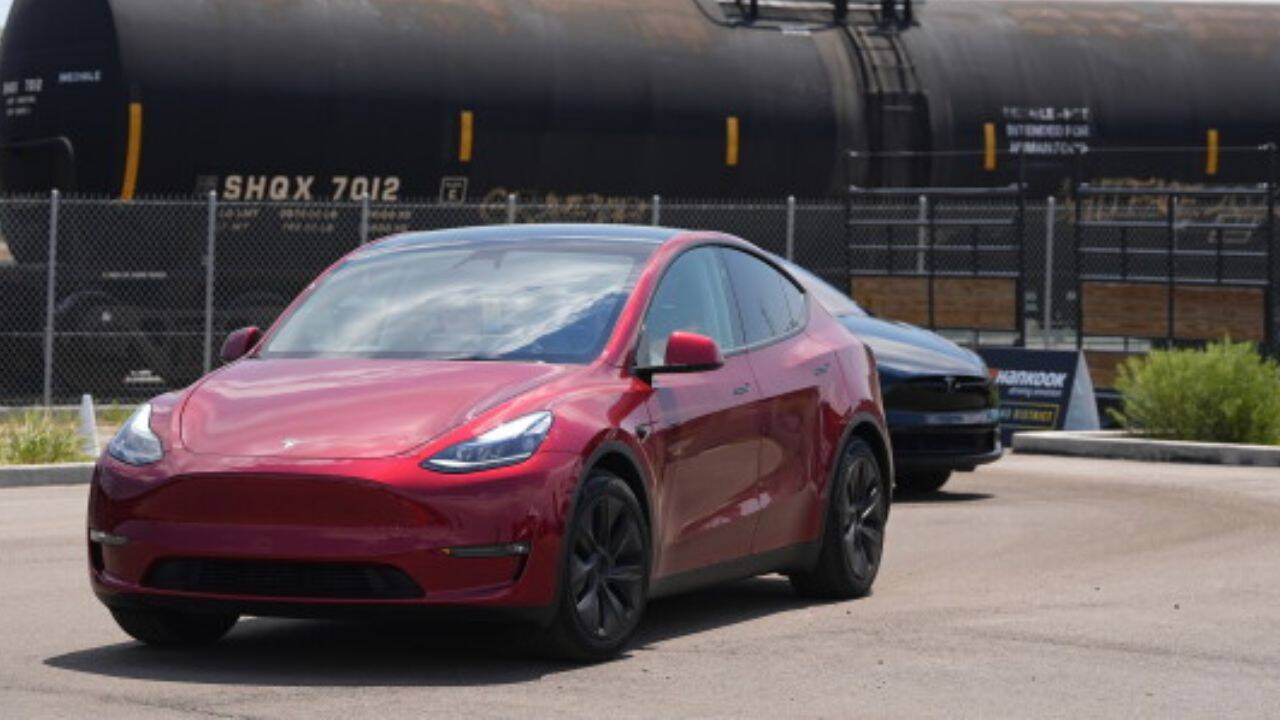
Another collision, another life extinguished on an American highway. When a 71-year-old pedestrian was struck and killed on a California freeway by a vehicle operating under automated driver assistance, the initial shock quickly dissolved into a familiar news cycle. Public outrage flared for a brief window, stock prices flickered, and federal regulators issued standard statements regarding ongoing evaluations. Then the news cycle moved on.
Yet the underlying mechanics of these tragedies remain largely unexamined by the mainstream public. The fundamental issue is not merely software failure or driver negligence. The crisis centers on a dangerous mismatch between human cognitive limits and the capabilities of partial automation technology currently deployed on public roads.
The Illusion of Total Control
Manufacturers market these advanced driver assistance systems with slick visuals and carefully chosen nomenclature. Consumers purchase vehicles believing the machine can handle the unpredictability of the open road while they check their phones or rest their eyes. This disconnect creates a severe safety hazard known as automation complacency.
Drivers placed behind the wheel of a partially automated car cease to act as active pilots. Instead, they become passive monitors. Human beings are biologically unsuited for this role. Our brains are hardwired to lose focus during monotonous visual tasks, especially when driving at high speeds for extended periods. When an unexpected hazard materializes—such as a pedestrian on a dark freeway lane—the human reaction time is too slow to compensate for a system that was never designed to handle every edge case.
Engineering for the Ideal Environment
Software engineers build perception models using vast libraries of training data. These neural networks learn to identify lane markings, other vehicles, and stationary objects under nominal conditions. However, the physical world is infinitely chaotic. Debris falls from trucks, lighting shifts abruptly during dawn and dusk, and pedestrians occasionally find themselves stranded in places designed exclusively for high-speed motor traffic.
When faced with an anomalous scenario, autonomous software must make instantaneous decisions based on probability. If the training data lacks sufficient examples of pedestrians walking across high-speed corridors at night, the perception algorithm may misclassify the radar signature or delay classification entirely. By the time the system recognizes the threat, the physical laws of momentum leave zero margin for error.
Regulatory Lag and Public Experimentation
The deployment of automated driving systems at scale represents an unprecedented regulatory experiment. Traditional automotive safety features, such as airbags or anti-lock brakes, undergo rigorous closed-course testing and certification before reaching consumers. In contrast, driver assistance software evolves through iterative over-the-air updates, effectively utilizing public highways as a testing ground.
Federal oversight bodies are currently struggling to keep pace with rapid technological iteration. Guidelines remain largely voluntary, and reporting standards for operational disengagements or crashes lack the uniformity required for comprehensive safety analysis. Until mandatory standards dictate rigorous fail-safe protocols and verifiable driver-monitoring systems, tragedies on California asphalt will continue to serve as grim milestones of an industry moving faster than its own wisdom.
Accountability in transportation policy usually follows catastrophe. The transition toward autonomous transit is exacting a heavy human toll, exposing deep fractures in how society balances innovation against public safety. The question is no longer whether software can navigate a clear highway on a sunny afternoon. The real test is whether the industry will confront its own limitations before the next avoidable fatality occurs.