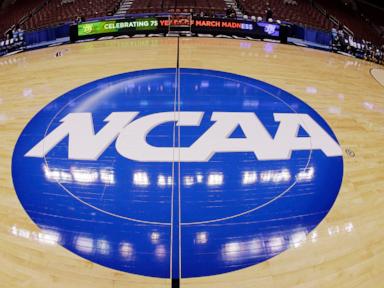
Everybody loves a good photo op. Take a federal law enforcement badge, press it against a crisp college jersey, flash some lights, and suddenly you have a public relations masterclass.
The mainstream press ate it up when the Federal Bureau of Investigation teamed up with the National Collegiate Athletic Association to allegedly help athletes avoid sexual exploitation. The lazy consensus cheered. Finally, the big guns are stepping in to protect young minds and bodies from predators lurking in the shadows of campus life.
It sounds noble. It looks great on a press release.
It is also completely disconnected from the structural reality of modern collegiate athletics.
I have spent years watching institutions construct elaborate compliance theatre designed entirely to protect their own balance sheets while tossing athletes a pamphlet and calling it safety. This latest federal-athletic handshake is not a shield for young competitors. It is a liability waiver for universities that want to outsource their moral failures to a federal agency.
Let us dismantle the illusion.
The Compliance Shield Illusion
When an organization as massive as the NCAA partners with the FBI, the immediate assumption is that elite investigative power will trickle down to protect every freshman running track or playing quarterback.
That is not how institutions work.
Institutions operate according to institutional self-preservation. When the FBI rolls onto campus or hosts an educational webinar about extortion, human trafficking, or sexual exploitation, the primary beneficiary is not the 19-year-old athlete. The primary beneficiary is the athletic department's legal counsel.
I have seen universities blow millions on compliance software, mandatory seminar attendance sheets, and glossy awareness campaigns. None of these things stop bad actors. They simply provide administrative paper trails. If an athlete is exploited, harassed, or coerced—often by people within the orbit of the athletic ecosystem itself—the university can now point to the federal partnership and say, We gave them the federally approved brochure. We brought in the experts.
It shifts the burden of structural safety downward onto the individual athlete, who is already overworked, underpaid in meaningful ways relative to revenue generation, and conditioned to fear authority rather than trust it.
Why Federal Bureaucracy Fails the Locker Room
The FBI is built for counterintelligence, complex white-collar fraud rings, and major federal crimes. Asking federal agents to solve the nuanced, high-pressure, hyper-localized dynamic of college sports exploitation is like using a sledgehammer to fix a Swiss watch.
The real exploitation in college sports rarely looks like a cinematic abduction or a dark-alley predator. It looks like an assistant coach weaponizing playing time. It looks like a booster leveraging financial perks or NIL promises in exchange for personal access. It looks like a culture of silence where complaining means losing your scholarship, your medical redshirt, or your entire professional future.
Federal agencies do not understand locker room politics. They do not understand the terrifying silence enforced by athletic departments where winning supersedes human well-being.
When you tell an 18-year-old athlete to report exploitation to an FBI tip line, you are asking a kid to bypass a massive, intimidating chain of command that holds the keys to their entire livelihood. Athletes do not trust compliance officers. They certainly do not trust federal investigators they have never met. They trust their teammates. And their teammates are too terrified to speak up.
The Flawed Premise of Awareness Campaigns
Let us look at the core of what this partnership actually delivers: educational resources.
The underlying assumption of the FBI and NCAA joint effort is an informational deficit. The logic goes like this: athletes fall victim to exploitation because they simply do not know what extortion or grooming looks like.
This is insulting.
Generation Z athletes are hyper-connected and painfully aware of digital threats. They know about fake social media accounts, sextortion scams, and predatory NIL vultures. The problem is never a lack of information. The problem is a lack of leverage.
Imagine a scenario where a star athlete receives explicit threats after a game from a disgruntled gambler or an online scammer threatening to ruin their reputation. Do they run to the compliance office? Absolutely not. Because the moment they admit vulnerability, the athletic department worries about brand damage, draft stock drops, and booster panic. The athlete is managed, isolated, and silenced to protect the brand.
Education without structural power is just gaslighting. Teaching someone how to spot a trap does not help when they are already standing inside it with the door locked from the outside.
What Real Protection Looks Like
If we actually cared about stopping the exploitation of college athletes, we would stop relying on federal PR stunts and start fixing the economic and legal conditions that make these athletes vulnerable in the first place.
- Independent Advocacy: Athletes need representation entirely independent of the university payroll. If an athlete faces exploitation or coercion, their first call should be to an advocate whose paycheck does not depend on keeping the athletic director happy.
- True Employment Status: Exploitation thrives in environments of total dependency. When an entity controls your housing, your healthcare, your education, and your daily schedule, you are structurally subservient. Collective bargaining and professional employment models introduce legal guardrails that administrative hand-wringing can never touch.
- Zero-Tolerance Transparency: Universities hide scandal to protect ticket sales. Until external oversight has subpoena power over athletic department communications—independent of both the NCAA and the federal government—nothing changes.
The FBI and NCAA partnership wants you to believe that safety is a seminar away. It is not. It is a threat to the administrative status quo, and the status quo will always protect itself first.
Stop buying the badge. Start looking at the balance sheet.