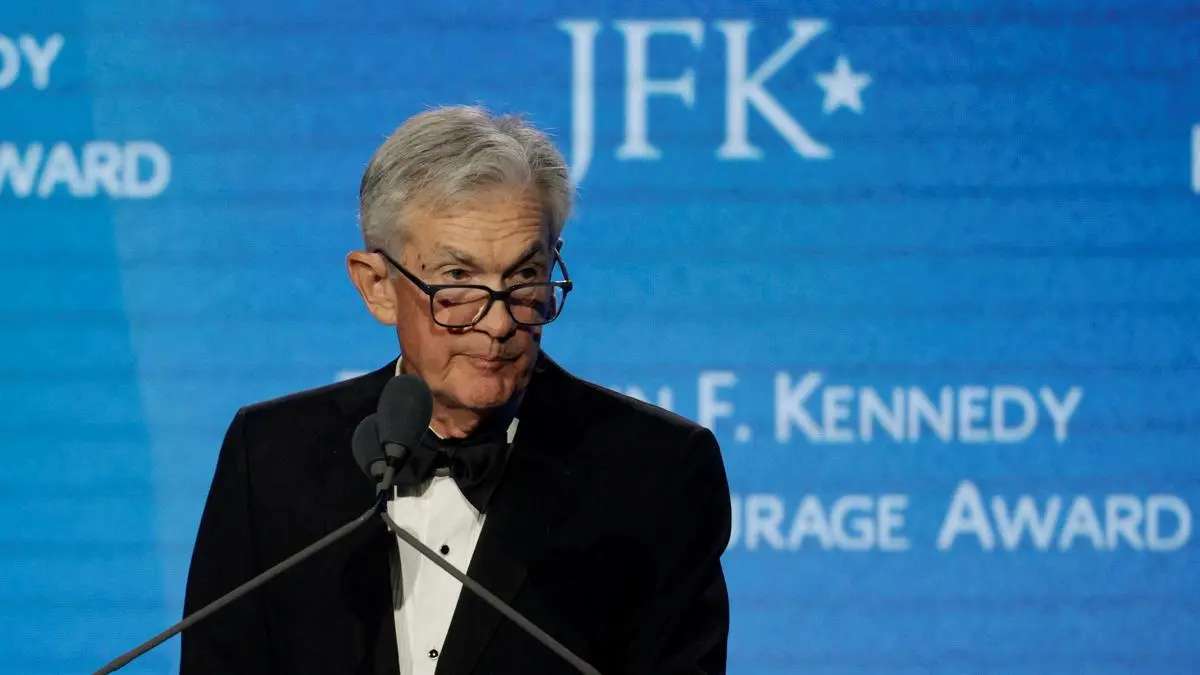
Jerome Powell just drew a line in the sand, and it’s a warning every investor and taxpayer needs to hear. Speaking in Boston while accepting the John F. Kennedy Profile in Courage Award, the former Federal Reserve Chair dropped his usual diplomat-speak. He made it clear that if a president can fire central bank officials over policy differences, the institution’s credibility is dead.
Think this is just academic inside baseball? It isn't. When the Fed loses credibility, your money loses value. Meanwhile, you can find other stories here: The Anatomy of Industrial Translation: Why the UK Academic Business Interface Is Stalling.
Powell stepped down as Fed Chair earlier this month, passing the baton to Kevin Warsh after a brutal confirmation battle. But in a rare move that surprised Washington, Powell didn't retreat to a lucrative consulting gig. He chose to stay on the Board of Governors until his term ends in 2028. He did it to protect the bank from political overreach. His Boston speech was his first public salvo since stepping down, and he didn't hold back.
The Cost of a Compliant Central Bank
When politicians control interest rates, they think about the next election, not the next decade. Short-term incentives always favor cheap money. Lower rates make the economy feel great today, but they guarantee roaring inflation tomorrow. To explore the complete picture, we recommend the recent article by The Wall Street Journal.
Powell warned that if any administration cracks the code to dismiss Fed officials over policy fights, the floodgates open. Every future president will do the exact same thing. The public will quickly realize that the central bank isn't acting in the best interest of the country, but rather the current occupant of the Oval Office.
The immediate fallout isn't just a loss of faith. It shows up in the bond market. If global investors think the Fed has become a tool for the White House to pump up the economy before election day, they'll demand higher yields to lend the US government money. Long-term interest rates would spike. Mortgages, car loans, and corporate debt would instantly become more expensive, regardless of where the Fed sets its short-term benchmark.
The Stress Test in Plain Sight
Powell noted that the Fed is currently undergoing a massive stress test. While he avoided naming names, you don't need a map to see who he's talking about. President Donald Trump spent the last year trashing Powell, calling him a "numbskull" and a "moron" for keeping borrowing costs restrictive.
The pressure wasn't just verbal. The Trump administration tried multiple avenues to rattle the Fed's top brass:
- A Department of Justice investigation into a $2.5 billion renovation of the Fed's headquarters, which critics called a politically motivated hit job.
- An aggressive push to remove Fed Governor Lisa Cook over unproven mortgage fraud allegations.
The battle over Cook’s seat is currently sitting with the Supreme Court. The legal question is simple but dangerous: Can a president unilaterally fire an independent economic governor?
If the high court sides with the White House, the modern structure of the Fed evaporates. Powell didn't mince words on this, stating that while partisan fights are essential for a democracy, a shared respect for the rule of law has to sit above the noise.
What Happens to Your Money Next
Wall Street is watching this fight closely. Right now, markets are giving new Fed Chair Kevin Warsh the benefit of the doubt, especially after Trump told Warsh to "do your own thing" at his swearing-in. But the actual policy path remains messy. Fed Governor Christopher Waller recently warned that the central bank’s next move could just as easily be a rate hike as a cut, keeping markets on edge.
If you are trying to manage a portfolio or business through this noise, don't focus on the daily political theater. Focus on the structural guardrails.
Watch the Supreme Court’s upcoming decision on Lisa Cook. A ruling that expands presidential authority to fire independent governors will likely trigger a sharp selloff in Treasuries and a spike in gold and hard assets.
Keep an eye on long-term bond yields rather than just short-term Fed announcements. If the spread between short-term and long-term rates widens drastically, it means the market is pricing in political interference and future inflation.
Diversify out of pure dollar dependence if the rule of law around independent institutions begins to fray. Central bank independence isn't an abstract concept; it's the premium that keeps the US dollar as the world's reserve currency. If that premium vanishes, the cost of everything you buy goes up. Maintain a portion of your capital in assets that can't be inflated away by political decree.
:max_bytes(150000):strip_icc()/Simply-Recipes-Aldi-Best-Frozen-Foods-LEAD-07-73a7d59941514c45bb103ddf2732b204.jpg)

