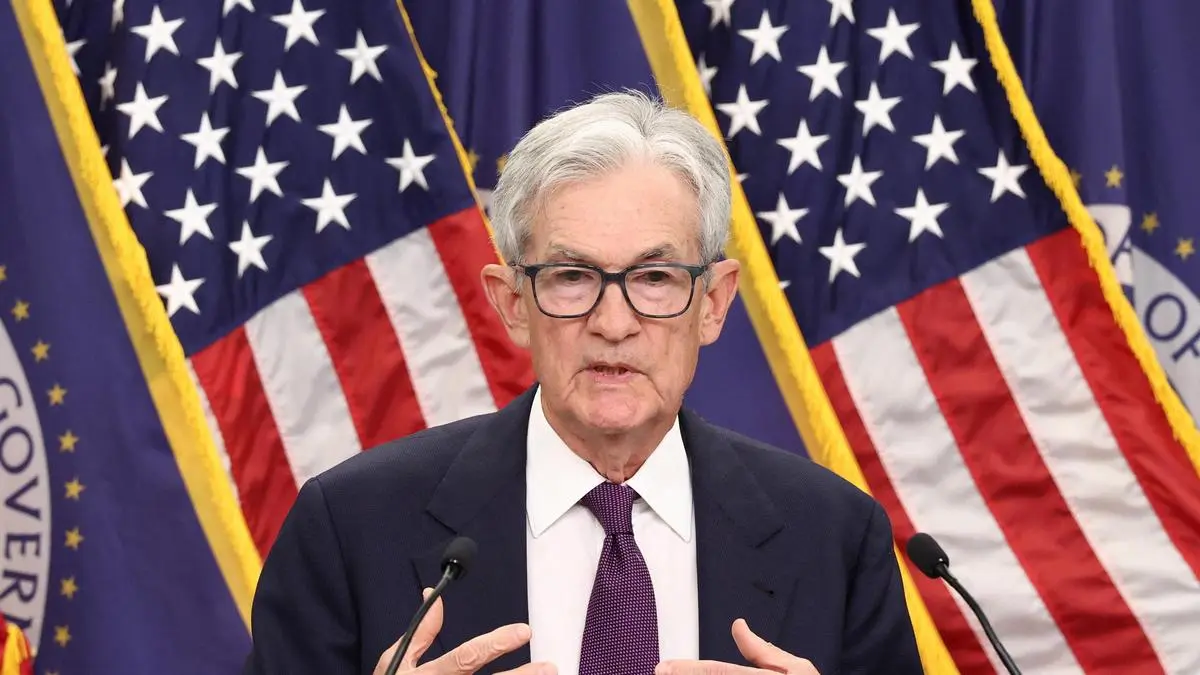
Jerome Powell wants you to believe he is the thin green line protecting the global economy from political chaos. He stands at the podium, jaw set, projecting the image of a neutral technocrat defending the "temple" of the Federal Reserve against the barbarian hordes of the executive branch. It is a compelling narrative. It is also a convenient fantasy that ignores how the Fed actually functions.
The mainstream press is currently obsessed with the drama of Powell "vowing" to finish his term despite pressure from Donald Trump. They treat this as a high-stakes battle for the soul of the dollar. They are wrong. This isn't a fight about independence; it’s a fight about optics. By digging in his heels, Powell isn’t saving the institution—he’s cementing its role as a political lightning rod, ensuring that every interest rate hike or cut is viewed through the lens of partisan warfare rather than economic necessity.
The Illusion of the Neutral Technocrat
The central premise of every "Save the Fed" op-ed is that the Chair is a non-partisan actor who makes decisions based purely on data. This ignores the reality that economic data is not a neutral map; it is a Rorschach test.
When the Fed targets a $2%$ inflation rate, that isn't a law of physics. It’s an arbitrary choice that prioritizes the stability of creditors over the wages of debtors. When Powell chooses to keep rates "higher for longer" to crush a tight labor market, he is making a value judgment. He is deciding that lower wages are a fair price to pay for price stability. That is a deeply political act.
By pretending these choices are purely mathematical, Powell avoids accountability. The "independence" he is so desperate to protect is actually a shield against the democratic consequences of his policies. If the public realizes that a small group of unelected officials can intentionally trigger a recession to cool off "overheated" wages, the entire structure of the modern central bank starts to look incredibly fragile.
Why Trump is Right for the Wrong Reasons
The critique from the MAGA camp is usually framed as "The Fed is part of the Deep State." While that’s useful for a rally, it misses the mechanical truth. The problem isn't that the Fed is conspiring against a specific president; it’s that the Fed has become the sole engine of the American economy because Congress is too paralyzed to pass functional fiscal policy.
Since 2008, we have lived in a world of "Monetary Dominance." Whenever there is a problem, the Fed prints money or manipulates interest rates. This has led to a massive distortion of asset prices.
Imagine a scenario where a doctor only treats a patient’s broken leg with morphine. The morphine stops the pain, but the leg heals crooked. The Fed is the morphine. By refusing to step aside or acknowledge the political nature of his role, Powell is insisting on being the only doctor in the room.
Trump’s attacks, however crude, expose a fundamental truth: the President is held accountable for the economy, yet he has no control over its most powerful lever. This tension is unsustainable. Whether it’s Trump, Warren, or a future populist from the left, the era of the "independent" Fed is ending. Powell’s stubbornness is merely accelerating the collapse of the prestige he thinks he’s saving.
The High Cost of "Stability"
We are told that if the President could influence interest rates, we would end up like Zimbabwe or 1920s Germany. This is the ultimate boogeyman used to silence dissent.
In reality, the Fed’s "independence" has presided over the greatest wealth gap in human history. The Cantillon Effect describes this perfectly: those closest to the source of the money (banks and the ultra-wealthy) benefit first and most from monetary expansion, while the rest of the population sees their purchasing power eroded by asset inflation.
Consider the following mechanics:
- The Fed buys Treasury bonds to lower long-term rates.
- This lowers the cost of borrowing for corporations and hedge funds.
- These entities use the cheap money to buy back stock or purchase residential real estate.
- The "average American" sees their 401(k) go up slightly, but their dream of owning a home disappears as prices skyrocket.
Powell isn’t defending the dollar for you. He’s defending the system that keeps the S&P 500 afloat at the expense of the middle class. When he "warns" about attacks on the Fed, he’s really warning that someone might pull back the curtain on this arrangement.
The Credibility Trap
The most frequent argument in favor of Powell staying is "market credibility." The theory goes that if Powell is fired or resigns, the bond market will revolt, yields will spike, and the dollar will tank.
I’ve seen markets freak out over a single word in a FOMC minute. Markets are fragile, but they are also incredibly pragmatic. If Powell were replaced by a competent, pro-growth economist who signaled a clear path for the dollar, the "shock" would last forty-eight hours. The idea that Jerome Powell—a man who famously called inflation "transitory" until it hit 9%—is the only person capable of holding the global financial system together is an insult to our collective intelligence.
The Fed’s credibility isn’t a fixed asset. It’s a dwindling reserve. Every time Powell speaks about "pain" for households while the banking sector gets a backdoor bailout (like the Bank Term Funding Program during the SVB crisis), he burns more of that reserve.
The Institutional Suicide of Staying
If Powell truly cared about the long-term health of the Federal Reserve, he would announce his resignation effective at the end of the next election cycle, regardless of who wins.
By framing his tenure as a resistance movement against Trump, he has made himself a political martyr. He has ensured that the next time the Fed raises rates, half the country will believe it’s an attempt to sabotage the administration. If he stays, he confirms the very bias his critics accuse him of.
The "nuance" the mainstream media misses is that institutional strength comes from transparency and clear boundaries, not from one man’s ego. The Fed should be a narrow agency with a limited mandate. Instead, it has become a sprawling shadow government that tries to manage everything from climate change risks to social equity.
When you try to be everything to everyone, you end up being accountable to no one.
The Real Power Play
The obsession with Powell’s "vow" to stay is a distraction from the real shift happening in global finance. The weaponization of the dollar and the rise of alternative payment systems mean the Fed’s domestic "independence" is becoming increasingly irrelevant on the world stage.
While Powell and Trump bicker over who gets to sit in the big chair at 20th and C Street, the foundational floor of the dollar is being tested. We are moving toward a multi-polar financial world. In that world, a central bank chair who is caught up in a domestic ego war is a liability, not an asset.
The Fed doesn't need a defender. It needs a massive reduction in scope. It needs to stop trying to "manage" the economy and start acting like the utility it was meant to be.
Powell thinks he’s a hero for staying. He’s actually just the last person to realize the party is over.
If you want to protect your wealth, stop listening to the Fed’s "vows." They are the empty promises of an institution that has lost its way and a leader who refuses to see the writing on the wall. The real risk isn't that Trump will break the Fed. The risk is that the Fed has already broken the economy, and Powell is the only one left who doesn't see the cracks.
Stop looking for a savior in a suit. Start looking at the balance sheet. The numbers don't lie, even when the Chairman does.