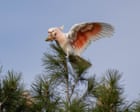
The media loves a tragic mascot. Enter the Gang-gang cockatoo, affectionately dubbed the "flamin' cockatoo" by those who prefer sentimentality over science.
Following the devastating 2019–2020 Black Summer bushfires, the narrative solidified into concrete. Mainstream conservation outlets rushed to publish obituary-style features. They lamented the loss of canopy, pointed fingers at climate change, and begged for millions in funding to "restore" what was lost. The underlying premise was simple: fire is the enemy, the habitat is broken, and humans must intervene to freeze the ecosystem in a permanent, pristine state.
This consensus is not just lazy. It is ecologically illiterate.
By treating fire as an unnatural invader rather than an evolutionary architect, well-meaning conservationists are actively sabotaging the long-term survival of the very species they claim to protect. The question isn't whether the Gang-gang cockatoo can survive the bushfires. The real question is whether the species can survive our clumsy, bureaucratic attempts to eliminate fire from a landscape that requires it to breathe.
The Canopy Myth: Why Destruction is Actually Construction
The standard conservation article laments the destruction of old-growth eucalyptus forests. They show photos of charred trunks and empty skies, implying that a burnt forest is a dead forest.
Let's dismantle this using basic Australian silviculture.
Gang-gang cockatoos (Callocephalon fimbriatum) are obligate hollow-nesters. They require deep cavities in mature eucalyptus trees to breed. These hollows do not appear because a tree gets old and decides to hollow itself out. They are formed through a brutal cycle of mechanical damage, fungal infection, termite infestation, and, most importantly, fire.
High-intensity bushfires do destroy existing hollows. Nobody denies this. But they also trigger the structural damage required to create the next generation of nesting sites.
[Intense Fire] ➔ [Trunk Scarring] ➔ [Fungal/Termite Ingress] ➔ [Hollow Formation]
When we suppress fire, or when we engage in aggressive post-fire "salvage logging" and safety clearing under the guise of forest management, we interrupt this pipeline. I have spent years tracking avian population dynamics in sub-alpine zones. The most devastating thing you can do to a fire-adapted ecosystem is to deny it the trauma it needs to regenerate.
Consider the Eucalyptus delegatensis (Alpine Ash) forests that Gang-gangs frequent. These trees do not just tolerate fire; their lifecycle demands it. Their seeds are released in massive quantities from woody capsules called serotinous cones, stimulated almost exclusively by the heat of a passing blaze. The resulting ash bed provides the perfect nutrient-dense, predator-free environment for seedlings to take root.
By framing the Black Summer fires as a pure catastrophe for the cockatoo, mainstream journalists miss the forest for the charred trees. The fire was not the end of the habitat. It was the reset button.
The Fallacy of Hand-Fed Conservation
Go to any environmental nonprofit's website right now and you will see an appeal to fund artificial nest boxes or intensive captive breeding programs. It feels proactive. It makes donors feel like heroes.
It is a monumental waste of capital.
Artificial nest boxes are an engineering band-aid for an ecological hemorrhage. Research from the Australian National University has repeatedly demonstrated that large parrot species frequently reject artificial boxes due to poor thermal regulation. In the blistering Australian summer, a plastic or plywood box becomes an oven, cooking eggs and fledglings alive. Natural hollows provide a microclimate buffered by inches of living wood. You cannot replicate a 200-year-old tree hollow with a trip to the hardware store.
Furthermore, deploying thousands of these boxes introduces a severe biological hazard: common starlings, common mynas, and feral honeybees love artificial boxes far more than native cockatoos do.
"We are spending millions to build slums for invasive species, while congratulating ourselves on saving native wildlife."
If you want to save the Gang-gang, you do not build boxes. You acquire land, stop logging mature forests, and let the natural fire-regeneration cycle take place over decades. But that requires patience, and patience doesn't look good on a quarterly fundraising report.
PAA: Dismantling the Flawed Assumptions
Let's address the questions that dominate search engines and public discourse, stripped of the emotional fluff.
Are Gang-gang cockatoos going extinct because of bushfires?
No. The species is listed as endangered, but attributing this purely to bushfires is a gross oversimplification. The primary drivers of their long-term decline are historical land clearing for agriculture, urban sprawl in the peri-urban fringes of Canberra and Melbourne, and competition for remaining hollows from hyper-abundant species like the Sulphur-crested cockatoo. Bushfires redistribute populations; humans destroy them permanently.
Can we plant trees to replace lost cockatoo habitats?
Sure, if you are planning for the year 2226. A eucalyptus tree does not develop hollows suitable for a Gang-gang until it is at least 120 to 150 years old. Planting saplings today does exactly nothing for the current breeding population. Stop bragging about planting a million trees and start talking about protecting the old-growth stands that already exist.
Should we suppress all fires in endangered species habitats?
This is the most dangerous premise of all. Decades of total fire suppression in Western nations have led to a catastrophic buildup of fuel loads. When a fire inevitably breaks out under these conditions, it changes from a fast-moving canopy fire into a catastrophic, soil-baking inferno that kills the seed bank and destroys the root systems of ancient trees. Controlled, cultural burning—practiced for millennia by Indigenous Australians—is the only viable path forward. It reduces fuel while allowing the ecosystem to access the benefits of smoke and heat.
The Hard Truth of Conservation Math
Every dollar spent on high-profile, emotional rescue missions for a single charismatic species is a dollar stolen from systemic habitat protection.
I have seen government departments blow through millions of dollars on tracking collars, public awareness campaigns, and glossy brochures featuring the Gang-gang’s distinctive wispy red crest. Meanwhile, the legal loopholes allowing native forest logging in adjacent valleys remain wide open.
It is a classic shell game. The public is distracted by the tragedy of the bushfire—an act of God—so they don't notice the ongoing tragedy of policy failure—an act of government.
If we want to ensure the Gang-gang cockatoo survives, we must accept a harsh, counter-intuitive reality:
- Accept Mortality: Individual birds will die in fires. This is a brutal reality of natural selection that has occurred for millions of years.
- Stop Intervening in Regeneration: Leave the burnt forests alone. Dead trees (stags) are vital foraging and roosting sites. Removing them for "aesthetic" or "safety" reasons is environmental vandalism.
- Fund Enforcement, Not Propaganda: Redirect money from public relations campaigns into the aggressive enforcement of illegal land clearing and the eradication of feral competitors.
Stop Romanticizing the Past
The competitor article wants you to look back. It wants you to mourn the forests of 2018 and dream of a return to a stable, unchanging ecosystem that never actually existed.
Australia is a continent forged by fire. The species that live here are not delicate flowers waiting to be snuffed out by a spark; they are evolutionary survivalists that have integrated fire into their DNA. The Gang-gang cockatoo does not need our pity, and it certainly does not need our shoddy carpentry.
It needs us to step back, stop micro-managing the wilderness, and let the landscape burn, break, and rebuild itself as it has done since the Gondwana supercontinent split apart.
Get out of the way and let the forest do its job.