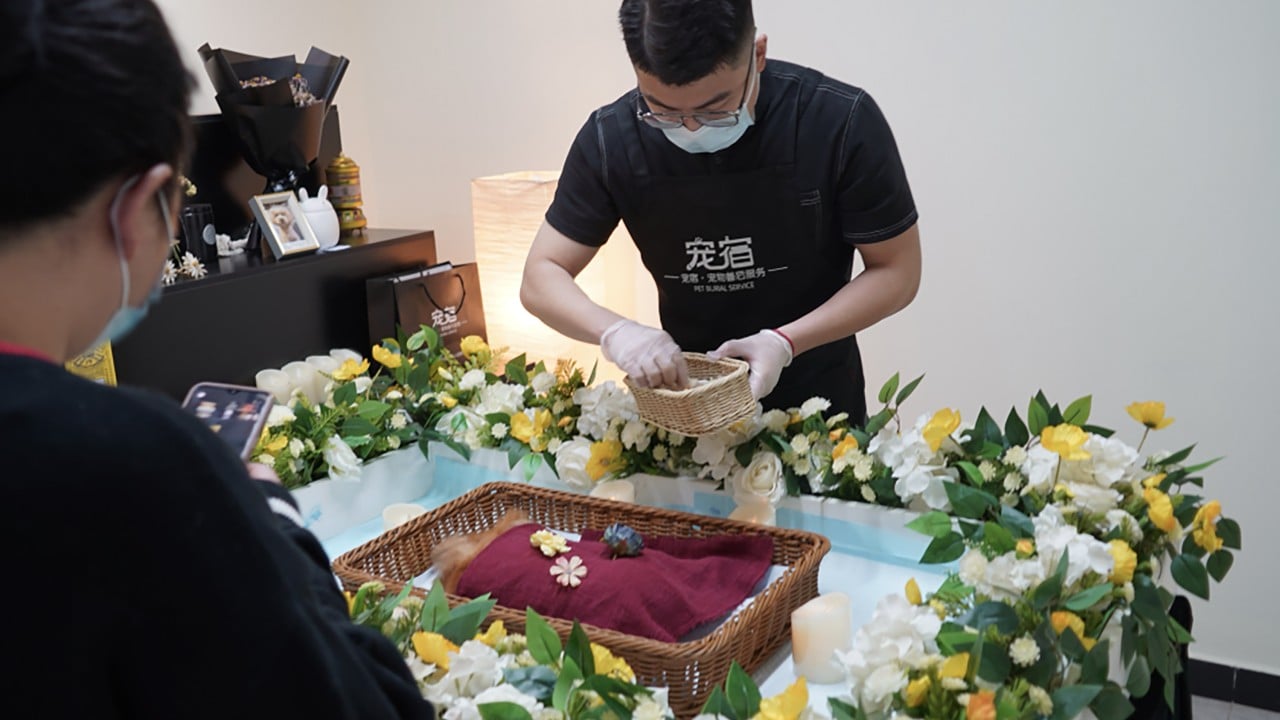
The porcelain urn sits on a mantle in Shanghai, catching the late afternoon amber light. Inside is the fine, white ash of a twelve-year-old Poodle named Bao. To his owner, a marketing executive who traded marriage and children for the demanding rhythm of a tech career, Bao was not a pet. He was the anchor. When Bao stopped breathing on a Tuesday night in autumn, the silence in the apartment felt structural, as if the walls themselves were caving inward.
Grief has a way of turning ordinary people into seekers. If you enjoyed this article, you might want to read: this related article.
Faced with a dead companion and a city ordinance forbidding traditional burial in public parks, the executive did what millions across China are now forced to do. She typed a frantic search query into her phone, entering a booming commercial ecosystem that moves quietly in the shadows. She found a service. A sleek van arrived within the hour. Men in dark suits carried a wicker basket lined with white silk. They bowed. They spoke in hushed, reverent tones. They promised a sacred cremation, a pristine resting place, and eternal peace.
It cost a month's salary. And she paid it gladly, because when your heart is breaking, you do not haggle over the price of mercy. For another angle on this development, check out the latest coverage from Glamour.
Yet, behind the polished websites, the soothing ambient music of pet memorial parlors, and the glowing customer reviews lies a stark, unsettling reality. China's pet funeral industry has ballooned into a billion-dollar colossus, driven by a surging demographic of young, urban singles pouring their maternal and paternal instincts into millions of cats and dogs. It is a market fueled by profound loneliness and deep devotion.
It is also entirely, dangerously unregulated.
Consider what happens next in this hidden economy. When the van doors close and the grieving owner turns away, the velvet curtain drops. There is no government inspector checking the emissions of the makeshift incinerators tucked into industrial fringe zones. There is no consumer protection agency auditing whether the ash returned in the hand-carved wooden box actually belongs to the animal who lived beside you for a decade. There are no sanitation standards governing how medical waste, infectious tissues, and deceased animals are handled before the flame touches them.
Nobody is watching.
This is the great paradox of modern affection. We have engineered societies where human connection is increasingly transactional, digital, and fleeting. To compensate, we have elevated our bond with animals to sacred heights. We buy them organic freeze-dried meals, monitor their biometrics with smart collars, and throw lavish birthday parties. We invest our purest emotional capital into creatures whose lives are heartbreakingly short.
When the inevitable end arrives, we run headfirst into a commercial trap built by our own vulnerability.
The numbers tell a story of explosive, uncontrolled growth. Over the past five years, the number of registered pet funeral and cremation businesses in major Chinese metropolitan areas has multiplied exponentially. Billions of yuan flow through digital payment apps for services ranging from basic cremation to elaborate Buddhist chanting ceremonies, pet psychics, and diamond conversion, where carbon extracted from ashes is pressed into permanent gems.
Industry analysts project continued double-digit expansion. Young professionals, caught in the relentless grind of corporate culture, find solace in unconditional animal companionship. When that companionship ends, the grief is absolute. Entrepreneurs have rushed in to fill the void.
Market forces answered the call. The state did not.
To understand the friction here, you have to look past the spreadsheets and step into the unregulated incinerators. Picture a corrugated metal shed on the dusty outskirts of a tier-two city. Inside, a second-hand furnace rars, fueled by cheap gas. The operator is often a former factory worker or a livestock farmer who saw a business opportunity on social media. They have no veterinary training, no environmental certification, and no oversight from local agricultural or public health bureaus.
To them, a dead Golden Retriever is just raw material for a transaction.
Stories have begun to leak through the digital underground of Chinese social media. Grieving owners sharing whispers of suspicion. One owner noticed that the weight of the ashes returned to her was suspiciously heavy—too heavy for a three-pound Pomeranian. Another followed a service vehicle out of curiosity, only to watch multiple animals tossed into a communal chamber together, their individual identities erased the moment the owner's back was turned. Mass cremations performed under the guise of private send-offs. Cheap commercial ashes substituted for cherished companions. Uncertified furnaces belching toxic plastic fumes into residential air supplies.
It is a predatory ecosystem that preys directly on the raw nerve of trauma. When you are drowning in sorrow, you are incapable of demanding a business license. You do not ask to inspect the EPA compliance records of an industrial burner. You just want your friend treated with dignity.
And the system knows it.
This lack of public oversight creates a moral vacuum. Without clear legal definitions, pet funeral services operate in a gray zone between commercial waste management and sentimental service provision. Are these bodies considered municipal garbage? Hazardous biological waste? Or are they sacred remains deserving of legal protection and sanitary standards?
The law remains silent. And in that silence, exploitation thrives.
Veterinarians and animal welfare advocates have long warned that this wild-west marketplace poses public health risks as well. Unregulated handling of deceased animals can spread zoonotic pathogens if proper biosafety protocols are ignored. Improperly treated emissions from substandard incinerators dump dioxins and heavy metals into the air of densely populated regions. Yet, because pets occupy a strange, intermediate status in civil law—often legally categorized as personal property rather than family members—regulatory bodies treat the entire sector as an administrative afterthought.
Property can be replaced. Property doesn't need civil rights. Property goes in the bin.
That is the cold legal framework crashing against the warm, beating heart of human experience.
Walk through any park in Beijing or Chengdu at dawn, and you will see the future. Elderly couples walking Pomeranians in strollers. Young women sharing matcha lattes with French Bulldogs wearing designer sweaters. The demographic shift is irreversible. Birth rates are plummeting. Urban loneliness is reaching epidemic proportions. The pet economy is not a passing fad; it is the emotional infrastructure of a changing civilization.
If we care about the people within this infrastructure, we must care about how it treats them at the end.
Protecting the pet funeral industry is not about red tape for the sake of bureaucracy. It is about protecting the sanctity of human grief. It is about ensuring that when a person hands over the body of their truest friend, they are met with accountability, transparency, and basic human decency. It requires licensing standards for operators, mandatory environmental compliance for crematories, standardized chain-of-custody protocols for remains, and severe penalties for fraudulent operators who profit off human heartache.
Until those rules arrive, the shadow economy will continue to churn.
Back in the Shanghai apartment, the amber light fades into the cool gray of evening. The executive looks at the porcelain urn on her mantle. She talks to it sometimes, whispering about her day, keeping the habit of a decade alive in the empty rooms. She believes Bao is resting safely inside. She chooses to believe it, because the alternative—the thought of what might have happened in that unregulated, hidden warehouse behind the highway—is a grief she is not yet strong enough to bear.
The furnace cools in the dark. The city sleeps above. And the silence waits for morning.