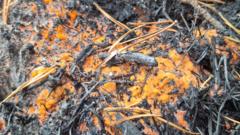
Nature wastes nothing. When a brutal wildfire sweeps through a landscape turning centuries of accumulated timber into grey dust, most observers see only devastation. They see a blackened graveyard. They miss the microscopic architects waiting beneath the surface. Among the most startling phenomena to emerge from these charred zones is the sudden appearance of the bright orange fire fungus, scientifically known as Pyronema omphalodes, an organism that relies entirely on total ecological collapse to thrive.
The appearance of these neon-orange patches across scorched earth often shocks park visitors. The color feels wrong against an ash-choked backdrop. Yet this organism is not an intruder or a sign of sickness in the reviving ecosystem. It is a biological pioneer. Understanding how this fungus operates requires looking past the tragedy of the burn and examining the precise biochemical triggers that wake dormant spores from a slumber that may have lasted decades. If you liked this piece, you should look at: this related article.
The Chemistry of Total Destruction
Most forest fungi require organic acids, complex sugars, and stable moisture to fruit. Pyronema omphalodes rejects these comforts entirely. It demands extreme heat. The spores of this organism possess thick, durable walls designed to withstand the furnace-like temperatures of a passing wildfire. In fact, many of these spores will not germinate unless they experience thermal shock. The fire acts as a biological alarm clock.
Once the flames pass and the soil cools, a secondary chemical trigger occurs. Wildfires convert living plant matter into alkaline ash rich in calcium, potassium, and magnesium. Normal forest soil leans acidic, a chemistry that keeps many competing mold varieties and bacteria in check. The sudden spike in soil pH caused by ash neutralizes these competitors. Pyronema omphalodes steps into this sterilized vacuum because it faces zero competition for nutrients. For another look on this development, refer to the recent coverage from NBC News.
The bright orange color comes from carotenoid pigments packed inside the fruiting bodies, known as apothecia. These pigments serve a practical purpose. They act as natural sunscreens. A post-fire landscape offers no shade. Unshielded ultraviolet radiation destroys delicate cellular structures. The vivid orange hue protects the reproductive tissue of the fungus while it releases millions of microscopic spores into the wind to find the next burn scar.
The Hidden Underground Network
Above ground, the bright orange patches look like melted plastic or spilled paint splattered across the dirt. Below ground, a massive shift is underway. Pyronema omphalodes belongs to the group of organisms known as pyrophilous fungi, meaning fire-loving molds that colonize soil strictly after high-intensity thermal events.
While visible mushrooms grab attention, the mycelial network working through the topsoil performs heavy lifting for the healing earth. As the fungus consumes the remnants of burnt roots and charred debris, it begins binding loose soil particles together. Fine-grained ash washes away easily during the first heavy autumn rains, leading to catastrophic mudslides and permanent topsoil loss. The thread-like hyphae of the fungus act as a living net. They weave through the grit, stabilizing the ground and preventing erosion before seeds from native grasses and shrubs can take root.
This interaction challenges the traditional conservation narrative. For decades, land management agencies treated all post-fire anomalies as threats requiring immediate mitigation, often dumping chemical binders or non-native grass seed over burned tracts. Experience shows that letting native succession play out yields better ecological outcomes. The orange fungus is not a blight. It is the first stitch in closing the wound of the forest.
Why Fire Adaptation Misleads the Public
Public perception of wilderness recovery remains stubbornly romanticized. People expect green shoots within weeks, framing recovery through the lens of human gardening. When a black, sterile moonscape produces neon orange mold instead of wildflowers, panic often ensues. Local parks departments frequently field frantic calls from hikers reporting toxic spills or hazardous chemical reactions in the soil.
This disconnect highlights a widening gap between urbanized populations and natural environmental cycles. Fire is an ancient ecosystem process, particularly in regions dominated by chaparral, ponderosa pine, and boreal forest. Many species have evolved alongside fire for millions of years. Pyronema omphalodes represents a specialized evolutionary niche. It is a obligate carbonicolous organism, meaning it cannot complete its life cycle anywhere else on Earth. If you remove fire from these landscapes, you drive this specific fungus toward local extinction, disrupting the broader food web that depends on the insects and microfauna feeding on the fungal mats.
Education campaigns by forestry services have slowly begun addressing this blind spot, yet public unease persists. Bright colors in nature usually signal danger, a warning to stay away. In the case of post-fire fungi, the brilliant orange acts as a beacon of resilience, signaling that the ground is beginning to process nutrients and rebuild.
The Broader Ecological Domino Effect
The arrival of Pyronema omphalodes triggers a sequence of biological events that accelerates forest regeneration. Once the fungus establishes its orange carpets, it alters the local microclimate of the soil. It retains moisture within its fleshy cups, creating damp micro-pockets amidst a dry, charred expanse.
Insects arrive next. Fungus gnats, springtails, and specialized beetles find nourishment in the fungal tissue. These insects bring birds and small mammals looking for easy protein. Meanwhile, larger plant roots begin growing toward the decaying fungal networks, tapping into the newly liberated mineral content left behind by the organism's digestive processes.
Without this initial fungal wave, forest recovery stalls. Bacteria alone cannot bridge the gap between sterile ash and complex soil ecology. The fungus acts as a biological transformer, stepping down the harsh, volatile chemistry of raw wildfire ash into forms usable by higher plants.
Looking at the Burn Scar Differently
Observing a landscape recovering from a severe wildfire requires patience and a willingness to abandon tidy definitions of beauty. The charred stumps and barren slopes test public tolerance for wild processes. Yet beneath the charcoal crust, life operates through mechanisms far older and more sophisticated than human intervention.
The bright orange fire fungus reminds us that destruction and creation are deeply intertwined in natural systems. It claims the ruins not to bury the forest, but to lay the foundation for everything that comes next.