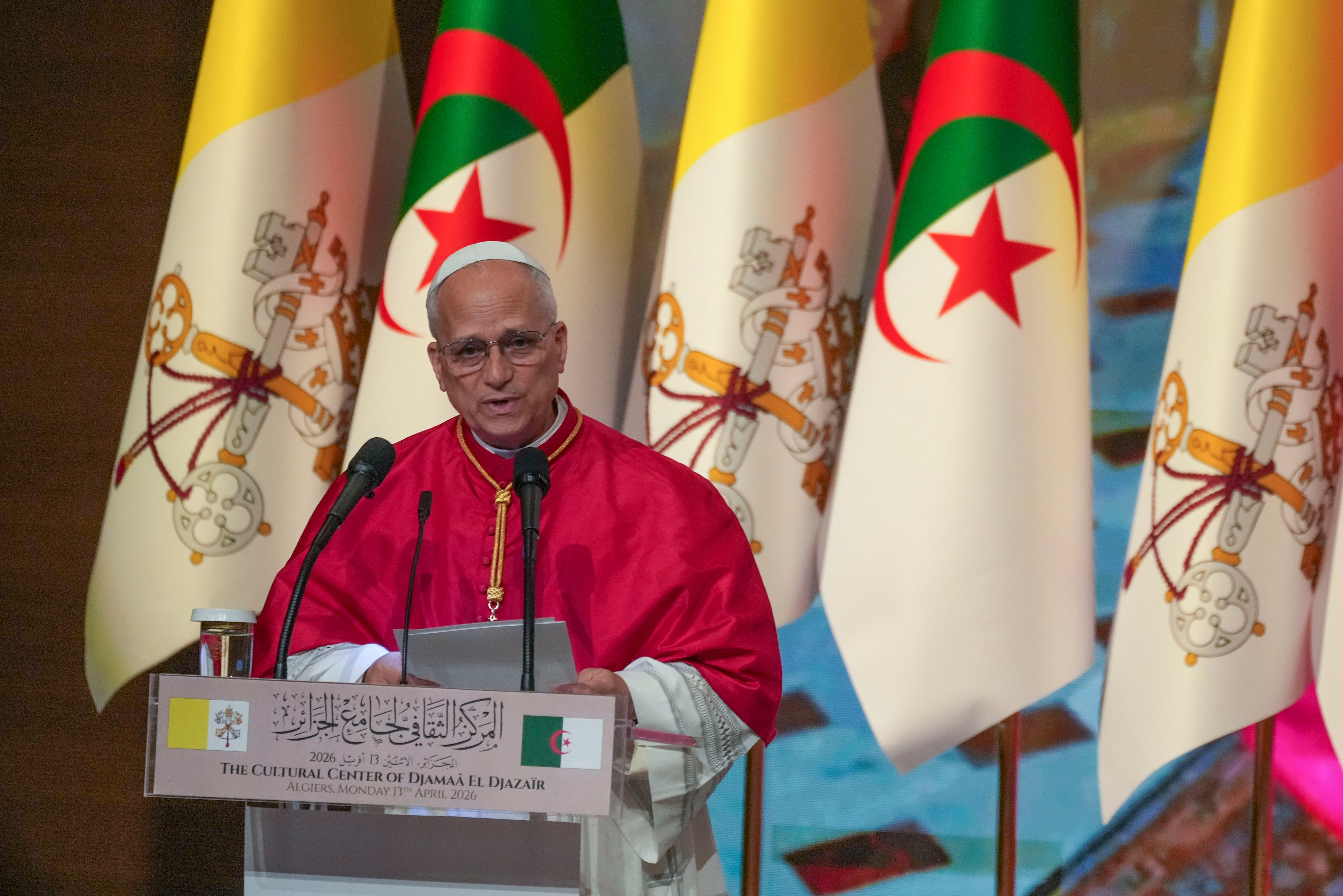
The marble halls of the Apostolic Palace are designed to swallow sound. When you walk through the Loggias of Raphael, the air feels heavy with the weight of two thousand years of bureaucracy and prayer. It is a place where time moves like cold honey. But lately, the silence has been brittle. The vibrations from across the Atlantic—loud, brash, and delivered in 280-character bursts—have begun to rattle the ancient windows.
In the center of this storm sits a man who chose his name after a saint who talked to birds and hugged lepers. Pope Leo does not look like a man at war. He looks like a grandfather who has seen too many winters. Yet, as the rhetoric between Washington and Tehran shifts from diplomatic posturing to the rhythmic drumbeat of an inevitable conflict, the Bishop of Rome finds himself in a position his predecessors knew all too well: the last moral speed bump on the road to a global catastrophe.
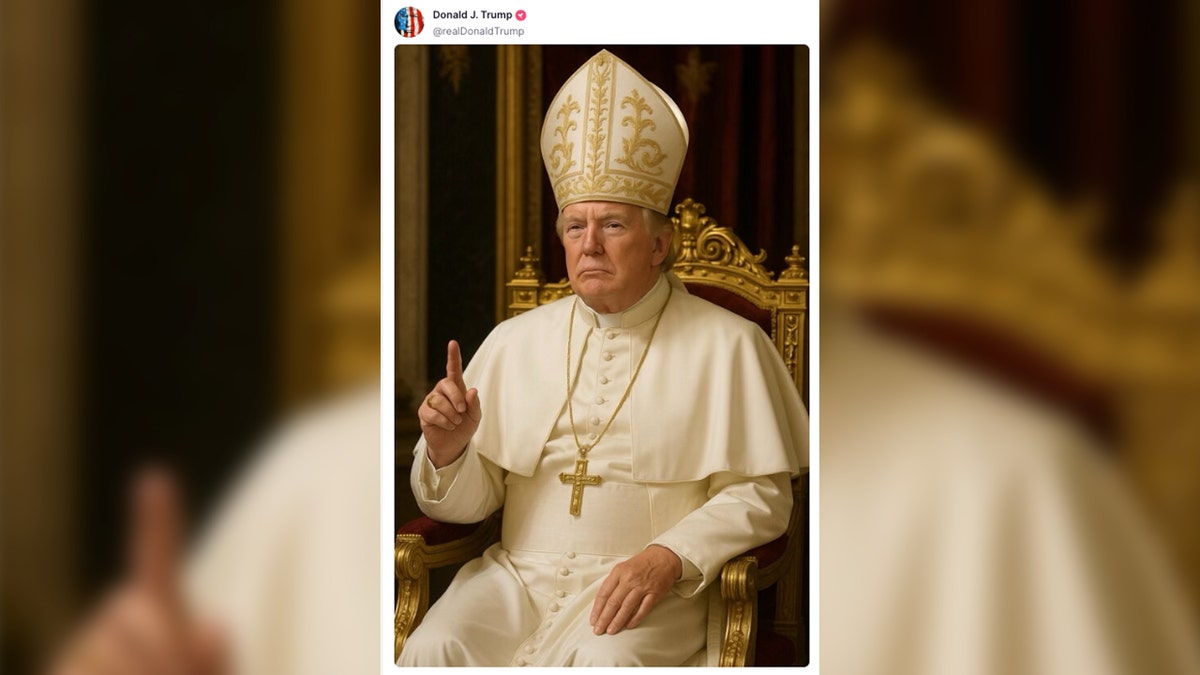
The tension isn't just about policy. It is about two entirely different languages. One speaks in terms of "maximum pressure" and "surgical strikes." The other speaks of "human fraternity" and "the madness of war." When the current American administration recently sharpened its tongue, directed specifically at the Vatican’s refusal to endorse a hardline stance on Iran, the world expected a fiery retort. Instead, Leo did something far more frustrating for his critics.
He smiled. He prayed. He moved on.
The Geography of a Grievance
To understand why a billionaire in a high-rise and a priest in a walled city are locked in this ideological dance, you have to look at a map through two different lenses.
For the White House, Iran is a square on a chessboard that must be neutralized to protect a specific set of interests. The logic is linear. If Point A (sanctions) doesn't work, then Point B (military escalation) becomes the only rational choice. It is a world of hard borders and harder ultimatums.
For the Vatican, the map looks different. It isn't a collection of states; it’s a web of people. There are approximately 20,000 Catholics living in Iran. There are millions of families across the Middle East who are still digging through the rubble of the last "surgical" intervention. When Leo looks at the prospect of a war with Iran, he doesn't see a strategic victory. He sees a refugee crisis that will drown Europe. He sees the extinction of ancient Christian communities that have survived since the time of the Apostles.
This isn't theoretical for him.
Consider a hypothetical family in Isfahan. Let’s call the father Yousef. Yousef doesn't care about uranium enrichment levels or the nuances of the JCPOA. He cares about the fact that the price of medicine for his daughter has tripled because of sanctions. He cares that the sky over his home might soon be filled with the sound of engines he cannot stop. When the Vatican speaks, it is trying to be the voice of Yousef.
The critics call this being "soft on terror" or "out of touch with geopolitical realities." Leo’s inner circle calls it being a pastor.
The Weight of the Fisherman’s Ring
Power in the Vatican is a strange, ethereal thing. The Pope has no divisions, as Stalin famously joked. He has no fighter jets. He has no economic levers to pull. His only currency is moral authority, and that currency only has value if it is spent consistently.
If the Pope aligns himself with the American "maximum pressure" campaign, he loses his ability to act as a mediator. He becomes just another Western leader. By brushing off the criticism from the U.S. executive branch, Leo is performing a high-wire act. He is signaling to Tehran that the West is not a monolith. He is keeping a tiny door of dialogue cracked open, even as everyone else is trying to kick the house down.
But the pressure is mounting. The halls of the State Department have grown increasingly impatient with what they perceive as Vatican meddling in "security matters." There is a sense in Washington that the Church should stick to liturgy and leave the "real world" to the men with the briefcases.
The reality is that the Church has been playing the "real world" game since before the United States was a collection of colonies. The Holy See has maintained diplomatic relations with Iran since 1954. They didn't break them during the Revolution. They didn't break them during the Iran-Iraq war. They play the long game. They wait for the empires to tire themselves out.
The Invisible Stakes
We often talk about war in terms of oil prices and geopolitical shifts. We rarely talk about the soul of the people involved.
War changes the person who orders it just as much as the person who suffers under it. This is the core of the friction. The American administration views the potential conflict as a necessary evil to prevent a greater one. Leo views the choice of war as a failure of the human imagination. He believes that once you start the fire, you lose the right to claim you can control where the sparks land.
The criticism leveled at him recently—that he is being "naïve" or "unhelpful"—misses the point of his office. A Pope’s job isn't to be helpful to a specific administration’s foreign policy goals. His job is to be an annoyance to anyone who thinks violence is a shortcut to peace.
There is a specific kind of courage in being dismissed. To be called "irrelevant" by the most powerful man in the world and to respond with a shrug and an invitation to tea is a power move in its own right. It suggests that your authority doesn't come from the person who can fire you or vote you out.
The Sound of the Quiet
The tensions will not dissipate tomorrow. The ships are still in the Gulf. The rhetoric will likely get sharper as the election cycle in the U.S. kicks into high gear. There will be more tweets, more press releases, and more "anonymous sources" expressing frustration with the Holy See's "obstructionism."
But inside the Vatican, the pace remains unchanged.
Leo continues to meet with diplomats from all sides. He continues to speak about the "common home." He continues to treat the threats of a superpower as a passing summer storm. He knows that his predecessors stood up to emperors, kings, and dictators. Most of those empires are now museums. The Church is still there.
The real conflict isn't between a Pope and a President. It’s between two visions of the future. One believes we can beat the world into a shape we like. The other believes we have to live in the world as it is, with all its messy, inconvenient, and stubborn humanity.
As the sun sets over St. Peter’s Square, the light hits the ancient stone in a way that makes it look indestructible. It’s an illusion, of course. Everything is fragile. The peace, the palace, the lives of people like Yousef in Isfahan.
Leo knows this. It is why he refuses to raise his voice. When everyone is screaming, the only way to be heard is to speak in a whisper that forces everyone else to lean in. Or better yet, to stay silent and wait for the screaming to stop.
The fisherman is used to waiting. He knows that the tide always comes back in, regardless of who claims to own the shore.