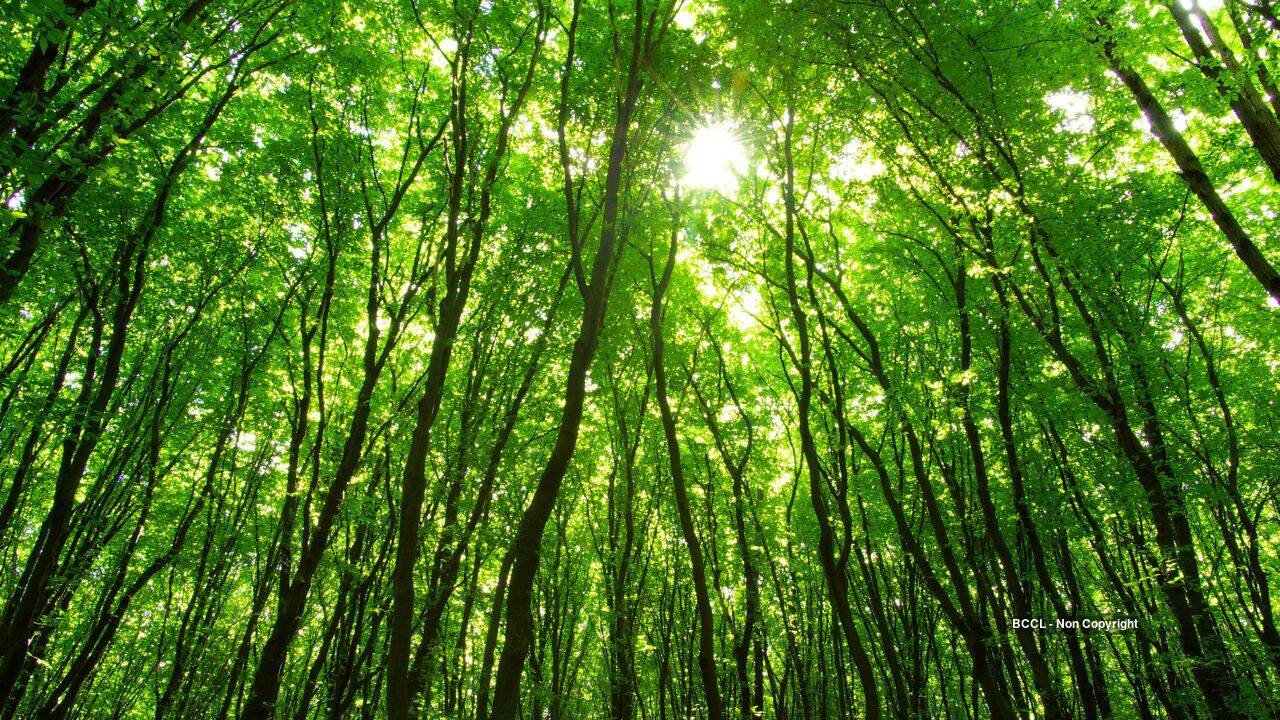
When you walk through a recovering tropical forest, your eyes might play tricks on you. You see a lush, green wall of leaves and assume it’s a pristine ecosystem reclaiming lost ground. That’s rarely the whole story. The truth is often a messy, competitive scramble where non-native trees show up first and take charge.
Researchers recently crunched data from 1,561 different forest plots across 10 tropical countries. They found something that should change how we think about reforestation. In young, moist forests, non-native trees—those that aren’t local to the area—accounted for 28% of all stems. Think about that for a second. Nearly one-third of the initial building blocks of these forests were essentially outsiders.
People often panic when they hear about invasive or non-native species. They picture choked-out landscapes and dead zones. But this data tells a more nuanced, and honestly, a more hopeful story. Those foreign trees aren’t necessarily killing the forest. They’re acting like a temporary scaffolding.
The Scaffolding Effect Explained
Most people assume that if you clear-cut a forest, you need to plant native seedlings immediately or everything is doomed. That’s a nice idea, but it ignores how nature actually functions under pressure. When the canopy is stripped away, the ground is exposed to intense heat and drying winds. Soil quality drops fast.
Native forest giants—the slow-growing hardwoods—often hate these conditions. They need shade. They need protection. Non-native, fast-growing trees are usually the ones that can handle the raw, brutal heat of a deforested site. They move in, grow tall quickly, and create that much-needed shade.
Basically, they’re doing the heavy lifting while the native species wait in the wings. The data shows exactly what happens next. As the canopy returns and the forest matures, the proportion of these non-native stems drops significantly. The locals eventually outcompete the invaders because they are better adapted to the long-term conditions of that specific micro-climate.
Why We Should Stop Micromanaging Nature
You’ve probably heard conservationists argue that we must pull out every single non-native plant to "restore" the forest. I’ve seen this happen in the field. Crews spend thousands of dollars and hundreds of hours hacking down anything that isn’t on a "native" list.
Honestly, that’s often a waste of resources.
If you remove the non-native trees too early, you’re often leaving the soil exposed to the sun again. You’re inviting the weeds to take over. You’re setting the recovery process back by years. The research from these 1,561 plots proves that these non-native trees aren’t always a permanent problem. They’re often just a phase.
We need to start looking at forest recovery as a transition, not a static image. A forest isn't a museum piece where every plant has to be an original. It’s a dynamic, living system that shifts over time. Sometimes, you need the fast-growing foreigner to stabilize the ship before the locals can take the helm.
Recognizing The Role Of Non-Native Species
It's time to get practical about how we manage land. If you’re involved in a reforestation project, your strategy needs to shift based on the age of the forest.
- Phase One: Focus on canopy cover. If non-native species are established and they aren't aggressively killing off native seedlings, let them be. They’re providing the shade you need for the future of the forest.
- Phase Two: Monitor the soil and the understory. As long as you see native saplings growing underneath the non-native canopy, the system is working. Don't fight the natural progression.
- Phase Three: Selective thinning. Once the native trees have reached a height where they can compete for light, you can slowly remove the non-native trees if they’re still hanging around.
Don't mistake "non-native" for "bad." Nature doesn't care about our labels. It cares about survival, carbon storage, and biodiversity.
The Reality Of Tropical Forest Dynamics
The study clearly shows that these trends aren't just local quirks. They held up across 10 different countries. This means we are looking at a universal biological process. When a forest is young and vulnerable, the "invaders" are often the ones preventing a total collapse.
If we keep trying to force a "native-only" aesthetic on young forests, we might actually be hindering recovery. We’re ignoring the biological reality that nature prioritizes coverage over provenance in the early years.
If you want to see a forest truly thrive, stop focusing on what species are present in year one. Start focusing on the trajectory of the ecosystem. Are the native trees showing up? Is the canopy closing? Is the soil moisture stabilizing? If the answer is yes, let the forest do its work.
Sometimes, the best thing you can do for a forest is simply step back and watch it grow, regardless of who arrives first.