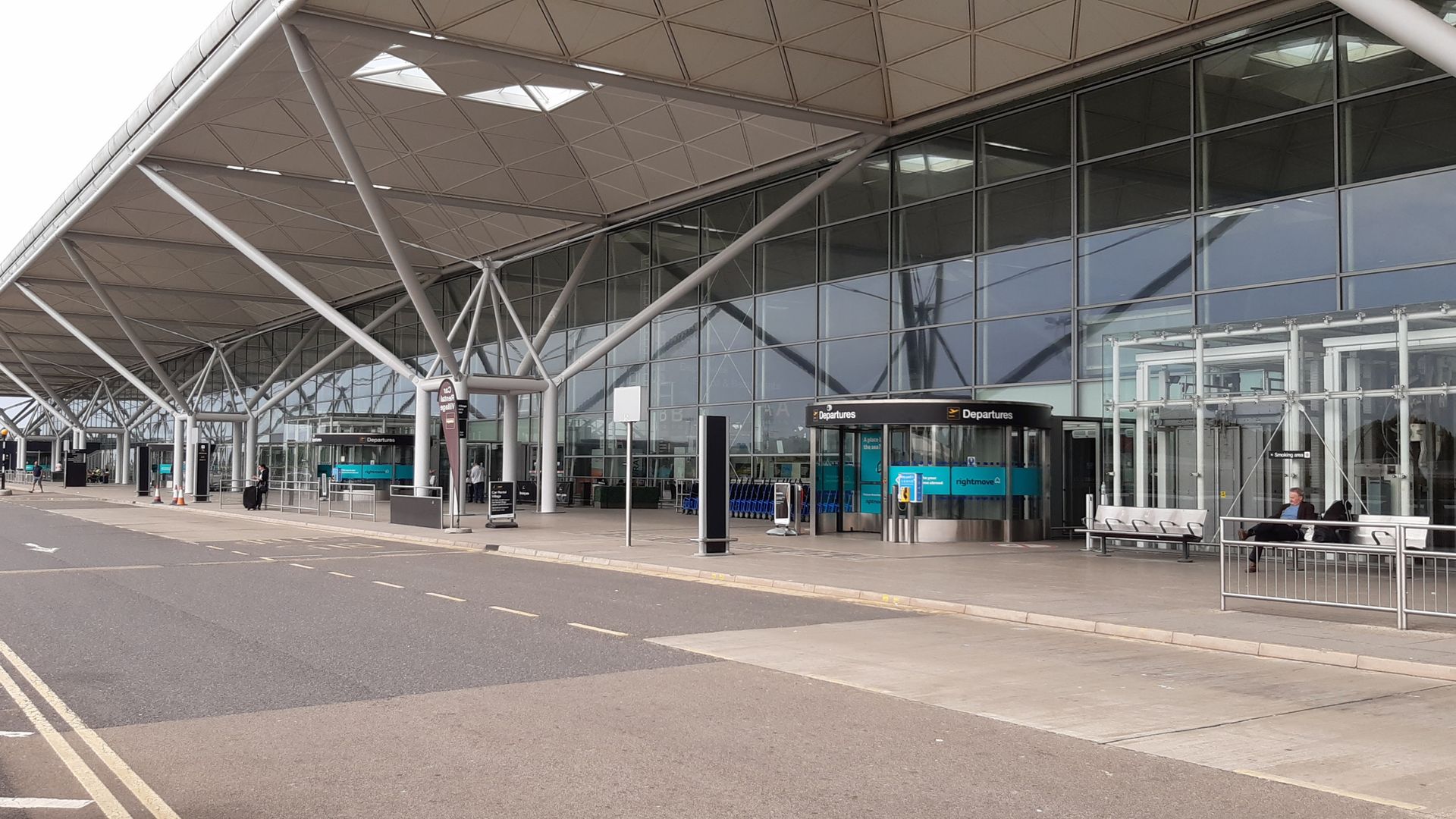
It starts with a flicker.
Not a dramatic explosion, not the cinematic shower of sparks Hollywood promises when a machine dies, just a fraction-of-a-second stutter in the fluorescent overhead lights of Terminal 5—a blink so brief you might blame it on dry contact lenses or the stale, recycled air of a departure lounge at four in the morning.
Silence.
Then, the low, rhythmic hum of the baggage carousel dies. The glowing departure boards, usually pulsing with the comforting promise of far-off places, freeze mid-refresh, before blinking into a uniform, indifferent black.
When a power surge hits a major UK airport, the headlines call it a technical glitch. They measure the damage in neat, sterile metrics: hundreds of flights delayed, tens of thousands of passengers stranded, millions of pounds shaved off quarterly airline earnings. Those numbers are accurate, and they are entirely beside the point. The real story isn't written in megawatts or spreadsheets; it is written in the quiet panic of a father watching the minutes tick away toward his daughter's wedding in Edinburgh, or the cold sweat of a surgeon in Manchester realizing the donor organ waiting on the tarmac in London isn't going to make the connection.
We treat modern aviation as an unstoppable force of nature, forgetting that the entire glittering apparatus hangs by a copper thread.
The Anatomy of a Modern Blackout
To understand how a single electrical spike can bring an international transit hub to its knees, you have to stop thinking of an airport as a building and start seeing it as a dense, nervous organism.
Picture a hypothetical passenger—let’s call her Clara—standing at Gate B42 with a lukewarm flat white in her hand. To Clara, the airport is a hallway with shops. She doesn't see the subterranean labyrinth beneath her sneakers, where high-voltage transformers step down enough electricity to power a small city like Oxford or York. Modern UK hubs, whether we are talking about Heathrow's sprawling terminals, Gatwick's high-intensity single-runway ballet, or Manchester's northern gateway, operate on a razor's edge of synchronized automation.
When a power surge occurs—perhaps triggered by a fault in the National Grid, a sudden lightning strike miles away, or the catastrophic failure of an aging substation component—a massive, uninvited wave of voltage slams into that delicate nervous system.
Surge protectors and uninterruptible power supplies (UPS) are designed to catch the blow. Usually, they do. Massive banks of industrial batteries kick in within milliseconds, keeping the air traffic control radar spinning and the runway approach lights burning bright against the British drizzle. Safety is never compromised; planes in the air are guided down safely, and planes on the ground stay put.
But the commercial soul of the airport? That shatters instantly.
A surge doesn't just turn things off; it scrambles the brains of thousands of interconnected servers. Automated baggage sorting systems—miles of high-speed conveyor belts guided by optical scanners—lose track of every single suitcase in transit. Security screening lanes, reliant on networked X-ray machines and biometric e-gates, lock down by default to prevent a breach. Refueling hydrants, which depend on computerized pressure sensors to pump aviation fuel safely into wing tanks, slam shut.
Even after the electricity stabilizes ten minutes later, you cannot simply flip a switch and resume operations. Every server has to be rebooted in a strict, sequential order. If the passenger manifest database comes online before the baggage reconciliation system, the two refuse to speak to each other. Meanwhile, aircraft are sitting at gates with their doors open, missing their narrow takeoff slots in Europe’s congested airspace.
One missing slot creates a domino effect that ripples from London to Frankfurt, across the Atlantic to New York, and back again.
The Invisible Clock in the Terminal
I still remember the smell of a stranded terminal after twelve hours without a functioning air-handling system. It is a specific, heavy blend of burnt espresso, anxious sweat, and floor wax, punctuated by the rhythmic thwack-thwack of people pacing the concourse just to keep their blood moving.
You learn very quickly during a major infrastructure failure that time moves differently inside a grounded airport.
In the first hour, there is camaraderie. Strangers share portable phone chargers near dead power outlets, trading wry British humor about the weather or the inevitable tea shortage. Everyone assumes a technician in a high-vis jacket is down in a basement somewhere, tightening a bolt that will set the world spinning again.
By hour four, the humor evaporates.
Consider what happens next: the digital information screens are still dark, or worse, stuck displaying contradictory lies. One app says your flight is boarding; the gate agent, shouting over a battery-powered megaphone because the PA system is fried, tells you the crew has just timed out under strict Civil Aviation Authority safety regulations. Once a pilot hits their legal maximum duty hours, that plane isn't moving until a fresh crew is driven in from across the country—assuming the roads around the airport aren't already gridlocked with taxis trying to rescue the thousands of people giving up on flying altogether.
The vulnerability of our current setup isn't a secret to the engineers who keep the lights on, even if it comes as a shock to the traveler holding a boarding pass. Much of the electrical infrastructure feeding Britain's major transport hubs was designed for an analog era, then retrofitted, patched, and pushed to handle an exponential explosion in digital demand. Every self-service bag drop, every facial recognition camera, every automated border gate adds another straw to the grid's back.
When the surge hits, we realize we haven't built a resilient system; we have built a brittle masterpiece.
Why Can't We Just Plug Into a Backup?
It is the first question every furious passenger asks at the customer service desk, usually while pointing at a ceiling light that stubbornly remains on: If the lights work, why can't you scan my boarding pass?
The answer lies in the difference between keeping the lights on and keeping the data flowing.
Think of an airport's electrical system like the plumbing in a Victorian house that has been converted into luxury flats. You might have a brand-new, high-pressure boiler in the basement, capable of heating every radiator in the building. That is your backup generator system—massive diesel turbines the size of railway locomotives, ready to roar to life the second the main grid drops.
Those generators easily handle the heavy lifting: lighting the terminals, running the elevators, and keeping the critical air traffic towers operational.
The problem isn't the boiler; it’s the fragile, microscopic pipes inside the walls. Sensitive computing hardware—the routers, switches, and servers that process passenger data—cannot tolerate dirty power. A power surge sends a violent spike of voltage racing through those delicate circuits before the backup generators can even spin up to speed. By the time the clean backup power takes over, thousands of circuit boards have already tripped their internal breakers to save themselves from melting, or worse, fried completely.
Repairing that isn't a matter of refueling a generator. It requires teams of IT specialists physically walking through miles of restricted service corridors, manually resetting tripped switches, replacing damaged hardware, and rebooting legacy software that sometimes dates back to the late 1990s.
While they are crawling through server rooms with flashlights, the outside world keeps moving. Incoming flights from Tokyo and Johannesburg, already halfway across the globe when the surge occurred, begin landing at an airport that has nowhere to put them. Tarmacs turn into parking lots. Passengers sit trapped inside pressurized metal tubes for three, four, five hours because there are no functioning jet bridges or ground crew communications to bring them to a gate.
The Ripple Effect Beyond the Runway
When a major UK hub stumbles, the shockwaves don't stop at the perimeter fence.
Britain is an island economy tethered to the rest of the world by air bridges. Beneath the feet of those frustrated holidaymakers in the passenger cabin sits the belly hold, packed with high-value freight that keeps modern life humming. Pharmaceuticals that require strict temperature control, precision aerospace parts bound for factories in Derby, fresh Scottish salmon headed for restaurants in Paris—all of it sits baking or freezing on tarmac dollies while the cargo handling computers reboot.
Under UK and European passenger rights regulations—specifically UK261—airlines are generally required to provide care and assistance during major disruptions, including meals, hotel accommodation, and rebooking. Yet there is a notorious grey area when the failure stems from external infrastructure rather than the airline itself. If the power surge originated in the National Grid rather than the airport's own substations, airlines will fiercely argue "extraordinary circumstances," leaving thousands of travelers fighting for months to recover out-of-pocket expenses for last-minute train tickets and overpriced airport hotels.
The financial toll runs into the tens of millions within a single afternoon, yet the reputational damage cuts deeper. For decades, London and the UK's regional hubs sold themselves as the seamless crossroads of the Western world—the reliable hinge connecting North America, Europe, and Asia. Every time a localized electrical fault triggers a twenty-four-hour meltdown, that reputation erodes just a little bit more.
Rebuilding Resilience in an Electric Age
So how do we stop a split-second voltage spike from holding an entire nation's travel plans hostage?
The fix isn't glamorous, which is precisely why it is so hard to fund. Nobody cuts a ribbon in front of television cameras to celebrate a new underground substation or a redundant fiber-optic ring. Politicians and airport boards love gleaming new terminals, designer duty-free halls, and expanded runway capacity; they are far less enthusiastic about spending hundreds of millions of pounds on subterranean switchgear that passengers will never see.
Yet that invisible investment is the only way forward.
True resilience requires moving away from centralized single points of failure toward localized microgrids—self-contained pockets of power generation and battery storage that can isolate themselves from the main grid the microsecond an anomaly is detected. Instead of one massive surge washing through the entire airport like a tsunami, smart automated switches can sever the connection in less than a millisecond, letting individual terminals ride out the storm on stored battery energy without a single computer screen even flickering.
At the same time, aviation's software architecture has to grow up. Relying on monolithic, interdependent databases where a glitch in baggage handling paralyzes check-in desks is an engineering relic. Cloud-native, decentralized systems—capable of operating offline on local tablets at the boarding gate and syncing up once the connection returns—would mean that even if the wires go dark, human beings with handheld scanners could still safely put bags on planes and get families home.
Until that quiet revolution happens beneath the tarmac, we remain entirely at the mercy of the current.
Walk through any departure lounge tonight, look up at the bright, humming fluorescent lights, and listen to the gentle mechanical whir of the baggage belts carrying thousands of lives toward the horizon. Everything looks solid, permanent, and effortless, right up until the exact millisecond it isn't.


