When the final whistle blew, Paris shook. Car horns erupted in a coordinated, chaotic symphony that rolled from the suburbs straight down to the Arc de Triomphe. It’s a scene French football fans know by heart, but whenever Les Bleus clash with Morocco on the pitch, the energy hitting the pavement changes completely. This isn't just about moving on to the next round of a tournament. It's complicated, it's passionate, and it feels incredibly personal for millions of people.
Football has a funny way of exposing the deep, tangled roots of history, identity, and migration. Watching the post-match celebrations in cities like Paris, Lyon, and Marseille reveals a much bigger story than a simple scoreline. You see the flags of both nations tied together, draped over the shoulders of teenagers who refuse to choose between their heritage and their home.
Beyond the Scoreline on the Champs Elysees
Walk down the Champs-Élysées after one of these high-stakes matchups and you'll quickly realize that standard sports commentary doesn't cut it. The air smells like sulfur from rogue fireworks. Red, white, and blue smoke mixes with the green and red flares of Moroccan supporters. It is a striking visual representation of modern France.
The media often braces for chaos before these games. Police departments regularly roll out massive security plans, boarding up luxury storefronts and shutting down metro stations near the main avenues. In past tournaments, like the historic 2022 World Cup semi-final in Qatar, authorities deployed up to 10,000 officers nationwide just to manage the crowds.
But focus only on the arrests or the tension and you miss the real magic happening on the sidewalks. For every riot shield, there are ten families, groups of students, and everyday workers just soaking in the moment. You'll see dual nationals wearing a France jersey while waving a Moroccan flag. They're celebrating a unique cultural identity that thrives long after the stadium lights turn off.
The Power of the Diaspora
To understand why this fixture feels so intense, you have to look at the numbers. France is home to a massive Moroccan diaspora. Government data shows over two million people of Moroccan origin living in the country, with hundreds of thousands concentrated right in the Paris metropolitan area.
This isn't a community living on the margins of football culture; they are right at the center of it. The connection runs deep across generations. Older immigrants who arrived decades ago watch the games alongside their French-born grandchildren. When these two teams meet, households split down the middle in the best way possible. Dinner tables turn into playful war rooms, and local bistros become loud, friendly battlegrounds.
Shared Heroes on the Pitch
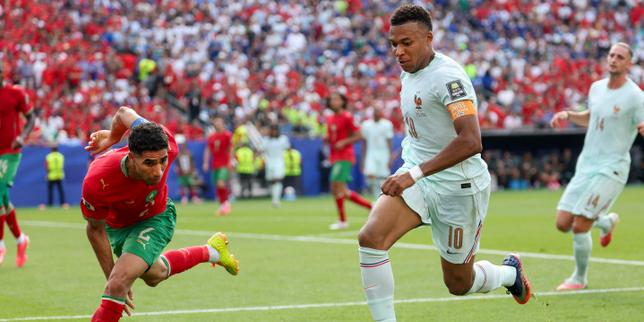
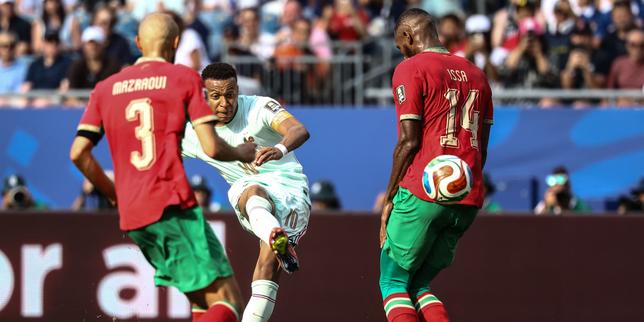
The players themselves embody this blurred line between the two nations. Look at the tight bond between French superstar Kylian Mbappé and Moroccan defender Achraf Hakimi. They're club teammates, close friends, and global icons. When they face each other on the international stage, their post-game embrace speaks louder than any political statement. They exchange shirts, sit together in the tunnel, and show the world that fierce rivalry doesn't mean division.
Many players in the Moroccan national squad were actually born or raised in Europe, honing their skills in French academy systems before choosing to represent their ancestral homeland. This creates an fascinating tactical chess match. The styles of play, the player developmental backgrounds, and even the locker room languages are deeply intertwined.
Moving Past the Predicted Chaos
Every time this match pops up on the calendar, predictable narratives flood the news cycle. Pundits warn of impending doom, rioting, and social collapse in the streets of major French cities. It's a lazy script that locals are getting tired of reading.
Honestly, the reality on the ground rarely matches the grim predictions. While isolated skirmishes do happen—often fueled by a mix of adrenaline, alcohol, and heavy-handed policing—the overarching vibe is overwhelmingly festive. People want to dance. They want to climb lampposts, beep their horns until their car batteries die, and argue about tactical substitutions with complete strangers.
The shared joy after these matches highlights something important. Football acts as a mirror for society. It shows that coexistence isn't some abstract political theory debated in talk-show studios. It's lived out in real-time on the asphalt, wrapped in flags, and fueled by a shared love for the beautiful game.
If you want to understand the heartbeat of modern France, stop looking at the political polling and start looking at the football celebrations. The noise, the color, and the messy, beautiful fusion of cultures tell you everything you need to know. Next time these two giants meet, bypass the mainstream news panic, find a local cafe packed with fans from both sides, and just watch how sport brings people together.