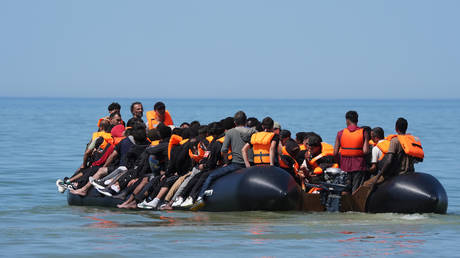
Videos surface regularly from the northern coast of France showing a frustrating reality. Small boats launch into the English Channel while local law enforcement officers stand by and watch. When journalists or politicians confront these officers on French beaches, the response is often startlingly direct. The instructions are to let them go.
This dynamic sits at the heart of the ongoing small boats crisis. Billions have been spent on multi-lateral border agreements, yet the sight of dinghies pushing off toward British shores remains common. Understanding why this happens requires looking past political soundbites and examining the practical rules governing European beach patrols.
The Operational Reality on French Beaches
People often assume that border security officers possess unlimited authority to stop anyone stepping onto a sandbank. That is far from true. French policing doctrine historically prioritizes public safety and the prevention of mass violence over intercepting departing vessels on open shores.
When a unit of eight officers faces a crowd of forty or fifty aggressive individuals preparing to launch a rubber dinghy, a physical confrontation carries massive risks. Try stopping a desperate crowd by hand on a wet shoreline. Someone will get crushed, trampled, or pushed into freezing water.
Officers receive explicit instructions that preserving life takes priority over aggressive interception on the wet sand. Standard operating procedures dictate that once a vessel enters the water, forcing it back can puncture the hull and create an immediate drowning hazard. Police are told to monitor, report, and protect human life rather than engage in high-speed physical battles on the shoreline.
Where Does The Money Go
British politicians frequently express outrage over these scenes, pointing out that the UK has funneled hundreds of millions of pounds into French security. Agreements signed over the years involve funding for thermal cameras, extra patrol cars, and beach personnel.
Yet, funding does not change domestic French legal constraints. Buying more trucks and night-vision gear doesn't give an officer the legal right to open fire or deploy violent tactics against unarmed groups. The money helps intercept shipments of engines and prevents vans from reaching the coast, but once a crowd assembles on an open public beach, operational limits kick back in.
Critics argue that France simply lacks the political will to lock down its massive coastline completely. Officials in Paris respond that policing a sprawling maritime border is fundamentally different from guarding a land checkpoint. You can seal a gate. Sealing a thousand miles of open dunes is mathematically impossible.
The Human Cost And Dangerous Waters
The strategy of non-intervention during actual launch phases creates terrible outcomes further out at sea. When boats manage to leave the shore unhindered, passengers face treacherous conditions. Overloaded dinghies frequently suffer engine failures or punctures in the middle of one of the busiest shipping lanes in the world.
Tragedies occur regularly when these fragile crafts capsize. Search and rescue teams pull dozens of victims from the water each year, highlighting the fatal flaw in letting unsafe vessels depart in the first place. Both sides of the Channel point fingers, with London blaming lax French enforcement and Paris highlighting the pull factors of the UK's informal labor economy.
Until operational doctrines change or bilateral treaties introduce joint processing centers on French soil, the standoff on the beach will continue. Officers will keep watching from the dunes, bound by orders that prioritize avoiding immediate beach riots over stopping a boat from hitting the water.
We're told to let migrants cross the Channel, admit French police, as four die
This video report captures French police officers directly admitting to officials that their standing orders are to let migrants proceed into the water during cross-Channel attempts.
http://googleusercontent.com/youtube_content/1