The air in central Mexico usually smells of dry earth, roasted corn, and the sharp, metallic tang of distance. But on a Tuesday morning outside a heavily fortified compound, the wind carried something else entirely. It carried the acrid, unmistakable stench of unrefined petroleum.
It smells like money. It smells like rot. Don't miss our earlier coverage on this related article.
Federal agents moved in quietly, their boots crunching against gravel that had seen too many heavy trucks coming and going under the cloak of midnight. They were hunting fuel thieves. In this region, tapping illegal lines from the state pipeline network is a cottage industry run by cartels who treat national infrastructure like an open vein. They expected corrugated steel sheds, tangled hoses, makeshift storage tanks, and perhaps a few nervous men with automatic weapons.
They did not expect the lions. If you want more about the history here, TIME provides an in-depth breakdown.
The Concrete Cage
Imagine walking behind a corrugated metal wall, expecting drums of stolen gasoline, only to find the heavy, rhythmic breathing of an apex predator echoing off concrete blocks.
This is not a metaphor. Behind that wall, pacing in a space designed for cargo rather than bone and muscle, was a big cat.
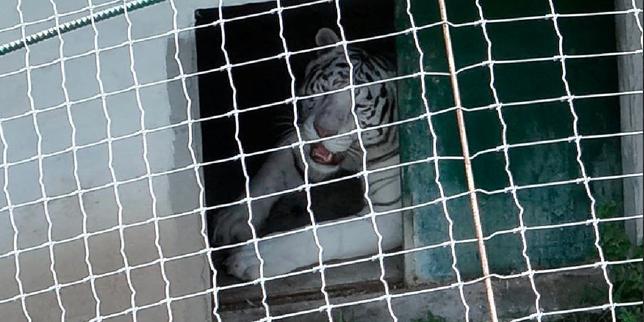
Law enforcement officers cataloged the surreal inventory over the course of that raid. One hundred and thirty-five animals. Let that number settle in the mind. One hundred and thirty-five living, breathing, sentient creatures crammed into makeshift enclosures alongside stolen fuel pumps, industrial hoses, and high-capacity storage bladders. There were lions. There were tigers. There were even bisons, massive symbols of an open northern wilderness, standing bewildered in the suffocating heat of an illegal Mexican fuel depot.
How do you smuggle a tiger?
The answer is deceptively simple: you do it the same way you smuggle anything else when corruption greases the wheels. You rely on porous borders, forged paperwork, and a black market that views exotic fauna as living currency. Drug cartels and fuel syndicates do not just diversify their portfolios; they accumulate status symbols. In certain violent subcultures, having a chained tiger in your backyard is the ultimate flex. It tells the neighborhood that you possess power beyond the law. It says you can feed a creature that eats twenty pounds of raw meat a day while ordinary people struggle to buy tortillas.
The Invisible Ledger
We talk about cartel economies in terms of billions of dollars, seizure rates, and homicide statistics. Those are the cold facts that populate evening news bulletins. But the real ledger is written in flesh.
Consider what happens to an animal bought as a cub. It is cute, manageable, a living plush toy for the children of a cartel lieutenant. Then it grows. Its jaws widen. Its territorial instincts flare. It requires a diet that costs more than a family's monthly wage. Suddenly, the novelty wears off. The animal becomes a liability.
So it gets relegated to the back of the compound. It is fed scraps, left in its own waste, and forgotten behind welded steel bars while its owners focus on the next illegal pipeline tap.
When federal authorities seized the property, they did not just find victims of wildlife trafficking; they found living evidence of a parallel ecosystem. The fuel thieves siphon from the state; the animal traffickers siphon from the wild. Both operations draw sustenance from the same rotting root of institutional vulnerability. When corruption allows criminal syndicates to operate with impunity above ground, the boundary between human suffering and animal exploitation dissolves completely.
The bisons stood particularly out of place. Native to the great plains far to the north, their heavy coats were matted in the subtropical heat. They did not roar like the lions or chuff like the tigers. They simply stared with dark, ancient eyes, survivors of a different kind of erasure, now trapped in the machinery of modern greed.
The Burden of Rescue
Taking down the kingpins is only the first act. What happens when you win a raid and inherit a menagerie?
Veterinarians and wildlife rehabilitators arrived hours after the raid, stepping gingerly among armed federal police. Their task was staggering. You cannot simply open the cages and let a captive-bred tiger walk into the Mexican scrubland. It would starve, or it would wander into a rural village with catastrophic results. You cannot easily transport a hundred-plus large mammals without specialized heavy transport, tranquilizer protocols, and millions of dollars in secure sanctuary space.
This is the hidden cost of the black market. Every illegal transaction creates a downstream disaster that public institutions are ill-equipped to handle. The state wildlife agencies are chronically underfunded. Zoos are often at full capacity. The sanctuaries are overwhelmed, relying on donations and the sheer willpower of people who refuse to look away.
Standing in that dusty courtyard, surrounded by the deep, resonant growls of caged cats and the heavy snorts of bewildered bisons, the officers realized the grim truth of their victory. They had crippled a local fuel-theft cell. But they had also inherited a floating ark, a broken Noah's project funded by crime and abandoned to the state.
The trucks rolled out one by one, carrying heavy crates draped in tarps. The sirens fell silent, leaving only the wind blowing across the dry plains, carrying the faint, lingering scent of gasoline and the ghost of a roar.