The Strait of Hormuz functions as the world's most critical energy choke point, but its current instability is not a localized tactical failure; it is the manifestation of a fundamental shift in the global maritime security architecture. While conventional analysis focuses on Iranian kinetic threats, the actual degradation of the maritime order is driven by a feedback loop between Tehran’s asymmetrical brinkmanship and Washington’s transition from a provider of global public goods to a practitioner of selective enforcement. The disintegration of the "freedom of navigation" principle is a quantifiable outcome of shifting cost-benefit ratios for both regional powers and the traditional guarantor of the seas.
The Structural Mechanics of the Choke Point
The Strait of Hormuz is a physical bottleneck where the navigable shipping lanes—specifically the two-mile-wide inbound and outbound channels—lie within the territorial waters of Oman and Iran. This geography dictates the operational reality of the "Transit Passage" regime under the United Nations Convention on the Law of the Sea (UNCLOS).
The vulnerability of the Strait is defined by three primary risk vectors:
- Asymmetrical Interdiction: The Iranian Navy and the Islamic Revolutionary Guard Corps Navy (IRGCN) utilize a "swarm and mine" doctrine. This utilizes low-cost assets—fast attack craft, naval mines, and shore-based anti-ship cruise missiles—to threaten high-value commercial tankers.
- Legal Grey-Zone Operations: By citing environmental concerns or maritime "infractions," regional actors can seize vessels under a veneer of domestic legality, forcing a diplomatic crisis that bypasses standard military deterrents.
- Insurance and Risk Premia: The mere threat of instability triggers a "War Risk" surcharge from Lloyd’s Market Association. When these premiums spike, the economic throughput of the Strait is penalized before a single shot is fired.
The US Security Paradox: From Guarantor to Competitor
For decades, the United States Navy acted as the sole underwriter of maritime security in the Persian Gulf. This role was predicated on the Carter Doctrine, which viewed any attempt by an outside force to gain control of the Gulf region as an assault on the vital interests of the United States. However, the internal logic of this commitment has frayed.
The Shift in Energy Dependency
The United States has transitioned from a net importer of hydrocarbons to a leading global producer. While the global oil market remains integrated, the direct physical reliance of the US on Hormuz-transit crude has plummeted. The primary beneficiaries of a stable Strait of Hormuz are now China, India, Japan, and South Korea. This creates a "Free Rider" problem in maritime security. Washington increasingly views the high cost of maintaining the Fifth Fleet as a subsidy for its primary strategic competitors in Asia.
Selective Enforcement and Sanctions Architecture
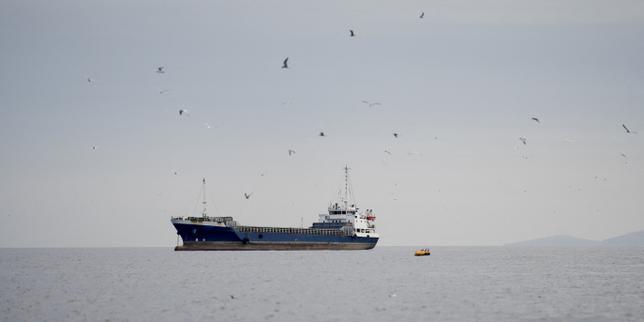
The weaponization of the US dollar and the imposition of "Maximum Pressure" sanctions changed the role of the US Navy. Instead of purely protecting trade, the Navy was tasked with interdicting it—specifically Iranian oil exports. This shifted the US from a neutral arbiter of freedom of navigation to an active participant in maritime disruption. When Washington seizes a tanker carrying Iranian crude (e.g., the Suez Rajan), it validates the logic of "tit-for-tat" seizures. This creates a cycle where the international legal framework is secondary to the exercise of raw jurisdictional power.
Iran’s Strategy of Calculated Friction
Tehran’s maritime strategy is a rational response to economic strangulation. Lacking the conventional naval power to win a direct engagement, Iran employs a strategy of "Calculated Friction" to manipulate the global cost of energy.
The Iranian tactical framework relies on the following pillars:
- Deniability and Proxies: Utilizing Houthi rebels in the Bab el-Mandeb or "unidentified" limpet mine attacks allows Tehran to exert pressure while avoiding a clear casus belli.
- Targeting the Logistics Chain: By focusing on the crew and the physical hull of tankers, Iran forces the private sector (shipowners and insurers) to lobby their respective governments for de-escalation.
- The Threat of Total Closure: While a total blockage of the Strait would be economically suicidal for Iran, the capability to do so serves as a permanent deterrent against a full-scale invasion of the Iranian mainland.
The Breakdown of Multinational Deterrence
The formation of initiatives like the International Maritime Security Construct (IMSC) was intended to restore order. However, these coalitions suffer from a lack of unified political intent.
The breakdown occurs at the intersection of three failures:
- Burden-Sharing Incoherence: European and Asian allies are hesitant to align fully with US-led missions for fear of being dragged into a broader conflict with Iran. This leads to fragmented patrols and a lack of a cohesive "Rules of Engagement" (ROE) framework.
- The Shadow Fleet Proliferation: The rise of a "grey market" or "shadow fleet" of tankers—vessels with opaque ownership, questionable insurance, and disabled AIS (Automatic Identification System) transponders—undermines the ability to monitor and regulate traffic. This fleet operates outside the traditional maritime order, making it both a target for and a tool of state-sponsored disruption.
- Regional Normalization vs. Global Enforcement: Regional powers like Saudi Arabia and the UAE have begun to hedge their bets. Seeing the US commitment as volatile, they have engaged in direct diplomacy with Tehran to secure their own coastlines, often at the expense of supporting broader US maritime sanctions enforcement.
The Strategic Bottleneck of Technology
Advanced surveillance and drone technology have fundamentally changed the "Search and Rescue" and "Visit, Board, Search, and Seizure" (VBSS) operations in the Strait. The proliferation of Unmanned Surface Vessels (USVs) and Loitering Munitions provides a low-cost way for state and non-state actors to monitor every movement of a carrier strike group.
In this environment, the "Over-the-Horizon" capability of the US is challenged by the "In-the-Water" ubiquity of Iranian sensors. The high-tech advantage of the US Navy is neutralized in the narrow, cluttered environment of the Strait, where the time-to-target for a shore-based missile is measured in seconds.
The New Maritime Equilibrium
The era of a single hegemon guaranteeing the global commons is ending. In its place, a fragmented, transactional maritime order is emerging. This is not the result of a single actor’s malice, but a systemic shift where the costs of maintaining the old order exceed the perceived benefits for the former leader.
The future of the Strait of Hormuz will be defined by:
- Bilateral Security Arrangements: Major importers like China will likely move toward protecting their own convoys, leading to a "militarization of the merchant marine."
- Technological Hardening: Commercial vessels will increasingly require autonomous defense systems or private security details capable of countering low-level drone threats.
- Regional Dominance: Iran will continue to leverage its geographic advantage to extract political concessions, treating the Strait as a sovereign toll road rather than an international waterway.
The strategic play for global stakeholders is no longer to wait for a return to the status quo of the 1990s. Instead, firms and states must build "logistical redundancy" into their energy portfolios. This means accelerating the development of pipelines that bypass the Strait (such as the East-West Pipeline in Saudi Arabia or the Habshan–Fujairah pipeline in the UAE) and shifting toward decentralized energy sources that are not vulnerable to geographic choke points. The maritime order is not being destroyed; it is being localized, and those who rely on global protection for their supply chains are currently operating on an obsolete risk model.
The transition from a US-guaranteed maritime commons to a contested, multi-polar waterway is the single greatest risk to the "Just-in-Time" global energy economy. Strategists must now price in the permanent presence of "state-sponsored piracy" as a standard operational cost rather than a temporary anomaly.
Final Strategic Play: Diversify transit routes immediately. The "freedom of navigation" is no longer a guaranteed public good; it has become a premium service available only to those with the kinetic or diplomatic leverage to enforce it themselves.