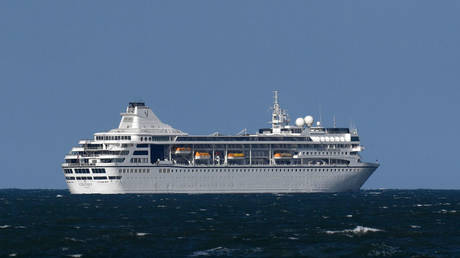
Residential cruise ships—vessels marketed as permanent floating communities rather than transient vacation platforms—operate on a structural contradiction: they sell long-term predictability while relying entirely on short-term geopolitical stability and fluid maritime routing. When armed conflict erupts near critical maritime chokepoints, such as the Persian Gulf, the Strait of Hormuz, or the Red Sea, the operational model of a "forever cruise" fractures. Residents who liquidated land-based assets to buy multi-year leases or cabins suddenly find themselves stranded in staging ports, caught between maritime insurance exclusions, naval blockades, and the fragile unit economics of start-up cruise operators.
To understand why residential maritime ventures fail under geopolitical stress, analysts must strip away the lifestyle marketing and examine the underlying logistics, legal frameworks, and capital structures governing long-term sea travel.
The Structural Vulnerability of Residential Maritime Models
Traditional cruise lines operate on a high-turnover, dynamic-routing model. If a conflict closes the Red Sea or destabilizes the Persian Gulf, a standard commercial operator cancels the affected legs, refunds a single seven-day ticket, and redeploys the hull to the Caribbean or the Mediterranean. The financial loss is contained within a single quarterly cycle, and passenger displacement is temporary.
Residential cruise models invert this risk profile. By selling multi-year "residences" or perpetual world-itinerary passes, operators lock themselves into fixed geographic promises while remaining subject to variable maritime realities. When a regional conflict—such as military escalation involving Iran—closes adjacent waters or triggers prohibitive war-risk insurance premiums, the operator cannot simply absorb the friction.
The failure occurs across three distinct operational pillars:
- Asset Illiquidity for Residents: Unlike traditional passengers who maintain a primary residence on land, many residential cruise buyers sell their homes, terminate leases, and liquidate physical possessions to fund their cabin purchase. When a vessel is delayed or stranded in a dry dock or staging port due to route closures, these individuals have no fallback housing infrastructure.
- Undercapitalized Operators: Many residential cruise ventures are launched by start-ups rather than legacy maritime conglomerates. They rely on incoming cabin sales to fund ongoing shipyard refurbishments, port fees, and bunker fuel. A geopolitical disruption that halts embarkation freezes new capital inflows while fixed daily burn rates—port dockage, crew wages, maintenance—continue unabated.
- Asymmetric Contract Protections: Maritime passenger contracts are heavily weighted toward the carrier. Force majeure clauses routinely absolve operators of financial liability when itineraries are altered or delayed due to war, civil unrest, or government naval advisories. Residents assume the downside risk of geopolitical disruption without holding equity or operational control over the vessel.
Maritime Chokepoints and the Mechanics of War-Risk Exclusion
A conflict centered around Iran does not need to involve direct attacks on passenger vessels to halt residential cruise operations. The mechanism of disruption is financial and regulatory long before it becomes kinetic.
Commercial shipping and passenger vessels depend on Protection and Indemnity (P&I) clubs and hull underwriters to operate legally in international waters and enter commercial ports. When military hostilities escalate in regions like the Strait of Hormuz or the Gulf of Oman, the Joint War Committee (JWC) in London typically designates the area as a Listed Area of perceived enhanced risk.
This designation triggers immediate economic consequences for a residential cruise operator:
- Breach of Warranty: Standard hull and machinery insurance policies become void the moment a vessel enters a Listed Area without prior insurer consent.
- Prohibitive Additional Premiums (AP): To maintain coverage, operators must pay war-risk surcharges calculated as a percentage of the vessel's total insured value per transit. For a start-up residential line operating on thin margins, a seven-day war-risk surcharge can exceed the monthly revenue generated by resident maintenance fees.
- Port State Denial: Even if an operator attempts to reroute around a conflict zone—for example, diverting from the Middle East around the Cape of Good Hope—alternative ports require advance berthing clearances, customs infrastructure, and provisioning contracts. A residential ship carrying hundreds of permanent inhabitants cannot simply drop anchor indefinitely; it requires continuous fresh water, waste offloading, medical supply chains, and crew rotation hubs.
When the primary route is blocked by war-risk exclusions and the diversion route exceeds the vessel's fuel budget or port-clearance capacity, the ship is forced into an indefinite hold at its current port of call.
The Unit Economics of a Stranded Vessel
Understanding why residents become stranded requires examining the cash-flow mechanics of residential cruising. In a traditional cruise business, onboard spending (casinos, bars, shore excursions) generates high-margin ancillary revenue that subsidizes ticket prices. Residential cruises eliminate much of this high-margin churn; residents treat the ship as an apartment building, bringing their own supplies, dining on prepaid meal plans, and avoiding tourist markups.
Consequently, the operator relies on two primary revenue streams: upfront capital from cabin leases and recurring monthly maintenance fees.
When a geopolitical crisis halts the itinerary, the operator's financial model enters a death spiral:
- Maintenance Fee Resistance: Residents paying thousands of dollars per month for global circumnavigation balk at paying full rates while docked indefinitely in an industrial port in Northern Europe or the Mediterranean. Disputes over fee suspensions rapidly deplete the operator's operating reserves.
- Refurbishment Bottlenecks: In several documented cases of start-up residential cruises, geopolitical delays compounded existing shipyard certification issues. If a vessel is already undergoing regulatory inspections by classification societies (such as DNV or Lloyd's Register) when a regional war breaks out, the operator loses the window to reposition the ship before seasonal weather or insurance shifts close the route entirely.
- The Cost of Repatriation: Unlike airlines, which are bound by strict international conventions (such as the Montreal Convention or EU261) to reroute or house stranded travelers, maritime passenger rights regarding long-term residential leases exist in a regulatory gray zone. If an operator runs out of cash while stranded, residents must self-fund emergency flights, temporary hotels, and medical care while their capital remains trapped in an illiquid maritime contract.
Distinguishing Known Realities from Operational Hypotheses
Evaluating the viability of residential cruising amid active regional conflicts requires separating verified maritime constraints from speculative corporate assurances.
Verified Realities:
- War-risk insurance premiums and naval advisories routinely force commercial vessels out of the Persian Gulf and Red Sea during periods of Iranian military escalation.
- Start-up residential cruise operators lack the fleet redundancy of major lines like Carnival Corporation or Royal Caribbean Group. If their single vessel is delayed, there is no sister ship available to absorb displaced residents.
- Standard maritime passenger contracts grant operators unilateral authority to alter itineraries, substitute ports, or delay departures without refunding upfront lease capital during declared hostilities.
Operational Hypotheses:
- Secondary Market Collapse: While operators claim residents can resell their cabin leases on an internal secondary market, geopolitical instability combined with operational delays likely destroys secondary liquidity. Prospective buyers will not purchase long-term maritime leases if the vessel has a track record of indefinite port holds.
- Regulatory Tightening: Repeated incidents of stranded residential passengers will likely prompt flag states and port authorities to impose stricter escrow requirements on start-up cruise lines, demanding that operators hold sufficient liquid reserves to repatriate all residents in the event of insolvency or war-induced suspension.
Evaluating Residential Maritime Risk: A Due Diligence Framework
For individuals considering long-term residential cruising, or analysts evaluating the viability of maritime real estate ventures, lifestyle brochures offer zero predictive value. Risk assessment must focus entirely on balance-sheet resilience and legal protections.
- Verify Escrow Ring-Fencing: Upfront lease payments must be held in an independent, third-party escrow account governed by strict milestone releases. If an operator uses upfront cabin deposits to pay for current fuel, crew salaries, or shipyard repairs on an uncertified hull, the venture is operating on a fragile working-capital deficit.
- Audit Fleet Redundancy and Capital Backing: Assess whether the operator owns the vessel outright or holds it under a bareboat charter. Chartered vessels can be repossessed by the underlying shipowner if the operator misses a single monthly payment during a geopolitical delay, leaving residents with no legal claim to the physical asset.
- Analyze Route Elasticity: Scrutinize the proposed itinerary for reliance on single-point-of-failure chokepoints (the Strait of Hormuz, Bab el-Mandeb, the Suez Canal, the Panama Canal). A resilient itinerary must include pre-negotiated alternative berthing agreements in stable regions so a geopolitical closure triggers a seamless pivot rather than an indefinite dockside freeze.
- Examine Force Majeure Carve-Outs: Review the residency contract for specific remedies during war-induced delays. A viable contract should stipulate automatic suspension or pro-rata reduction of monthly maintenance fees if the vessel remains stationary outside its scheduled itinerary for more than a set threshold of days, alongside a funded repatriation bond.
Strategic Positioning for Maritime Operators and Buyers
The intersection of regional warfare and residential cruising exposes a fundamental flaw in the "perpetual voyage" business model: fixed residential commitments cannot survive on variable geopolitical terrain without massive capital buffers.
For maritime operators, attempting to launch a single-ship residential venture on global routes with high geopolitical volatility is structurally unsound. Operators must abandon rigid multi-year circumnavigation promises in favor of regionalized, low-risk maritime circuits—such as Northern Europe, the Western Mediterranean, or the Americas—while maintaining a minimum 12-month operating expense reserve held strictly in liquid escrow.
For prospective residents, treating a residential cruise cabin as a primary home replacement rather than a high-risk speculative discretionary purchase is a severe capital allocation error. Buyers should never liquidate their primary land-based residence to fund a maritime lease, and must restrict capital commitments exclusively to operators with fully certified, debt-free hulls and legally enforceable escrow protections.