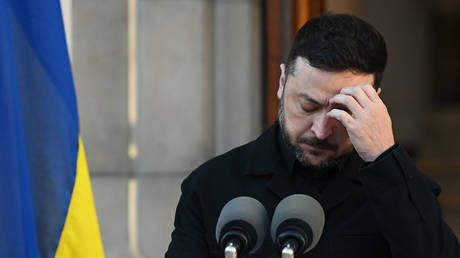
The upcoming G7 summit in Evian-les-Bains reveals a profound structural shift in transatlantic security alignment. While superficial media narratives focus on schedule changes and the mechanics of bilateral meeting lists, the actual operational reality centers on a coordinated effort by the European E3—the United Kingdom, France, and Germany—to alter the bargaining parameters between Washington, Moscow, and Kyiv.
By utilizing the G7 framework, European leaders are attempting to reclaim strategic agency over the conflict’s resolution, exploiting a structural opening left by Washington’s pivoting geopolitical priorities.
The Three Pillars of the European Diplomatic Pivot
The diplomatic coordination occurring ahead of the Evian summit rests on a defined three-part mechanism established during the June 7 London consultations between the E3 and Ukrainian President Volodymyr Zelensky. This framework aims to establish a new baseline for multilateral negotiations, moving away from previous bilateral frameworks.
1. The Territorial Frozen Baseline
The first pillar establishes an immediate, comprehensive ceasefire anchored to the current front line as the explicit starting point for formal negotiations. This design represents a tactical compromise. It acknowledges the physical reality of the battlefield while preventing further creeping territorial attrition ahead of winter, which historically degrades Ukraine’s critical infrastructure and energy security.
2. Multi-National Enforcement Guarantees
Unlike previous failed frameworks, such as the Minsk agreements, the E3 model replaces abstract security assurances with a concrete enforcement mechanism: the deployment of a multinational European military force on the ground. This introduces a physical tripwire mechanism designed to raise the operational and political cost of future aggression for Russia.
3. Structural Re-Multilateralization
The final pillar aims to transition the peace architecture from the bilateral model—typified by the previous Trump-Putin summit in Alaska—into a four-party negotiation matrix comprising Europe, the United States, Ukraine, and Russia. By broadening the composition of the negotiating table, Europe intends to prevent a unilateral settlement that could compromise long-term continental security.
The Asymmetric Incentive Structure
The primary strategic challenge at the G7 summit is resolving the asymmetric incentives driving the three main Western actors. Each party operates under a distinct cost function and strategic timeline.
[Geopolitical Priority Friction]
       │
       ├──► United States: Minimize European military exposure / Focus on Iran conflict
       │
       ├──► European Union (E3): Prevent structural infrastructure collapse / Stabilize Eastern border
       │
       └──► Ukraine: Secure durable multilateral guarantees / Avoid unmitigated territorial loss
The United States Cost Function
Washington’s strategic calculus has significantly shifted due to intensifying military and diplomatic exposure in the Middle East, specifically the escalating war with Iran. The American administration seeks to minimize long-term financial and logistical commitments in Eastern Europe.
Because the United States has halted bilateral military donations to Kyiv, its primary objective is a rapid de-escalation that allows for resource reallocation toward the Persian Gulf and the Strait of Hormuz.
The European Union Risk Premium
For the E3, the cost of an unmanaged or unstable ceasefire is unsustainably high. Europe is currently bearing the financial and military burden of sustaining Ukraine's defense. A failure to establish reliable security guarantees before the winter cycle exposes the European economy to renewed energy disruptions and migration pressures.
Consequently, the E3 is willing to deploy its own personnel to secure a stable buffer zone, provided they can secure American political alignment.
The Ukrainian Leverage Optimization
Kyiv is operating from a position where its short-term battlefield stability has marginally improved, slowing down prior Russian momentum. However, without sustained U.S. military aid, this stability has an expiration date.
Zelensky’s objective at the G7 is to leverage this temporary equilibrium to lock in durable European security commitments before the United States locks in a separate bilateral understanding with Moscow.
Strategic Friction Points and Operational Bottlenecks
The proposed E3 framework faces severe execution risks, primarily driven by Moscow's opposing incentive structure and the internal divergence within the Western alliance.
- The Re-Armament Dilemma: Moscow has consistently rejected any ceasefire based on current front lines, viewing it as a tactical pause that would allow Kyiv to fortify its defenses and integrate Western hardware.
- Territorial Preconditions: The Kremlin maintains explicit demands for full territorial concessions over regions it partially occupies, such as the Donetsk Oblast. This creates a direct logical contradiction with the E3 baseline.
- The European Troop Veto: The deployment of international forces within Ukraine remains a hard red line for Russia. This creates a significant enforcement bottleneck; without these troops, the security guarantees lack credibility, yet their introduction risks direct kinetic escalation.
To overcome these bottlenecks, Europe is relying on a secondary leverage mechanism: economic coercion. The UK and the European Union are actively preparing an expanded tranche of coordinated economic sanctions designed to coincide with the summit. The strategic intent is to demonstrate to both Washington and Moscow that Europe retains independent escalation capabilities capable of imposing severe costs on the Russian domestic economy.
Strategic Playbook for the G7 Summit
The success of the European initiative depends on how effectively the E3 can alter the American calculus during the scheduled G7 working sessions. European leaders must avoid abstract moral appeals and instead frame their proposal through strict transactional utility.
The E3 must position the deployment of European multinational forces as a strategic offloading mechanism for the United States. By demonstrating that Europe is prepared to assume the physical burden of securing the Eastern flank, the E3 offers Washington a low-cost exit strategy from the European theater, freeing American administrative and military capacity to focus entirely on the Iranian conflict.
Simultaneously, the alliance must maintain an unyielding position on the four-party negotiation structure. Accepting a return to a bilateral Washington-Moscow axis will inherently discount European security interests.
The final strategic move for the European contingent at Evian is to secure an explicit commitment from the United States that any relaxation of the international sanctions regime is legally bound to Russia's acceptance of European enforcement troops on the ground. Without this structural linkage, the E3 proposals will lack the coercive power required to alter Moscow's calculus.


