Germany’s current energy policy trajectory is not a "flip-flop" in the political sense, but a systemic collision between ideological decarbonization targets and the rigid physical constraints of industrial baseload requirements. The perceived inconsistency in Berlin’s decision-making—extending coal lifelines while shuttering nuclear plants, or subsidizing hydrogen while importing LNG—is the natural byproduct of an unhedged bet on intermittent renewable sources. When a G7 economy attempts to replace synchronous generation with asynchronous, weather-dependent assets without a mature storage buffer, the resulting "energy trilemma" (balancing security, affordability, and sustainability) becomes mathematically impossible to solve.
The Physics of Grid Instability and the Merit Order Effect
The German power market operates on a Merit Order model, where the most expensive power plant needed to meet demand sets the price for the entire market. While wind and solar have near-zero marginal costs, their integration creates a "cannibalization effect." During peak production, prices collapse, disincentivizing private investment in the very capacity needed when the sun sets or the wind dies down—a phenomenon known as Dunkelflaute.
This creates a structural paradox. To maintain grid frequency at a constant 50 Hz, the Federal Network Agency (Bundesnetzagentur) must ensure instantaneous balancing of supply and demand. As synchronous inertial mass (provided by the heavy spinning turbines of nuclear or coal plants) is removed from the system, the grid becomes more volatile. The "flip-flop" on coal is not a shift in climate goals; it is a desperate tactical move to provide the "System Services" that wind turbines cannot yet replicate. The cost of these redispatch measures—manually intervening to prevent grid collapse—has escalated from roughly €400 million in 2014 to several billion euros annually in the mid-2020s.
The Natural Gas Bridge Collapse
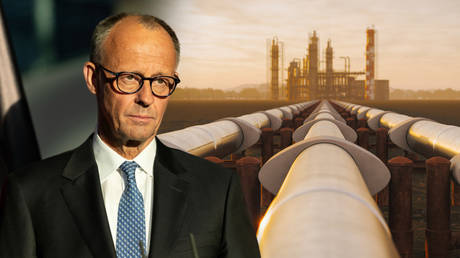
The central pillar of the original Energiewende (Energy Turn) was the assumption of cheap, abundant Russian pipeline gas. This was intended to serve as the flexible "bridge" fuel: gas-fired power plants can ramp up and down quickly to compensate for solar volatility. The sabotage of the Nord Stream pipelines and the subsequent geopolitical shift didn't just increase costs; it broke the bridge mid-crossing.
Germany’s response—the rapid construction of Floating Storage Regasification Units (FSRUs) for LNG—is an emergency pivot with high capital expenditure. However, LNG is inherently more expensive than pipeline gas due to the liquefaction, shipping, and regasification stages. This permanent increase in the "floor price" of energy has direct implications for Germany’s energy-intensive Mittelstand and heavy industries like BASF and ThyssenKrupp.
The Cost Function of Industrial Relocation
When energy costs exceed a specific threshold of the total OpEx (Operating Expense), industrial firms face three choices:
- Absorption: Reducing margins to maintain market share (unsustainable long-term).
- Innovation: Investing in efficiency (limited by the laws of thermodynamics).
- Relocation: Moving production to jurisdictions with lower energy costs (the U.S. Gulf Coast or China).
The current "deindustrialization" narrative is substantiated by the decoupling of industrial production from GDP growth. If the energy input remains expensive and volatile, the German "economic miracle" built on value-added manufacturing faces a terminal decline in competitiveness.
The Nuclear Exit and the Carbon Penalty
The decision to finalize the Atomausstieg (nuclear phase-out) in April 2023, amidst a continental energy crisis, remains the most controversial element of the German strategy. From a purely data-driven perspective, removing 4.3 GW of carbon-free, baseload-capable capacity during a supply crunch forced a higher utilization of lignite (brown coal) plants.
The carbon intensity of the German grid frequently spikes above 400g CO2/kWh during low-wind periods, significantly higher than nuclear-heavy France or hydro-heavy Scandinavia. This creates a "Carbon Penalty" for German exports under the EU’s Carbon Border Adjustment Mechanism (CBAM) and internal ESG mandates. The refusal to reconsider nuclear was a victory of political path dependency over engineering pragmatism, forcing the government to later "flip-flop" by subsidizing massive new fleets of gas-to-hydrogen ready power plants to fill the gap.
Hydrogen Strategy and the Infrastructure Bottleneck
The German government has bet heavily on a "Hydrogen Economy" to decarbonize heavy industry and provide long-term storage. The National Hydrogen Strategy targets 10 GW of electrolysis capacity by 2030. However, the logic contains a significant circular dependency:
- To produce "Green" hydrogen, you need a surplus of renewable energy.
- Germany currently has a deficit of renewable energy relative to total primary energy demand.
- Therefore, the electricity used for hydrogen production often comes from the marginal (coal or gas) plant on the grid, rendering the hydrogen "Grey" or "Brown" in practice.
Furthermore, the "Hydrogen Core Network" (Wasserstoff-Kernnetz) requires the conversion of thousands of kilometers of natural gas pipelines. The technical challenges of hydrogen embrittlement and the lower volumetric energy density of hydrogen compared to methane mean that even if the molecules are available, the delivery system is a decade away from maturity.
Structural Constraints of the North-South Divide
A primary physical bottleneck in the German energy system is the geographical misalignment between production and consumption. The majority of wind generation is located in the North (offshore and onshore), while the industrial heartland is in the South (Bavaria and Baden-Württemberg).
The delay in constructing high-voltage direct current (HVDC) transmission lines, such as SuedLink, is driven by local "NIMBY" (Not In My Backyard) opposition and complex regulatory hurdles.
This creates a "market splitting" pressure. Currently, Germany is a single bidding zone, meaning electricity prices are the same in Hamburg and Munich. However, because the power cannot physically move south, the grid operator must pay northern wind farms to shut down (curtailment) while paying southern gas plants to fire up. These "out-of-market" costs are passed directly to consumers through grid fees, making German household electricity prices among the highest in the world.
Strategic Allocation of Capital and Political Risk
The "flip-flops" observed in Berlin are symptoms of a transition that lacked a "Failure Mode and Effects Analysis" (FMEA). The strategy assumed a stable geopolitical environment and a linear progression of technology.
The current tactical reality requires a shift from Ideological Decarbonization to Resilient Decarbonization. This involves:
- Capacity Mechanisms: Moving away from a pure "energy-only" market to one that pays generators for simply existing (ready to provide power), ensuring backup is available.
- Lignite as a Strategic Reserve: Formally classifying coal not as a primary fuel, but as a strategic insurance policy, despite the political optics.
- Pragmatic Imports: Acknowledging that Germany will likely remain a net energy importer and diversifying those imports through long-term LNG contracts and global green hydrogen partnerships (e.g., with Namibia or Australia).
The German energy transition is currently in a "trough of disillusionment." The move toward more pragmatic, albeit seemingly inconsistent, policies is not a sign of failure but a necessary correction to align political goals with the second law of thermodynamics.
To stabilize the industrial base, the next phase of German policy must prioritize the acceleration of the HVDC transmission corridors and the formalization of a capacity market. Without these two structural fixes, the "flip-flops" will continue as the government reacts to localized grid instabilities rather than executing a cohesive national strategy. Success requires decoupling the energy debate from partisan identity and treating the national power grid as the mission-critical life-support system that it is.
If you would like to analyze the specific ROI of HVDC infrastructure versus localized battery storage in the Bavarian region, I can model those cost projections next.