The tea in the bazaars of Tehran is always hot, but the air around it has turned brittle.
For months, the whispers of a "grand bargain" have drifted through the winding alleys and the glass-paned government offices like woodsmoke—fragile, shifting, and ultimately impossible to pin down. On one side of the world, analysts in dimly lit rooms in Washington and Brussels pore over satellite imagery and encrypted cables, searching for a crack in the door. On the other, the Iranian leadership stands before the cameras, their faces unreadable, their voices steady as they flatly deny that any such door exists.
To the outside observer, this looks like a standard diplomatic stalemate. To the person living it, it feels like a long, held breath.
Take a man like Abbas, a hypothetical but deeply representative shopkeeper near the Tajrish Bazaar. He doesn't read the classified briefs. He reads the price of saffron and the fluctuating value of the rial. When news breaks that Iran has officially denied seeking a deal to end the simmering regional tensions or the long-standing nuclear standoff, Abbas doesn't see a geopolitical maneuver. He sees the shadow of another year of isolation. He sees a future where the bridge to the rest of the world remains a pile of scorched stones.
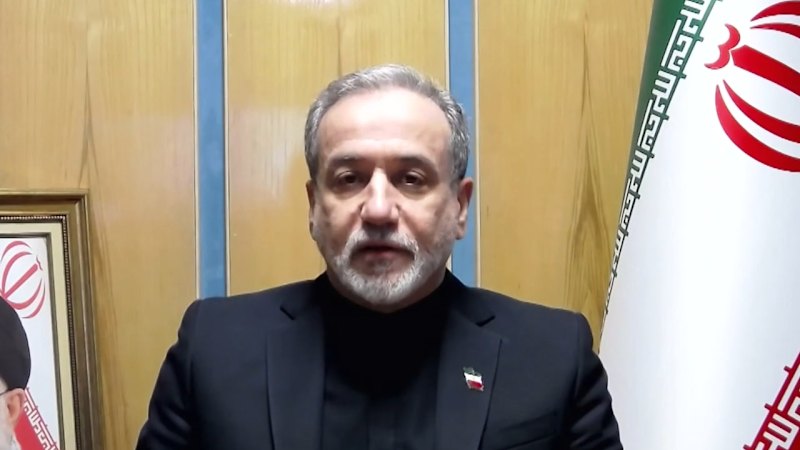
The official line from the Iranian Foreign Ministry is a masterclass in the architecture of "No." They claim there is no secret table. No back-channel olive branch. No desperate plea for the lifting of sanctions in exchange for a retreat from the brink. They speak of sovereignty and "resistance," words that have been the rhythmic heartbeat of the state for decades.
But why the denial now?
History provides a cold, logical lens. In the high-stakes theater of Middle Eastern diplomacy, admitting you want a deal is often perceived as admitting you are starving for one. Strength, in this arena, is projected through indifference. To signal a desire for peace is to signal a vulnerability that your opponents—whether in Jerusalem or D.C.—are trained to exploit.
Consider the mechanics of the "Non-Deal." It is a strange, modern phenomenon where two sides agree to stop punching each other without ever actually shaking hands. If Iran admits it is seeking a resolution, it loses the leverage of the unknown. By denying the pursuit of a deal, they maintain the ability to walk away from a table that they claim isn't even there.
The human cost of this strategic silence is measured in more than just missed diplomatic opportunities. It is measured in the "brain drain" of young engineers leaving Tehran for Vancouver. It is measured in the scarcity of specialized medicines that somehow always get caught in the gears of "permissible" trade. It is measured in the constant, low-grade anxiety of a population that knows a single miscalculation in the Strait of Hormuz could turn their quiet Tuesday into a front-page tragedy.
There is a specific kind of exhaustion that comes from living in a state of permanent "almost." Almost at war. Almost at peace. Almost a global partner. Almost a pariah.
The denial issued by Tehran is meant for two audiences. The first is the domestic hardliners, the guardians of the original flame who view any compromise as a betrayal of the 1979 soul. To them, the denial is a reassurance: We have not moved. The second audience is the West. To them, the denial is a price tag: If you want us to talk, you will have to come to us.
But the tragedy of the denial is that it ignores the third audience—the millions of people whose lives are the collateral of this waiting game.
Negotiations are often described as a game of chess, but that is a sanitized metaphor. Chess has rules. Chess has a board. This is more like a game of nerves played in a dark room where both players are convinced the other has a knife. Every time a spokesperson stands behind a podium to reject the "rumors" of a deal, the room gets a little darker. The knife feels a little sharper.
We often think of peace as a sudden, bright event—a signing ceremony with rolling pens and flashes of cameras. In reality, peace is usually a messy, stuttering process of admitting that the current path is a dead end. By denying that a deal is even on the mind of the state, the leadership ensures that the path remains blocked. They prioritize the image of the unyielding fortress over the reality of the thriving city.
The facts remain stubborn. Sanctions have bitten deep into the marrow of the Iranian economy. Regional proxy conflicts have stretched resources to a translucent thinness. The mathematical reality suggests that a deal isn't just a "seeking"; it is a necessity for long-term stability. Yet, the rhetoric remains frozen.
It is a strange irony that in the digital age, where everything is tracked and nothing is truly secret, the most important conversations on earth are the ones that officially never happened. We are left watching the smoke, trying to figure out if it's coming from a hearth or a fire.
As the sun sets over the Alborz Mountains, casting long, purple shadows across the capital, the shops close and the families gather. They talk about the things families always talk about—marriage, money, the weather. They avoid the topic of "the deal" because talking about something that is constantly denied feels like chasing a ghost.
But ghosts have a way of haunting a house until they are finally acknowledged.
The denial isn't just a statement of policy. It is a shield. And as long as that shield is held high, the people behind it remain invisible, tucked away in the shadow of a pride that refuses to blink, even as the world moves on without them.
The ink on the official denial is dry, but the reality it attempts to hide is still wet, still shaping itself, still waiting for someone to be brave enough to admit that the war nobody wants can only end when someone finally admits they are looking for the exit.
Until then, the tea stays hot, and the breath stays held.
Would you like me to analyze the historical parallels of these diplomatic denials to see how they usually resolve?