Meet Marcus. He works nine hours a shift in a fulfillment center where the air smells faintly of cardboard dust and recycled ozone. Marcus does not have a human boss watching him from a corner office. His supervisor is a blue light flashing on a handheld scanner, a relentless numerical pulse that calculates every second he spends walking, reaching, or turning a corner.
The algorithm does not know Marcus has an old knee injury from his high school track days. It only knows that his pick rate dropped by 4.2 percent over the last hour.
It issues a warning. Then another. By the end of the week, an automated notification arrives in his email inbox. Employment terminated due to productivity variance. No conversation. No appeal. Just a digital pink slip generated by a black-box machine learning model that cannot see a human being, only numbers on a spreadsheet.
For years, technology companies promised efficiency. They handed us tools designed to lift the heavy burdens of daily labor. Instead, they handed us a leash. Workers across industries found themselves tethered to automated management systems that track keystrokes, monitor bathroom breaks, and evaluate performance with the cold indifference of a line of code.
Code does not care about bad days, grief, exhaustion, or human resilience. Code only optimizes.
Drawing a Line in the Dust
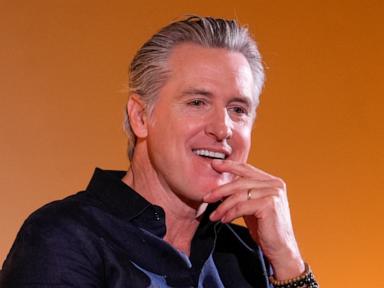
Then came the shift. In California, Governor Gavin Newsom signed a suite of legislative measures explicitly designed to build a firewall between human dignity and algorithmic overreach.
This was not a symbolic gesture tucked away in some bureaucratic filing cabinet. It was a direct legislative counter-punch against a quiet corporate migration toward invisible management. The new laws target a fundamental vulnerability in the modern economy: the total lack of transparency when an automated system decides whether a person keeps their livelihood.
Consider what happens when a machine makes decisions without accountability. If a human manager fires someone unfairly, there is a paper trail of bias, a face to look at, a conversation to be had. If an algorithm denies a promotion or triggers a termination based on flawed proxy metrics, the worker hits a concrete wall. You cannot argue with a server rack. You cannot cross-examine a neural network.
The legislation forces corporations to step into the light. Companies utilizing automated decision-making systems for hiring, firing, and performance monitoring must now provide notice, grant access to the underlying data upon request, and prove that these systems do not perpetuate systemic discrimination.
The Cost of Convenience
We have spent the last two decades sleepwalking into an era of digital convenience. We traded privacy for speed. We traded human judgment for automated scale.
The consequences bled silently into the workforce. Delivery drivers rushed through red lights because an app penalized them for being thirty seconds behind schedule. Call center employees were disciplined because their vocal inflection did not register as sufficiently cheerful to an audio-monitoring program. Healthcare workers saw their schedules scrambled by algorithms that viewed them as interchangeable inventory units rather than caregivers with families.
The psychological toll is heavy. There is a specific kind of exhaustion that comes from working under a master that never sleeps, never forgets, and never shows empathy. It creates a culture of constant surveillance where workers internalize the machine's paranoia. Every pause feels like a transgression. Every breath is timed.
When California stepped in to regulate these practices, it did something radical. It declared that human labor is not an input variable to be squeezed until dry. It asserted that the fundamental right to earn a living cannot be outsourced to a black box that nobody understands and nobody controls.
The Fight for the Future of Work
Corporate lobbyists fought these protections tooth and nail. They argued that regulation would stifle innovation. They claimed that human intervention slows down the magnificent engine of modern commerce.
They are right, in a way. Human intervention does slow things down. Empathy takes time. Fairness requires nuance. Justice is inefficient.
But efficiency without humanity is tyranny dressed up in a Silicon Valley hoodie.
The laws signed in Sacramento represent a fundamental realization. Technology must serve human flourishing, not subordinate human beings to the cold logic of profit margins. Workers are not bugs to be patched out of the system. They are the foundation upon which every economy stands.
The blue light on Marcus's scanner still flashes. The fulfillment center is still vast, loud, and demanding. But the rules of the game have shifted. The ghost inside the time clock is no longer invisible, and for the first time in a long time, the machine has to answer to the people it was built to manage.


