The needle on the dashboard doesn't care about maritime law. It doesn't care about the Merchant Marine Act of 1920 or the political chess matches played in mahogany-rowed offices in Washington. For a long-haul trucker watching the diesel gauge flicker toward empty in the middle of a Pennsylvania stretch, or a mother calculating if she can afford the drive to a specialist three towns over, that needle is a countdown. It is a slow, rhythmic ticking toward a financial breaking point.
When fuel prices climb, they don't just take more of your paycheck. They take your time. They take the family dinner that gets canceled because someone had to pick up an extra shift. They take the small, quiet peace of mind that comes with knowing you can get from Point A to Point B without checking your bank balance first.
In September 2017, that needle was moving fast. Hurricanes Harvey and Irma had just ripped through the Gulf Coast and Florida, tearing up infrastructure and leaving a trail of drowned refineries in their wake. Suddenly, the complex, invisible machinery that keeps the American engine humming was stalled. The fuel was there, sitting in tanks, but it wasn't moving.
Then came a rare, bureaucratic tremor: the waiver.
The Century-Old Invisible Wall
To understand why a signature in the Oval Office mattered to a gas station in Orlando, you have to understand the Jones Act. Formally known as the Merchant Marine Act of 1920, it is a piece of legislation so deeply embedded in the American skeleton that we usually forget it’s there. Its premise is simple. If you want to move goods by water between two U.S. ports—say, from a refinery in Houston to a port in Jacksonville—the ship must be American-built, American-owned, and American-crewed.
It was born from the trauma of World War I, a frantic attempt to ensure that if the world ever went to war again, the United States wouldn’t be caught without a fleet of its own. It was about national security. It was about pride.
But in the wake of a hurricane, that pride carries a heavy price tag.
Imagine a grocery store where you are only allowed to buy milk delivered by trucks made in your hometown. If those local trucks break down or get stuck in a flood, you can’t just call the neighboring county for help. You wait. While you wait, the milk on the shelves disappears. The price of the remaining cartons triples. This is the reality of the Jones Act during a natural disaster. There are only so many American-made, American-crewed tankers. When the demand for fuel spikes because the pipelines are underwater, those few ships become the most expensive real estate on the ocean.
The Waiver as a Pressure Valve
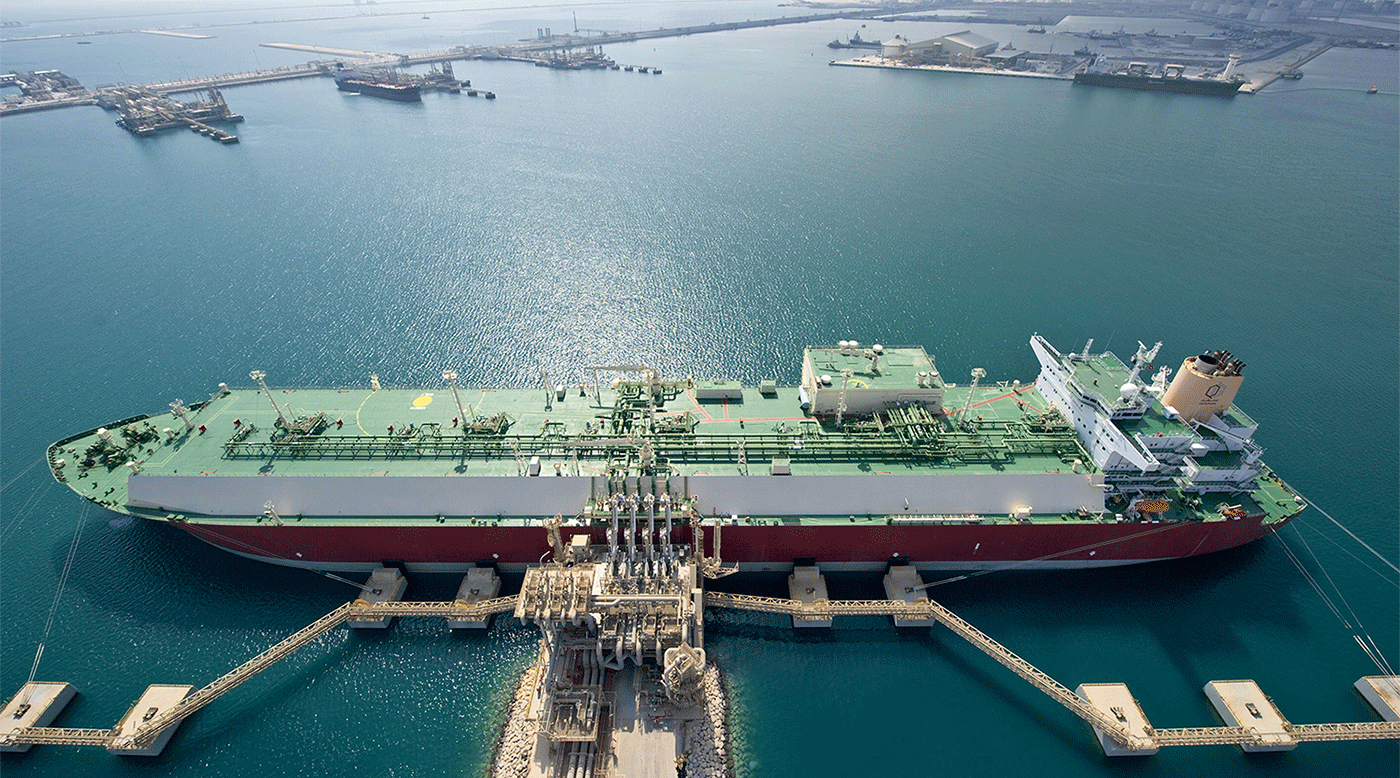
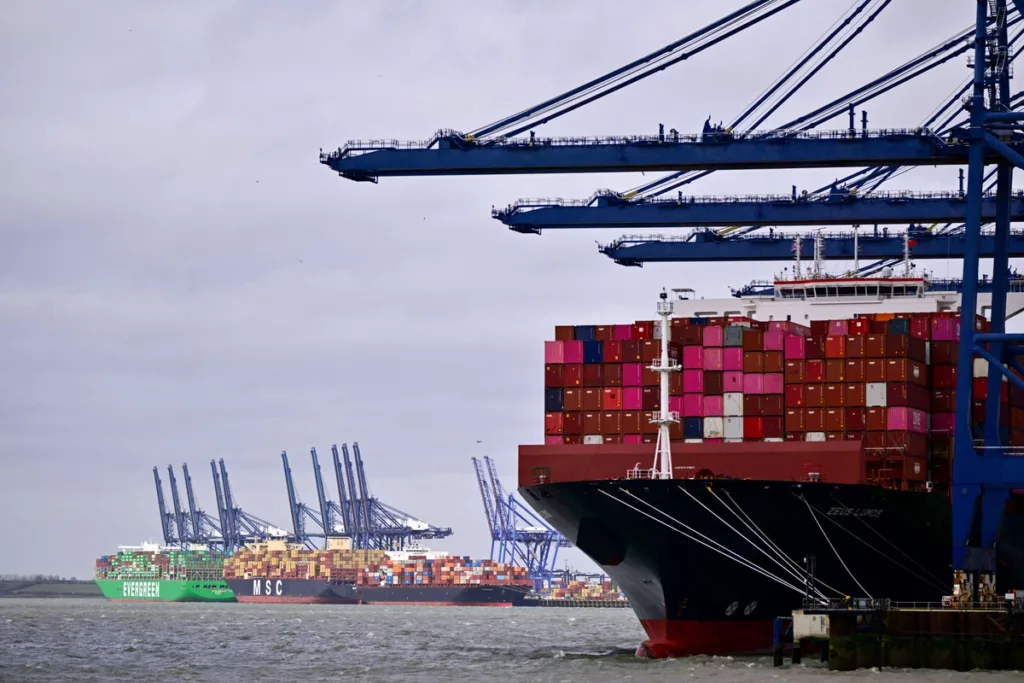
When the Trump administration issued a ten-day waiver of the Jones Act in September 2017, it wasn't just a dry policy shift. It was an admission that the system was choking. By lifting those restrictions, the government effectively opened the floodgates. Foreign-flagged vessels—ships from across the globe that were already lurking in the Atlantic or the Caribbean—could suddenly pull into American docks, load up with fuel, and race toward the darkened cities of the Southeast.
It was an act of economic desperation masquerading as a logistical shortcut.
For those ten days, the "American-only" rule vanished. The goal was simple: get as much gasoline, diesel, and jet fuel into the hands of the people as humanly possible. The administration was betting that the sheer volume of supply provided by these international tankers would blunt the sharp, jagged edge of the price hikes.
Consider a hypothetical fuel distributor in Miami named Elias. For weeks, Elias has been watching his supply dwindle. His regular American carriers are backlogged or stuck in repairs. He is staring at a map of a thirsty state, knowing that if he doesn't get a shipment soon, the local emergency services will be the first to feel the pinch. The waiver is his lifeline. It means he can hire a ship flying a Marshall Islands flag that is currently sitting twenty miles offshore. It means the fuel arrives in thirty-six hours instead of two weeks.
The Friction of Protectionism
The debate over the Jones Act is never really about the ships. It is about a fundamental tension in the American soul: the desire to protect our own versus the need for a functioning, globalized economy.
Proponents of the Act will tell you that without it, the American shipbuilding industry would wither and die. They argue that we would become dependent on foreign nations for our most basic logistics. They see the Act as a shield. To them, waiving it—even for ten days—is a crack in the armor.
But to the person standing at a gas pump in a rain-slicked parking lot, that shield feels more like a cage.
The statistics back up the frustration. Studies have shown that shipping oil from the Gulf Coast to the East Coast on a Jones Act vessel can be three times more expensive than shipping it on a foreign vessel. We are, in effect, paying a "patriotism tax" on every gallon of gas we buy. In times of peace and calm, we absorb that cost. It is baked into the price of a gallon of milk, a pair of jeans, or a commute. But when the wind starts howling and the refineries go dark, that tax becomes unbearable.
The waiver wasn't just about the immediate crisis of Harvey and Irma. It exposed the fragility of our energy independence. It proved that despite all our talk of being self-sufficient, we are still beholden to a global network of commerce that we can only ignore when the sun is shining.
The Temporary Breath
The waiver eventually expired. The foreign ships retreated to international waters. The American tankers resumed their slow, expensive loops between ports. The news cycle moved on to the next crisis, and the "Ghost Ships" of the international fleet became a footnote in a Department of Homeland Security press release.
But the precedent remained.
Every time a president signs a Jones Act waiver, they are acknowledging a hard truth: our laws are often at odds with our needs. We cling to a 1920s vision of maritime dominance while living in a 21st-century reality of instant demand and volatile climates. We want the security of our own fleet, but we cannot afford the bill it sends us when things go wrong.
The next time you see the price of gas jump five cents overnight, or you read about a storm brewing in the Atlantic, think of those ten days in 2017. Think of the ships that were allowed to dock, just for a moment, to keep the lights on and the needles moving.
We live in a world of invisible borders and even more invisible laws. Usually, we don't notice them until they start to squeeze. When the squeeze becomes a stranglehold, we look for a way out, a signature on a page, a temporary reprieve from a century of tradition.
The needle keeps moving. The ships keep waiting. And the cost of our convictions is measured out, cent by cent, at the pump in the dead of night.