The water in the Baltic Sea is too fresh. It tastes like rain and disappointment, a chemical mismatch for a creature designed to float in the dense, saline cradles of the Atlantic. For Timmy, a humpback whale whose fifteen-ton presence has become a living monument to a navigational error, the water isn't just a medium. It’s a slow-acting poison.
Imagine a sailor who wakes up to find the North Star has shifted twenty degrees to the left. Everything looks right, but nothing feels right. The landmarks are gone. The magnetic pull that usually hums in the bones—a biological compass fine-tuned over millions of years—has gone silent or, worse, started lying. This is the quiet tragedy unfolding in the shallow, brackish reaches of the Baltic. Timmy is not just a whale; he is a map that has been torn in half.
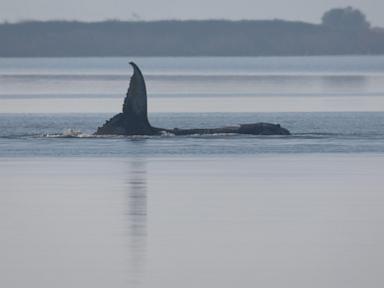
Most people see a "sick and stranded" animal. They see a headline. But if you stood on the shoreline of Germany or Poland, peering through the grey Atlantic mist, you wouldn't see a headline. You would see a mountain that breathes. You would hear the huff of a blowhole—a sound like a steam engine clearing its throat—echoing across a bay that was never meant to hold him. It is a lonely, jarring sound.
The Physics of a Mistake
Humpback whales are the great wanderers of the liquid world. They are built for the deep, for the crushing pressures and the cold, salt-heavy currents that carry them from tropical breeding grounds to Arctic feeding buffets. They navigate using a complex mix of bathymetry, solar cues, and the Earth's magnetic field.
But the Baltic Sea is a trap.
It is a shallow basin with a narrow, convoluted entrance through the Danish straits. Once a whale enters, the acoustic environment changes. The seafloor is closer. The water density drops because of the massive inflow of freshwater from European rivers. For a humpback, this is a nightmare of buoyancy. Salt water provides lift. In the fresher Baltic, Timmy has to work harder just to stay afloat. Every flick of his massive tail fluke costs more energy than it should. He is running a marathon in sand.
Biologists monitoring his movements have noted a lethargy that wasn't there weeks ago. He is "sick," but that word is too sterile. He is starving in a desert of his own making. The Baltic doesn't have the massive schools of krill or the oily herring required to fuel a body the size of a school bus. He is burning through his blubber reserves, a biological battery that is slowly ticking toward zero.
The Human Watchers
On the shore, the humans gather. They bring binoculars and long-lens cameras. Some are there for the spectacle, the "once-in-a-lifetime" chance to see a leviathan in their backyard. Others are there because they feel a kinship with the lost.
Consider a hypothetical observer, let's call her Elena. She is a local marine researcher who has spent fourteen days sleeping in her truck, tracking Timmy's pings. To Elena, the whale isn't a data point. He is a mirror. She sees in his aimless circling the same anxiety we feel when we realize we’ve taken a wrong turn in life and can't find the way back. She watches the skin on his back—usually a sleek, dark obsidian—begin to pale and slough off, a condition caused by the lack of salinity.
"He's looking for a door that isn't there," she might whisper to a colleague.
The stakes are invisible but absolute. If the authorities try to herd him out using acoustic deterrents—pingers that create a wall of sound—they risk panicking him. A panicked whale in shallow water is a dead whale. If they do nothing, they watch him wither. It is a trolley problem written in salt and skin.
Why the Baltic is a Hall of Mirrors
The Baltic isn't just fresh; it's loud. It is one of the most heavily trafficked maritime regions on the planet. The constant thrum of container ships and ferries creates a subterranean roar that masks the natural sounds Timmy uses to orient himself.
To a whale, sound is sight. Imagine trying to find your way home through a thick fog while someone stands next to your ear blowing a vuvuzela. You wouldn't be able to think, let alone navigate. The "stranding" isn't always a physical beaching. Often, it's a sensory stranding. Timmy is trapped in a hall of mirrors where every acoustic reflection is a lie.
The technical term is "vagrancy." It sounds like a crime, doesn't it? As if Timmy decided to skip out on his responsibilities in the North Sea to go on a joyride. In reality, vagrancy is often the result of a solar storm or a seismic shift that rattles the internal compass. It happens to birds, to butterflies, and to the kings of the ocean. But when it happens to a king, the world stops to watch the fall.
The Thin Grey Line
The intervention teams are caught in a desperate wait. They check his respiration rates. They look for the "peanut head" shape—a depression behind the blowhole that signals extreme malnutrition. They debate the ethics of euthanasia versus the hope of a miracle.
There is a specific kind of silence that falls over a rescue boat when a whale like Timmy stops moving for too long. You hold your breath. You wait for that burst of mist. When it finally comes, it’s a relief that hurts. You know he’s still alive, which means he’s still suffering.
We want to save him because we want to believe that mistakes can be undone. We want to believe that if you wander too far into the freshwater, someone will guide you back to the salt. But the ocean is indifferent to our narratives. It doesn't care about the "human-centric" angle or the emotional core of the story. It only cares about displacement and density.
The tragedy of Timmy is that he is too big for the room he's in. He is a creature of the infinite, caught in a puddle.
The last sighting was near a small fishing village. The sun was setting, casting a bruised purple light over the waves. Timmy breached—just once. A massive, defying arc of silver and black that hung in the air for a second, a middle finger to gravity and the fresh water that was trying to pull him down. Then he crashed back into the Baltic, the splash reaching the boots of the people on the pier.
He is still out there. Moving slower. Looking for the stars he lost.
The water remains too calm, too still, and far too sweet.