A heavy mist clings to the iron railings of North Block on a brisk Delhi morning, blurring the grand colonial architecture into a hazy charcoal sketch. Inside a modest office overlooking Raisina Hill, a senior bureaucrat stares at a flashing red secure phone, his coffee growing stone-cold. Thousands of miles away, in the marble corridors of Washington and behind the gilded walls of Beijing, two men are preparing to sit across a mahogany table.
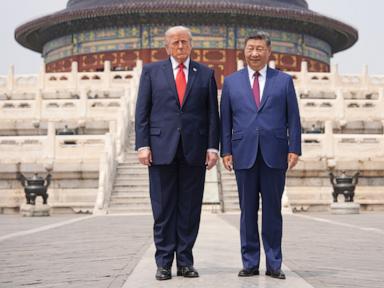
When Xi Jinping and Donald Trump shake hands, the tremors do not stop at the Pacific or wash softly against the California coast. They ripple straight across the Himalayas, rattling the fragile teacups of South Block and rewriting the strategic arithmetic of a billion people.
We tend to think of global superpowers as distant gods moving chess pieces on a map. But for India, this summit is intensely personal. It is the invisible current running through every factory floor in Chennai, every software line written in Bengaluru, and every patrol route carved into the frozen granite of Ladakh.
To understand why this meeting matters, you have to look past the talking points. You have to look at the geometry of survival in a world where two titans are locked in an eternal, exhausting embrace.
Consider Rajesh. He is a fictional archetype, but he represents a very real bloodline: the New Delhi trade negotiator who has spent twenty-five years watching the world shift on its axis. Rajesh remembers when India was an afterthought in Washington, a country politely dismissed as a land of potential that never quite arrived. He remembers the breathless optimism of the early century, the illusion that globalization would lift all boats equally without creating tidal waves.
Today, Rajesh watches the Trump-Xi dynamic not with excitement, but with a cold, calculating anxiety. Because when America and China negotiate, India is never just a spectator. India is the weight on the other side of the scale.
The first reason this summit commands the undivided attention of New Delhi is the brutal reality of economic gravity.
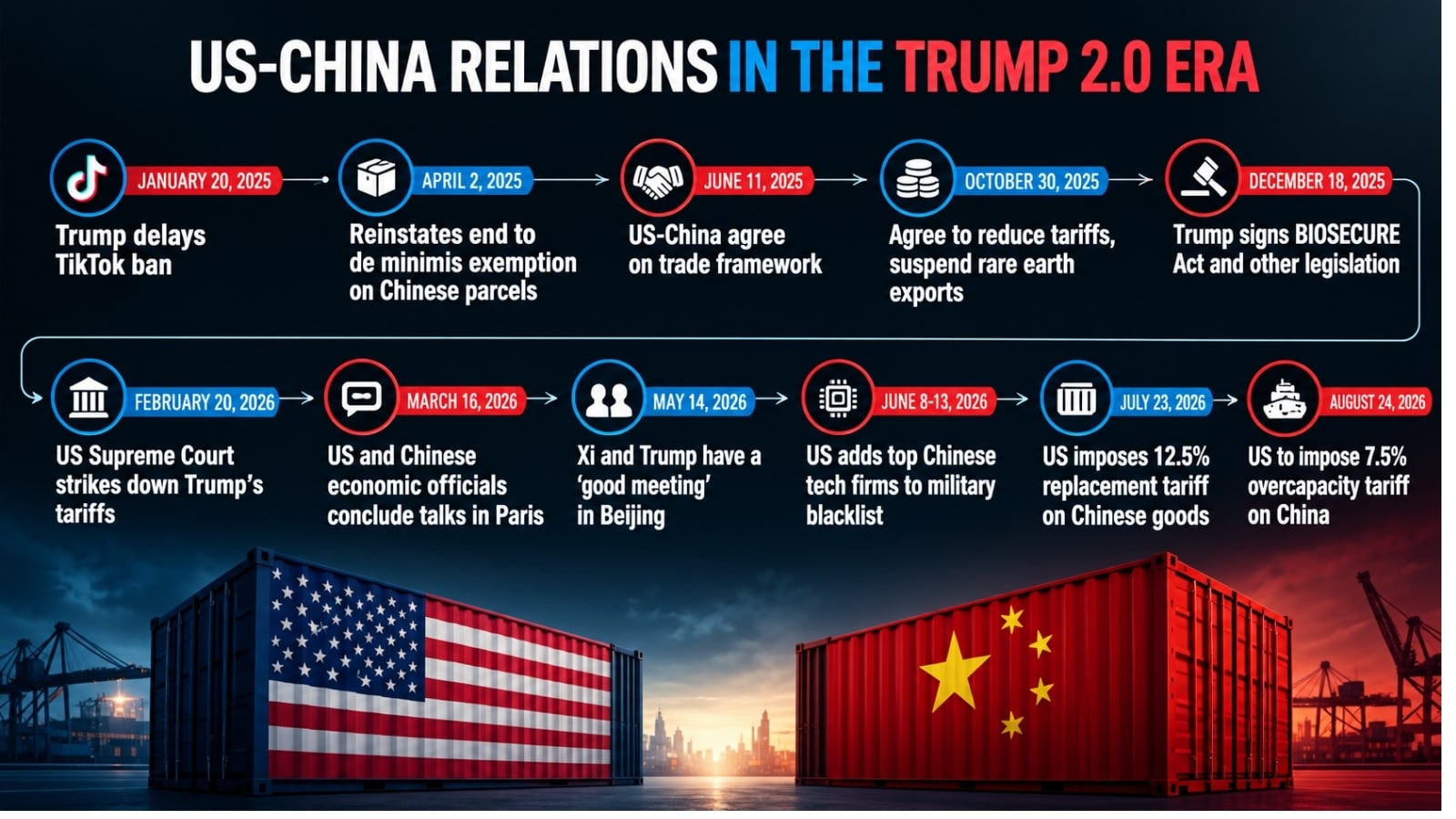
Trade is not an abstract spreadsheet; it is the bread on a million tables. When Donald Trump steps into a room with Xi Jinping, the specter of tariffs hangs heavy in the air. Trump’s transactional worldview—where every trade deficit is a personal insult and every handshake requires a concession—creates a volatile atmosphere. If Washington and Beijing decide to bury the hatchet on trade, or conversely, if they plunge into a deeper tariff war, the shockwaves slam directly into Indian shores.
Imagine a giant tectonic plate shifting beneath the ocean. The surface ripple might start thousands of miles away, but by the time it hits the coast, it reshapes the harbor.
If Trump slaps sweeping universal tariffs on foreign goods, India’s burgeoning manufacturing sector—designed to catch the supply chains fleeing China—finds itself caught in the crossfire. We are told that India is the natural alternative to Beijing, the vast democracy ready to absorb the factories of the world. Yet, protectionist winds blowing from the West do not discriminate between rivals and friends. They simply demand feebleness or fealty.
Conversely, if Xi and Trump strike a grand bargain, slicing up global market shares behind closed doors, India risks being sidelined in its own neighborhood. A bilateral accommodation between Washington and Beijing can easily curdle into a condominium of superpowers, where the rules of Asia are written by two men who have never walked the dusty alleys of Varanasi or felt the monsoon rain in Mumbai.
This brings us to the second, more perilous dimension: the dance of deterrence along the Line of Actual Control.
Geopolitics is often described with sterile terms like "balance of power" or "strategic autonomy." Let us strip those away. Picture an army patrol moving silently through the dark, jagged defiles of the Himalayas. The wind howls at eighteen thousand feet, howling through passes where oxygen is thin enough to make your temples throb. Every soldier knows that a misstep doesn't just mean a tumble down a rocky ravine; it means an international incident.
When Xi Jinping sits down with Donald Trump, the security architecture of the Indo-Pacific hangs in the balance. Beijing watches Washington with a mixture of contempt and caution, measuring every word that comes out of the American president’s mouth. If Trump signals disinterest in Asian security—if he treats alliances as expensive club memberships that need to pay dues—Xi reads an invitation in the silence.
An emboldened Beijing in the East means a more aggressive posture in the Himalayas. It means more gray-zone tactics, more salami-slicing along the border, and more nights where Indian commanders look at satellite imagery with a knot in their stomachs.
For decades, India has walked a tightrope called strategic autonomy. We buy oil from Russia, purchase defense hardware from the United States, share intelligence with Western partners, and yet fiercely guard our independence from formal military alliances. It is a dance requiring the balance of a tightrope walker in a hurricane.
When the American president and the Chinese paramount leader meet, that tightrope begins to fray. Washington wants India inside its corral, a loyal vanguard against the Middle Kingdom. Beijing wants India neutral, pliant, and isolated from Western technology. To choose neither is to invite suspicion from both.
And that brings us to the third and perhaps most vital theater: the battle for the mind and the machine.
We live in an age where the ultimate currency is no longer oil or steel, but algorithms, silicon chips, and artificial intelligence. The nation that controls the digital nervous system of the twenty-first century writes the rules for everyone else.
During summits like this, the quiet conversations happen behind closed doors regarding technology transfers, semiconductor supply chains, and critical minerals. China holds a near-monopoly on the rare earth elements that power everything from electric vehicles to guided missiles. America holds the crown jewels of advanced computing.
India is caught in the middle of this technological iron curtain. Prime Minister Narendra Modi’s government has staked its national pride on initiatives like Make in India and domestic semiconductor manufacturing. Yet, building an advanced tech ecosystem requires tools, patents, and materials that cross oceans. If Washington and Beijing agree to carve up the tech world into walled gardens, India’s dream of becoming an independent technological powerhouse faces a grueling uphill battle.
We are not merely talking about economic growth points. We are talking about whether the youth of Patna or Pune will inherit a world where they can build freely, or whether they will be forced to rent their digital future from servers located in Silicon Valley or Shenzhen.
Let us step back from the macroeconomics and the high-altitude patrols. Why does any of this matter to the average person sipping chai at a roadside stall in Jaipur?
Because international politics is the weather of our daily lives. Just as an unseasonal storm in the Bay of Bengal can rot the onion crop and send prices skyrocketing in local markets, a closed-door deal in a summit room can shutter a textile factory in Surat or create a million high-tech jobs in Hyderabad.
We are living through a hinge of history. The unipolar moment—that brief, arrogant flash of time when Washington dictated the terms of global reality—is dead and buried. In its place has risen a multipolar, messy, multipronged chaos.
When Xi Jinping and Donald Trump look across the table at each other, they see mirrors of ambition. Both men understand power in its rawest, most transactional form. They do not care about diplomatic niceties; they care about leverage, dominance, and legacy.
India’s masterclass over the past decade has been learning how to dance with giants without getting crushed beneath their feet. It is a terrifying dance. One misstep, one misplaced word, and the consequences echo across a billion lives.
As the morning mist finally burns off the dome of Parliament House in New Delhi, the senior bureaucrat closes his secure file. The red phone stops flashing. For now.
Across the ocean, the two leaders adjust their ties, the cameras begin to click, and the world holds its breath to see which way the earth will tilt.