The Distance Between the Silicon and the Sentence
The hum of a server rack sounds like a distant waterfall. If you have spent enough hours in a basement data center, watching amber lights blink in rhythmic indifference, you stop hearing the noise. It becomes part of the air. You look at a spool of fiber-optic cable and you do not see glass. You see distance shrinking. You see a message sent from a porch in Shenzhen arriving on a kitchen table in Brooklyn before the coffee has time to cool.
We built this speed. We cheered for it.
Then the floor dropped out.
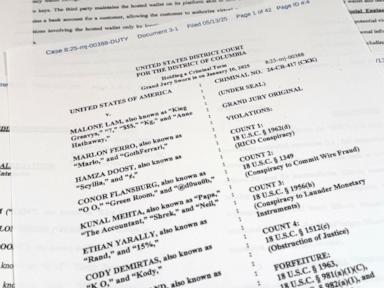
Picture a federal courtroom in Brooklyn. The mahogany is dark, smelling of decades of lemon oil and dry papers. Outside, the sirens of New York harbor blur into a constant, low-frequency roar. Inside, men in charcoal suits sit behind stacks of binders that are several inches thick. These binders do not contain code. They contain allegations. They contain conspiracy, trade secret theft, bank fraud, and the heavy, chilling machinery of a racketeering charge.
This is where the invisible architecture of our modern world finally has to answer to the law.
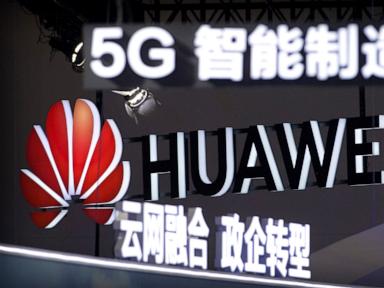
Huawei Technologies is not just a corporate entity on a balance sheet. For millions of people who wake up before dawn to check a screen, it is the invisible hand connecting them to their livelihoods. Yet, as the upcoming trial in New York looms, the narrative shifts from gigabytes and baud rates to indictments and intent.
To understand why this courtroom battle matters, you have to step away from the legal briefs and look at how the physical world meets the digital one. Imagine a bridge. For twenty years, engineers cross this bridge every day, marveling at its suspension cables, adding lanes, inviting more traffic, running heavier trucks across its span. Nobody checks the foundation. Nobody asks who poured the concrete in the dark of 2004.
Now, prosecutors are standing at the base of that bridge with sledgehammers and searchlights.
The Anatomy of an Accusation
Racketeering. The word itself belongs to another era. It conjures up pinstripes, docks, Tommy guns, and whispers in smoky back rooms. We do not naturally associate it with telecommunications infrastructure, silicon wafers, and fifth-generation wireless networks.
Yet, the indictment brought by the United States Department of Justice casts a wide, sweeping net. It alleges a pattern. Not a single mistake, not a corporate misstep, but an institutional strategy.
Let us look at the mechanics of what is actually being claimed, stripped of the legal jargon. When a company grows at a velocity that defies historical precedent—surpassing legacy giants in Europe and the Americas to become the largest telecommunications equipment maker on earth—questions follow. How did they move so fast? How did they price their hardware below competitors while pouring billions into research and development?
The government’s answer lies in the pages of the New York indictment: intellectual property theft.
Consider a hypothetical engineer working in a lab in suburban Seattle in 2012. Let us call him David. David spends four years solving a stubborn problem in router efficiency. He bleeds over his whiteboard. He runs simulations until his workstation fans scream in protest. One Tuesday morning, he finds the solution. A clean, elegant algorithm that cuts latency in half.
In the indictment's narrative, that algorithm does not stay in Seattle. Through corporate espionage, through hidden partnerships, through sophisticated acquisition channels, that intellectual property finds its way across the Pacific, is disassembled, reassembled, and sold back to the American market at a fraction of the cost.
Is this a proven fact for every line of code? No. That is what the trial in New York is designed to determine. But it is the central tragedy of the modern economy: when innovation becomes weightless, it becomes stealable.
The Human Cost of the Invisible Wall
We talk about geopolitics as if it were a game of chess played by old men in secure rooms. It is not. It is felt by the contract worker in Texas whose company suddenly cannot buy cellular components because of trade restrictions. It is felt by the small-town carrier in the Midwest who bought affordable infrastructure years ago and now faces a multi-million-dollar rip-and-replace mandate because the hardware is deemed a national security risk.
Fear is expensive.
When Huawei faces these charges in federal court, the stakes transcend corporate fines. A corporation cannot go to prison, but its executives can. More importantly, its business model can be permanently broken.
Think about the way trust works in human relationships. Once broken, it requires an immense, exhausting amount of labor to rebuild. Now scale that to the global internet. For decades, the premise of globalization was simple: commerce would transcend borders, code would have no nationality, and the most efficient network wins.
We were wrong.
Code has a passport. Hardware has a flag.
When the trial begins, the courtroom will fill with experts translating complex network protocols into plain English for a jury of citizens who may struggle to explain how Wi-Fi works. They will look at spreadsheets of international bank transfers through subsidiaries in Iran. They will listen to testimony about stolen source code for robotic arms used in testing facilities.
It is dry. It is tedious. It moves at the glacial pace of American jurisprudence.
Yet, underneath that tedium lies the central question of our century: Who gets to write the rules of the digital frontier?
The Fracture
We are living through the great splintering.
The internet was once promised as a flat, borderless plain where anyone could connect with anyone. Today, it is rapidly dividing into digital walled gardens. One garden runs on Western standards, tangled in compliance, choked by litigation, but anchored in legal transparency. The other runs on different models of state-backed capitalism, hyper-efficient, massive in scale, and largely unaccountable to Western courts.
Huawei sits directly on the fault line of this tectonic shift.
When the company denies the charges—as it consistently has, calling the prosecution a politically motivated campaign orchestrated to handicap a technological rival—it speaks to a vast audience outside the West that sees things differently. To many in the Global South, the trial in New York does not look like justice. It looks like protectionism. It looks like an aging empire trying to pull up the drawbridge before the gate is entirely lost.
Both things can be true at the same time.
The allegations of corporate theft can be real, backed by specific emails, witness testimonies, and forensic accounting. And the geopolitical anxiety of the United States can be equally real, driven by the terrifying realization that the critical infrastructure of the Western world was built using parts designed by a strategic rival.
There is no clean resolution here. There is only the process.
The Silence After the Verdict
Trials end with a gavel strike. Headlines flash across tickers in Times Square and Tokyo. Analysts on cable news dissect the winners and losers in thirty-second sound bites.
But back in the data center, the amber lights will keep blinking.
The packets will keep moving. Across oceans, through subsea cables buried in the dark, cold mud of the Atlantic, data flows unmindful of indictments or racketeering statutes. The world is too small now to un-invent the connections we have forged.
We wanted a connected world. We got it. We just forgot that connection requires rules, and rules require enforcers, and enforcers eventually have to stand in a courtroom in New York and ask a jury to decide what belongs to whom.
The trial will pass. The appeals will drag on for years. New technologies will emerge, rendering today's routers as obsolete as copper telegraph wires. But the underlying question will remain, humming quietly in the background like a server rack in the dark, waiting for an answer we have not yet learned how to speak.