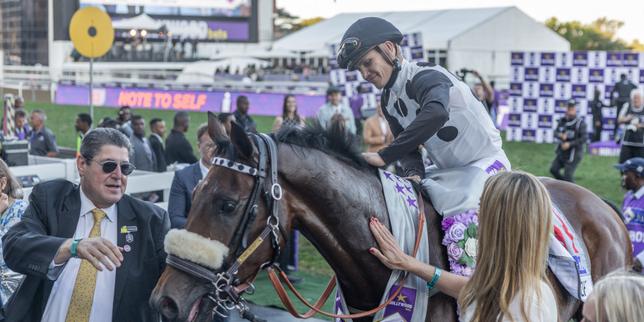
The humidity in Durban does not clear for winter; it just hangs lower, trapping the scent of ocean salt, rich manure, and five-hundred-dollar perfume over the track at Greyville.
Every July, a distinct roar echoes from the grandstands. To an outsider, it sounds like pure celebration. It is the sound of Africa’s richest horse race, a spectacle often dubbed the South African Ascot. But listen closely to the cadence of the crowd, and the noise fractures. It divides into the frantic shouting of punters in the cheap seats, the polite clinking of crystal in the air-conditioned corporate marquees, and the heavy silence of the workers sweeping up discarded betting slips in the dirt.
The Durban July is not just a race. It never has been. It is a annual theatrical production where South Africa attempts to perform the miracle of its own reinvention, wrapped in tulle, fascinators, and three-piece silk suits.
To understand what is actually at stake on this track, you have to look past the horses. You have to look at the people who flock here, bringing their ghosts, their bank accounts, and their fiercely guarded hopes with them.
The Designer and the Tulle
Consider Thando. He is twenty-four, and his hands are stained a faint, stubborn indigo from a week spent dying raw linen in a plastic tub in his mother’s kitchen in Umlazi, a township just south of the city. Thando is a fashion designer, a title he claims with pride despite not having a brick-and-mortar shop or a steady bank account. For him, the Durban July is the only calendar date that matters.
The theme for this year’s race demands architectural elegance. Thando spent his last rent money on meters of stiffened mesh and African wax prints, stitching a gown that he hopes will catch the eye of a passing television crew or a wealthy influencer.
As he walks through the gates of Greyville, holding his breath so the dust doesn't ruin the pristine white hem of his creation, he enters a parallel universe. Here, young Black South Africans move with a dazzling, defiant opulence. They wear towering headpieces shaped like local monuments; they sport neon suits tailored to perfection. This is the generation that was promised the sun, and today, they intend to look like they own it.
For Thando and his peers, the fashion on display is not mere vanity. It is a political statement. In a country where economic mobility remains painfully stagnant for the majority, dressing like royalty is a form of reclamation. When Thando watches a prominent young content creator glide past in a gown that costs more than his mother earns in a year, his feelings are mixed. He feels a surge of pride at the sheer beauty of Black success, followed immediately by a sharp twist of anxiety. He needs to sell this dress by Monday, or the lights go out in Umlazi.
The dream of a united, wealthy, multiracial South Africa is alive inside the fashion marquee. It feels tangible. You can touch it, smell it, toast to it. But the marquee has canvas walls, and outside, the wind is blowing.
The Owner and the Legacy
A few hundred yards away, sitting in the exclusive owners' lounge with a clear line of sight to the finish line, is Pieter. Pieter is sixty-eight, with skin cured by decades of Highveld sun and eyes that have watched horses run under three different national flags. His grandfather bought their first thoroughbred stallion in the 1950s, back when Greyville was an explicitly segregated enclave of white colonial society.
Pieter remembers when the Durban July was a stuffy, English affair. Men wore bowler hats; women wore conservative gloves. It was an exhibition of old money, a reassurance that despite being at the southern tip of Africa, British high society was alive and well.
Today, Pieter’s table is shared with a new breed of elite. Next to him sits a mining magnate who grew up in Soweto, a man who now owns a share in Pieter’s favorite three-year-old colt. They talk about bloodlines, trainers, and the cost of feed. They laugh, they clink glasses of local Méthode Cap Classique, and they talk business.
This is the success story the country likes to tell itself. The old establishment and the new political elite finding common ground over the love of a thoroughbred. The partnership is real, and the money generated by their stable keeps dozens of grooms, farriers, and jockeys employed. Pieter genuinely respects his partner. He believes in the future they are building together.
But Pieter also knows the math of racing. He knows that a single horse can cost hundreds of thousands of rands a month just to train. He knows that the sport is shrinking, that the middle class can no longer afford to own horses, and that the beautiful diversity of his VIP table is an anomaly, not the rule. The luxury surrounding him feels increasingly like a fortress built against a rising tide of economic uncertainty outside the gates.
The Waitress and the Leftovers
Then there is Lerato. She does not see the fashion, and she does not see the horses. She sees the glasses.
Lerato is thirty-one, working a twelve-hour shift for a catering company that services the luxury hospitality chalets. While the crowd screams as the field rounds the final turn, Lerato is carrying a tray of half-eaten oysters and empty champagne bottles down a narrow service corridor.
From her vantage point, the racial dynamics of the event take on a different color. The people sitting at the tables—the ones ordering the premium whiskey and complaining about the ice—are now a mix of Black, white, and Indian elites. But the people carrying the trays, washing the dishes, and scrubbing the portable toilets are entirely Black and brown.
Lerato watches a prominent politician, known for his fiery speeches about wealth redistribution, tip a white bartender a thousand-rand note with a theatrical flourish. She wonders if that politician knows what a bag of maize meal costs this week. She doesn't begrudge the patrons their wealth; she just wishes the bridge between their world and hers wasn't so impossibly long.
When the main race ends and the winner is declared, a shower of gold confetti explodes over the presentation podium. It drifts across the track, landing in the mud. Lerato watches it fall. Tomorrow, she will be back here, her back aching, sweeping that gold paper into black garbage bags while the city returns to its quiet, segregated routines.
The Weight of the Wager
The Durban July is often called a mirror, but that is too passive. It is an accelerator. It takes all the tension, all the unfulfilled promises, and all the desperate joy of modern South Africa and compresses them into a single afternoon of high stakes.
The betting ring is where the illusion of unity truly cracks open. Here, the desperation is palpable. You see men in faded tracksuits huddled over racing forms next to executives in tailored linen. They are looking for the same thing: a shortcut out of their current reality.
For the wealthy, a bet is entertainment. For the man who took two minibuses to get to the track, a bet is a prayer. If his horse wins, he pays his daughter’s school fees. If his horse loses, he walks home. The track does not care about their motives. The mud treats the hooves of the favorite and the longshot exactly the same.
The real problem lies elsewhere, far from the track conditions or the jockey's weight. It lies in the fact that forty years after the country began its march toward a fairer society, the Durban July still feels like an island of impossible excess surrounded by an ocean of poverty. The racecourse sits in the center of Durban, a city that has weathered riots, devastating floods, and political instability. Yet, for one day, the gates shut, the security guards line the perimeter, and the fantasy is maintained.
The Final Furlong
As the sun begins to dip behind the grandstand, casting long, dark shadows across the turf, the atmosphere changes. The formal attire loosens. High heels are kicked off, abandoned on the grass. The alcohol has blurred the sharp edges between the different social tiers.
For a brief hour during the after-parties, as the bass from the speakers thumps through the damp night air, people from completely different worlds dance together. Thando finds himself sharing a joke with an influencer who just promised to look at his lookbook. Pieter wishes his partner good night with a genuine warmth that didn't exist that morning. Lerato counts her tips, realizing she has enough to buy her son the shoes he needs for school.
It is a beautiful, fragile moment of connection. It is exactly what the architects of the new South Africa envisioned.
But consider what happens next. The music stops. The lights in the marquees are switched off one by one. The patrons climb into their German sedans and head to the gated suburbs of Umhlanga, while the workers wait in the dark for the collective taxis back to the townships.
The Durban July did not fix South Africa today. It didn't heal its fractures or bridge its vast economic chasms. It simply gathered them all in one place, dressed them up in their finest clothes, and asked them to run as fast as they could toward a finish line that keeps moving.