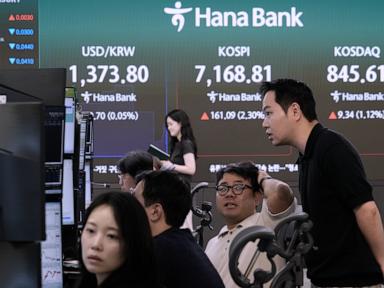
International equities climbed during the latest global trading cycle, tracking overnight gains on Wall Street where major stock indexes pushed toward record territory. Investors across European and Asian trading desks welcomed the positive sentiment, bidding up shares in technology, banking, and industrial sectors. Beneath the veneer of broad market optimism, however, stubborn macroeconomic realities persist. Central banks continue to wrestle with persistent inflation readings, sovereign debt burdens across developing and developed economies are testing historical limits, and structural supply chain vulnerabilities have not vanished simply because a benchmark index posted a green session.
Financial journalism often treats a green trading board as a final destination. It is not. A single day of coordinated buying across global exchanges reflects liquidity flows and institutional portfolio rebalancing rather than an instantaneous healing of the world economy. To understand why international markets move in lockstep with New York trading floors, we have to look past the intraday price action and examine the plumbing of modern capital allocation.
The Mechanics of Transatlantic Spillover
When Wall Street sneezes, international markets catch a cold. When Wall Street rallies, Frankfurt, Tokyo, and London usually follow. This correlation is rarely about local economic health in Frankfurt or Tokyo. It is about capital gravity.
Global pension funds, sovereign wealth managers, and hedge fund allocators maintain multi-trillion-dollar pools denominated largely in United States dollars. Algorithm-driven trading desks and passive index funds dictate the pace of modern volume. When US equities break upward, risk models automatically adjust global weightings. Automated execution protocols trigger buy orders across foreign exchanges to maintain targeted asset class exposures. Local fundamentals in individual countries often take a back seat to these cross-border liquidity floods.
Consider the recent session. Major benchmarks across Europe advanced between half a percent and one point two percent. Asian markets opened to broad buying pressure, mirroring the overnight enthusiasm stateside. Yet, underlying economic conditions in those regions told a different story. Industrial production numbers in key European manufacturing hubs remained sluggish, constrained by high energy input costs and weak domestic consumer demand.
The disconnect between equity pricing and real-economy performance is the defining feature of contemporary finance. Asset prices respond to liquidity conditions and interest rate expectations with immediate violence. The real economy responds to credit availability, wage growth, and capital expenditure over months and years. When markets rally on the back of Wall Street momentum, they are frequently pricing in anticipated monetary policy relief rather than an immediate surge in corporate earnings or productivity gains.
The Debt Overhang Threatening Sovereign Stability
While traders celebrate green screens, finance ministers and central bankers face a grinding reality that equity indexes choose to ignore. Global debt levels have reached unprecedented magnitudes. Following years of emergency pandemic spending, subsequent inflationary shocks, and elevated borrowing costs, governments from Washington to Rome are spending a staggering portion of tax revenues purely on debt service.
Higher interest rates are no longer a temporary shock. They are the new baseline. For a decade following the financial crisis, sovereign borrowers enjoyed near-zero or negative real interest rates. Governments could run substantial deficits with minimal fiscal friction. That era is dead. Every refinancing wave now occurs at significantly higher coupon rates, crowding out public investment in infrastructure, education, and defense.
When Wall Street rallies, it often signals that investors expect central banks to cut benchmark rates aggressively. If those rate cuts fail to materialize at the pace the market demands—because inflation proves sticky or labor markets refuse to soften—the repricing can be swift and painful. Global benchmarks that rise on speculative optimism are inherently vulnerable to hawkish surprises from monetary authorities.
Supply Chains Under Quiet Stress
Equities also display a persistent blind spot regarding physical supply chains. The headline numbers look clean until a geopolitical flashpoint, a labor dispute at a major container port, or an environmental disaster disrupts the flow of critical inputs. Semiconductor fabrication, rare earth element processing, and energy shipping lanes remain dangerously concentrated.
Corporate executives spent the post-pandemic years talking about diversification, nearshoring, and supply chain resilience. In practice, pure efficiency and lowest-cost sourcing still dominate corporate decision-making. When margins compress, companies revert to the cheapest suppliers regardless of geographic risk.
Global markets may cheer a rising Wall Street, but international trade volumes tell a more nuanced story. Cargo throughput at major European and Asian ports shows uneven growth. Freight rates fluctuate wildly based on regional conflicts and maritime security threats. These physical constraints act as a permanent tax on global commerce, capping profit margins in ways that standard equity valuation models frequently fail to capture until earnings season arrives.
Navigating the Illusion of Consensus
For individual investors and corporate strategists, treating global market synchronicity as a sign of economic health is a dangerous error. A rising tide lifts all boats, but it also obscures which vessels are taking on water.
When evaluating international exposure, portfolio managers must separate monetary liquidity from fundamental value. A market driven higher by macroeconomic sentiment and algorithmic momentum can reverse course on a single disappointing inflation print or unexpected geopolitical headline. Sustainable wealth creation requires looking past the daily ticker tape and examining balance sheet strength, debt maturity profiles, and genuine pricing power in domestic markets.
The global financial system remains interconnected, fragile, and fiercely reactive. Wall Street will continue to set the opening tempo for trading floors from London to Hong Kong. But the underlying score is written by debt, demographics, and the physical limits of global trade. Those forces do not change direction simply because a trading session ends in the green.