The air conditioning in Dubai is always too cold. It hums with the quiet, relentless vibration of a city built on the sheer audacity of sand and capital, where you can buy horizon lines by the square mile and the horizon itself feels like an endorsement of your own immortality.
I remember the feeling of that artificial chill. It clings to your skin, insulating you from the furnace outside, creating a microclimate of absolute safety. If you stand on the balcony of a high-rise penthouse there, looking down at the crawling lines of supercars and the blue glass towers piercing the haze, gravity feels optional. Money is a physical weight in that place. It smells like ozone, expensive leather, and imported espresso. You walk into a hotel lobby and the marble floor shines like a frozen lake, reflecting a man who believes he has outrun the geometry of consequence.
Then the door clicks shut.
Consider what happens next: the silence. Not the quiet of a desert night, but the thick, acoustic deadness of a stainless-steel door swinging closed in a Dublin correctional facility.
Daniel Kinahan spent years engineering his own weather. He orchestrated an empire of shadow from the sun-bleached marinas of the United Arab Emirates, trading on the currency of fear and the comfort of untouchability. From the outside, the transition looks cinematic. A fall from grace. A modern-day Icarus story written in tabloid headlines and extradition notices. But the reality is far more claustrophobic, and far more ordinary in its despair.
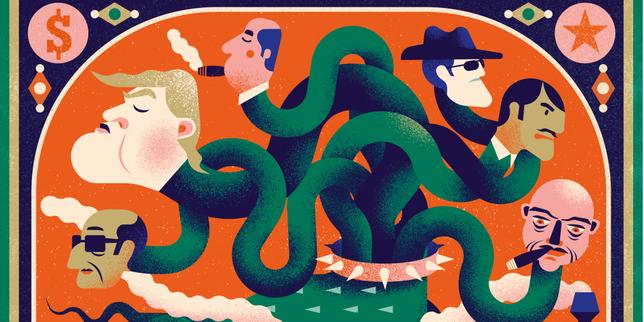
Power is a strange, brittle thing. We look at criminal syndicates through the lens of Hollywood—neatly tailored suits, hushed whispers in dimly lit restaurants, cigars burning down to ash. We forget the logistics. We forget that empires built on violence require constant maintenance, a frantic spinning of plates, and an absolute reliance on the goodwill of foreign states who view you only as an asset until they view you as a liability.
Geopolitics is a cold machine. For years, the Gulf was a comfortable harbor for capital of all origins, asking no questions as long as the investment remained liquid and the streets remained orderly. But the world shrinks. Treaties get signed in carpeted rooms where no one raises their voice. Sanctions drop like winter rain. Suddenly, the golden visa is just a piece of paper, and the air-conditioned sanctuary turns into a gilded cell waiting for a key from Interpol.
Let us step inside that transition for a moment. This is not a defense, nor is it a lament. It is an exercise in gravity.
Imagine the morning the illusion breaks. Not with a dramatic shootout, but with a knock at a door that sounds entirely too polite. The realization that the passport in your drawer is suddenly heavy. The phone calls that stop ringing on the other end. The sudden, terrifying clarity that the men who shared your table and smiled for the cameras are the first to adjust their seating arrangements when the wind shifts.
Dubai offers a specific kind of loneliness. Because everyone is a transient, everyone is calculating. When you fall there, you do not fall into the arms of a community; you fall through a trapdoor into an international vacuum.
And then comes Ireland.
The Irish penal system does not care about past grandeur. It smells of damp wool, floor wax, and institutional cooking. The light that filters through the reinforced glass is gray, rinsed of the harsh, theatrical glare of the desert sun. Every sound is sharp—keys rattling on heavy rings, boots echoing on concrete corridors, the mechanical clatter of sliding metal.
We talk about high-profile criminals as if they occupy a different biological category. We treat them as symbols, monsters on a screen, vectors of chaos. But strip away the headlines, the multi-million-dollar boxing promotions, the transnational drug networks, and you are left with a middle-aged man sitting on a bolted-down bunk, staring at a wall painted in institutional green.
The human mind is remarkably stubborn. It tries to negotiate with reality long after reality has left the room. In those first weeks, the brain replays the calculation. Where did the margin narrow? Which handshake was the bad one? Which border was crossed too soon?
This is the hidden cost of the enterprise. We are obsessed with the accumulation of power because we suffer from a profound terror of vulnerability. We build walls, buy protection, bribe systems, and surround ourselves with armed guards because we are fundamentally afraid of the dark. We think that by reaching the top of the mountain, we will escape the weather.
Instead, you just freeze faster.
The myth of the criminal mastermind collapses under the weight of its own administrative burden. To run a global operation of that scale requires a terrifying amount of administration. Spreadsheets, encrypted chats, logistics, corrupt officials demanding their cut, rivals plotting the angle of your decline. It is not a life of glamorous leisure; it is a 24-hour corporate job where the human resources department is equipped with firearms and the performance reviews are fatal.
When that structure fractures, the relief is sometimes as violent as the shock. The frantic spinning stops. The phone finally goes dead.
There is a profound lesson hidden in the concrete box, one that the rest of us rarely stop to absorb. We spend our lives chasing safety through accumulation, believing that if we just get far enough away from our origins, if we stack enough insulation between ourselves and the world, we become immune to the laws of cause and effect.
Kinahan traded a Dublin childhood for the shimmering facades of the Emirates, believing he had outsmarted geography. He believed wealth was a shield thick enough to deflect history. He was wrong. Geography always catches up. The past is not a foreign country; it is the foundation beneath your feet, and if you build on sand, you better hope the tide never turns.
Now, the horizons are measured in yards of reinforced concrete. The only sound is the heavy turning of a key. The desert heat is a distant memory, replaced by the damp chill of an Atlantic wind that finds its way through every crack in the stone.
The sun still sets over Dubai. The towers still pierce the haze. The supercars still crawl along Sheikh Zayed Road, air conditioning humming, drivers looking out at the endless glass and steel, entirely certain that tomorrow will look exactly like today.