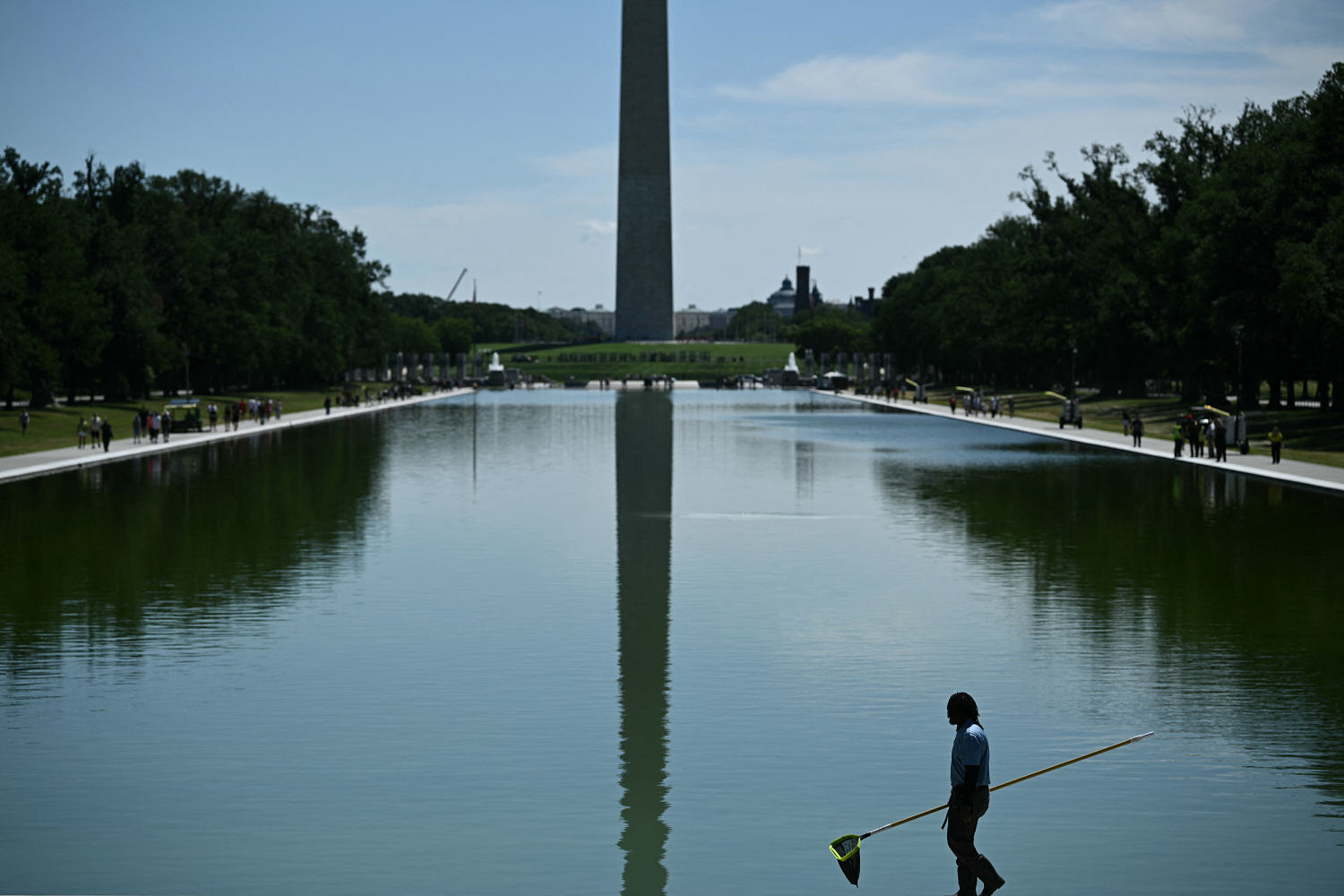
The Lincoln Memorial Reflecting Pool became an accidental punchline this summer. Chunks of its brand-new bright blue lining started peeling off the bottom, and the water turned an aggressive shade of green. President Donald Trump blamed vandals. He claimed malicious actors were tearing up the historic landmark and even tampering with the water chemistry.
Turns out, that narrative completely fell apart.
Federal prosecutors filed a motion in late July to drop all criminal charges against David Hearn, a 67-year-old former Olympic canoeist who had been arrested and indicted for allegedly slicing up the pool's sealant with a razor. The U.S. Attorney’s Office for the District of Columbia admitted a hard truth. The damage wasn't vandalism. It was a rushed, flawed installation job by the contractor, Atlantic Industrial Coatings.
If you've been following this strange saga, the sudden about-face exposes a classic government blunder: ready, fire, aim.
Let's look at what actually happened behind the scenes.
The Rush to Finish Before America 250
The renovation project was pushed heavily to get the National Mall ready for the country's America 250 celebrations around Independence Day. Officials wanted a pristine, striking blue bottom for the pool. The contractor applied a fresh polyurea coating, but the timeline was tight.
According to court filings, the Department of the Interior and the U.S. Park Police originally pointed fingers at the public. They fed investigators information suggesting intentional destruction. Prosecutors took that narrative to a grand jury, leading to Hearn's indictment on July 2.
Hearn always maintained his innocence. He told reporters he simply stopped by the pool on a bike ride on June 19 to satisfy his curiosity about the peeling coating and algae. He touched the surface, but he didn't tear it.
Prosecutors claim they spent weeks chasing the Department of the Interior for records. Dozens of requests later, the documents finally trickled in. They revealed a completely different story. A National Park Service engineer had already flagged peeling areas caused by overspray and application errors. The lining had failed repeatedly during the actual application process.
When U.S. Attorney Jeanine Pirro inspected the drained pool later in July alongside defense experts, the truth became obvious. The lining was failing across the entire basin. It wasn't human hands armed with razors causing the damage. It was poor adhesion, bad timing, and a rushed project schedule.
Accountability and the Fallout
Dropping the case clears Hearn's record, but it leaves plenty of embarrassment for federal agencies. Hearn's legal team didn't hold back, calling the arrest an abuse of government power and demanding an apology.
Why did the system move so fast to prosecute a citizen before verifying basic maintenance records? That question remains unanswered. When government projects go wrong, finding a scapegoat in the public eye is often easier than admitting that a contractor botched a multi-million-dollar job under pressure.
The pool itself remains a headache. Algae blooms have thrived, and questions linger about the chemical balance and overall maintenance strategy.
If you take anything away from this mess, it's a reminder to look past official press releases when high-profile public assets fail. Officials are quick to cry foul play when things break down on national monuments. Sometimes, the real enemy isn't a malicious vandal. It's just bad execution under a rushed deadline.