The hand-wringing over India’s supposed "lost generation" of tech talent is reaching a fever pitch. If you believe the mainstream narrative, Donald Trump’s protectionist stance on H-1B visas and the tightening of Western borders is a catastrophic blow to India’s economic future. The logic is lazy: India produces the minds, the US harvests the profit, and any disruption to this conveyor belt is a national tragedy.
It’s time to stop mourning a colonial-era economic model.
For decades, India has functioned as a high-end labor colony. We’ve exported our most expensive "asset"—human capital—for the price of a remittance check. When a software engineer leaves Bengaluru for Mountain View, India loses the compounding interest of that person’s innovation, tax revenue, and mentorship. If Trump or any Western leader wants to shut the gates, they aren't "stealing" an asset; they are returning it to sender.
The real tragedy isn't that Indians can't leave. The tragedy is that we’ve built an entire education system designed to help them escape.
The Remittance Trap Is a Race to the Bottom
Economists love to point at the $100 billion-plus flowing back into India as a sign of success. They are wrong. Remittances are the consolation prize for a nation that failed to create a domestic environment where that talent could build trillion-dollar companies at home.
When $100,000 worth of elite Indian education—subsidized by the Indian taxpayer—moves to California, the Return on Investment (ROI) for the Indian state is abysmal. The engineer pays US taxes, builds US intellectual property, and spends their peak consumption years in a US zip code. The "remittance" sent back to aging parents in Hyderabad covers groceries and healthcare. It does not build the next Nvidia.
We are trading visionaries for ATM machines. By tightening visa loops, the US is inadvertently forcing India to deal with its own genius. This isn't a "loss." It’s a forced repatriation of the most valuable resource on the planet: cognitive surplus.
The Rail Link Distraction
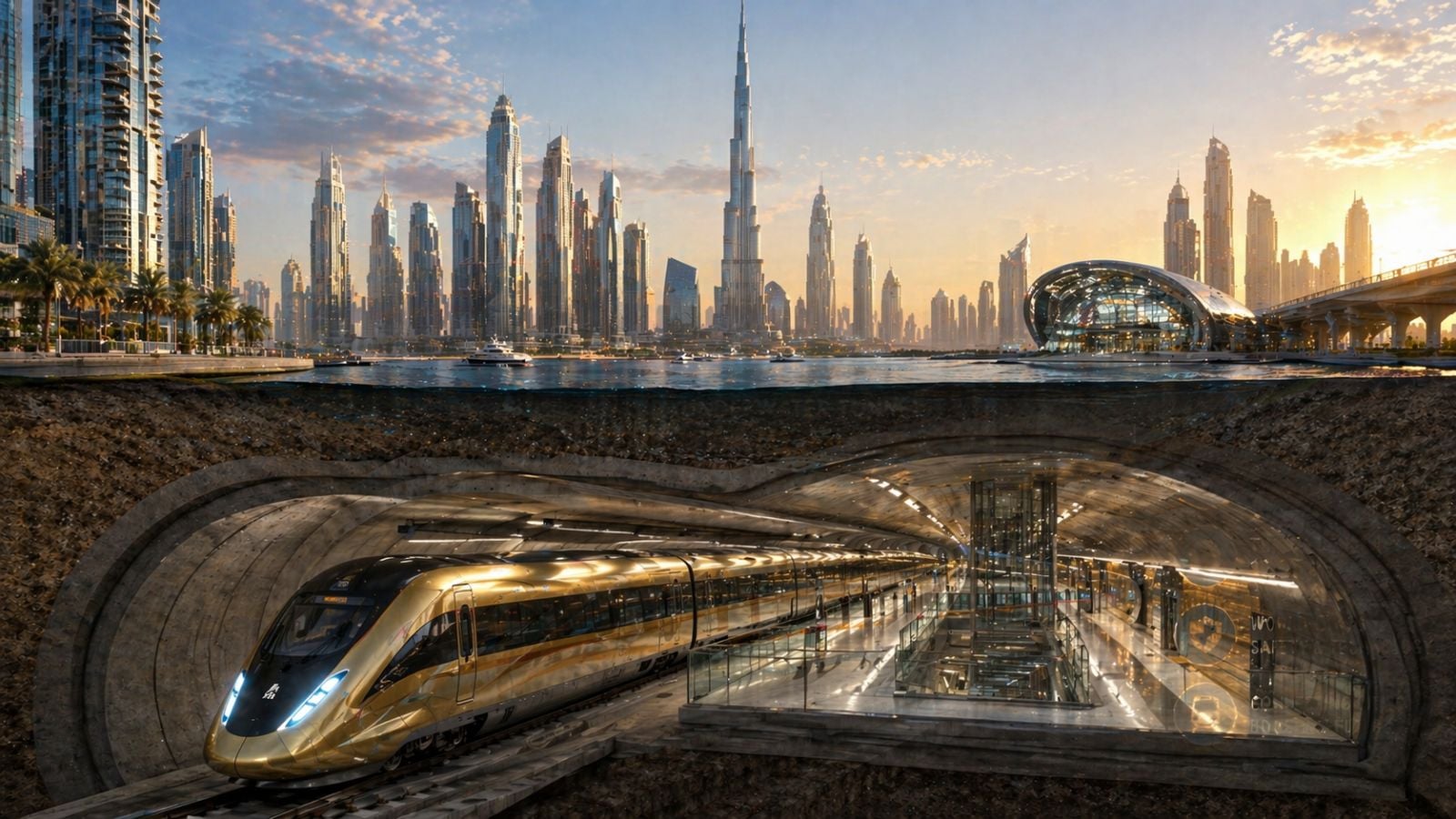
There is a sudden obsession with regional connectivity—specifically the Middle East-Europe Rail Link (IMEC)—as a panacea for India’s trade woes. The argument suggests that physical infrastructure will bridge the gap left by a cooling relationship with the West.
Let’s be blunt: physical tracks are 20th-century solutions to 21st-century problems. You can build all the rail lines you want from Mumbai to Haifa, but if the cargo being moved is just raw materials or low-margin hardware, you are still playing a losing game. The high-margin "assets" India should care about don't travel in shipping containers. They travel in fiber-optic cables and minds.
If India wants to be a global hegemon, it shouldn't worry about whether a train can reach Riyadh faster. It should worry about why an Indian founder still feels the need to flip their corporate structure to Delaware the moment they hit Series A. The rail link is a shiny distraction for bureaucrats who don't understand that the new Silk Road is made of code, not iron.
The Myth of the "Indo-US Partnership"
The "partnership" has always been lopsided. The US wants India as a hedge against China and a source of cheap, high-skilled labor. India wants the US as a destination for its restless youth and a source of VC capital. This isn't a partnership; it's a vent for internal pressure.
When Trump pushes "America First," he is actually doing India a favor by exposing the fragility of this dependency. Reliance on the H-1B program has made Indian tech firms complacent. They became "body shops"—arbitrageurs of human hours rather than architects of original products.
I’ve sat in boardrooms where the entire strategy was "how do we get more boots on the ground in New Jersey?" That isn't innovation. That’s staffing. The visa crunch is a brutal, necessary shock to the system that will force Indian firms to either build original IP or die.
Capital Is No Longer the Moat
People ask, "But where will the funding come from if we alienate the West?"
This question assumes we are still living in 2010. Global capital is desperate. It is a commodity. What is scarce is the ability to execute at scale in a massive, digital-first domestic market. India has 800 million internet users. It has a digital public infrastructure (UPI, ONDC) that makes the US banking system look like a Victorian relic.
The idea that Indian talent needs a Western "stamp of approval" to be valuable is a psychological hangover. If the US closes its borders, the talent doesn't evaporate. It settles. It builds. It solves local problems that have global applications.
Think about the "Reverse Brain Drain" seen in China during the early 2000s. The "Sea Turtles" (Haigui) who returned from Silicon Valley didn't just bring money; they brought a culture of relentless execution. They built Alibaba, Tencent, and Baidu. They didn't do it by waiting for a visa extension. They did it because the door to the West was either closed or unappealing.
Stop Asking "How Do We Keep Them?"
The premise of the question is flawed. You don't "keep" talent through loyalty or patriotism. You keep it through friction-less business environments and the promise of massive wealth.
Currently, India’s regulatory environment is a thicket of compliance that treats every founder like a potential criminal. If we are "losing" an asset, it isn't because of Trump’s immigration policy. It’s because of India’s tax terrorism and bureaucratic inertia.
- Abolish the "Angel Tax" permanently and without caveats.
- Stop the obsession with "Job Creation" in the traditional sense. Focus on wealth creation. High-wealth individuals create ecosystems.
- Dismantle the prestige of the foreign degree. As long as an MS from a mid-tier US university is valued more than ten years of local execution, the drain will continue.
The Hard Truth About Brain Drain
We need to be honest: the people leaving are often the most risk-averse. They want the stability of a 401(k), a suburban home, and a green card. The real disruptors—the ones who want to build empires—are already staying. They see the chaos of India not as a bug, but as a feature. They know that solving a problem for 1.4 billion people is more lucrative than optimizing an ad-click algorithm in Mountain View.
Trump’s protectionism isn't a wall; it’s a mirror. It’s forcing India to look at its own landscape and realize that we’ve been subsidizing the American Dream at the expense of our own.
The multibillion-dollar "asset" isn't lost. It’s just being forced to stay home. Now, for the first time in eighty years, India actually has to figure out what to do with it.
Stop crying about the visas. Start building the reasons to stay. If the West wants to hand us back our best minds on a silver platter, the only logical response is "Thank you."
India doesn't need a rail link to the world as much as it needs a bridge to its own potential. The era of the Indian immigrant is ending; the era of the Indian titan is being forced into existence by the very people who think they are holding us back.
Build the companies. Own the data. Forget the visa.