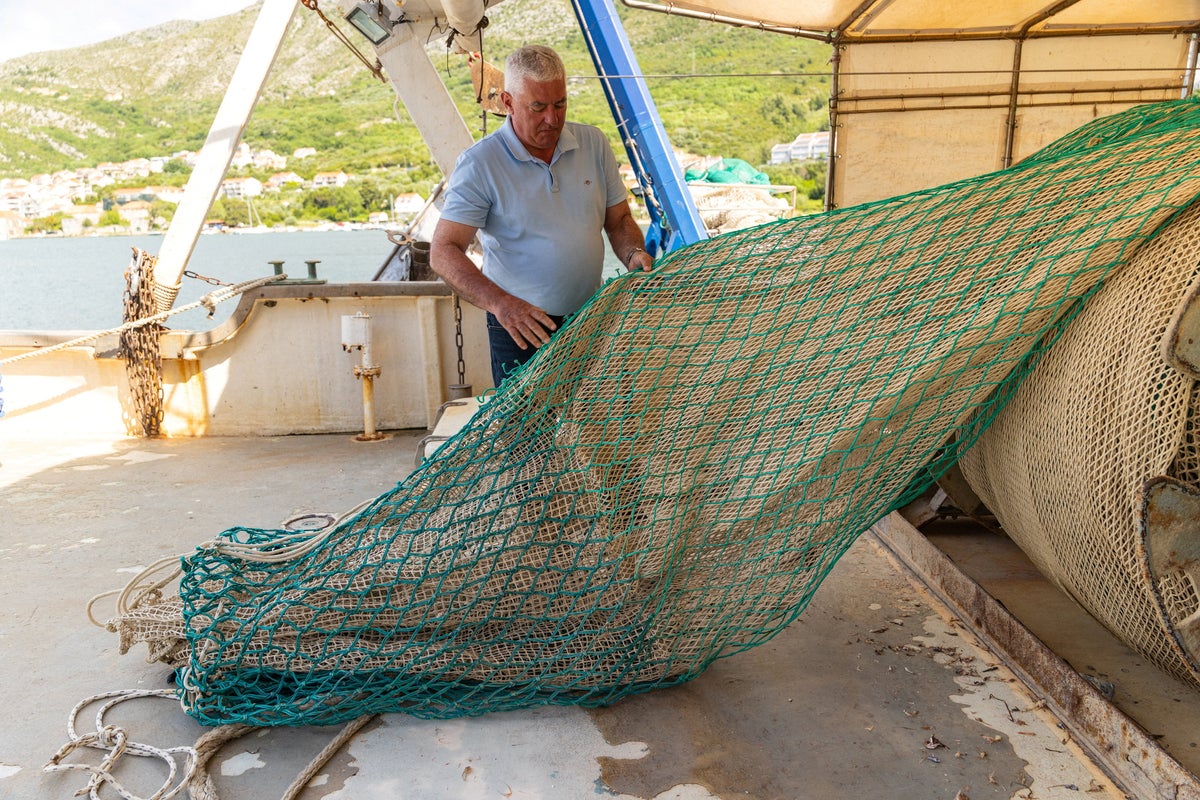
The headlines are predictable, bleeding-heart, and fundamentally wrong. You’ve seen them: "Traditional fishermen forced to hang up their nets," or "War in the Middle East makes European fishing unprofitable." These stories paint a picture of a noble, ancient industry being crushed by geopolitical forces beyond its control. It’s a tragic narrative that sells newspapers and wins sympathy votes.
It is also a lie.
The reality is far more clinical and far less sympathetic. The "traditional" fishing industry in European tourist hotspots isn’t dying because of the Iran conflict or spiking fuel prices. It’s dying because it is a zombie industry—an inefficient, over-subsidized relic that has been on life support for decades. The war isn't the cause of death; it's just the coroner’s report.
If your business model collapses the moment fuel prices tick up or a regional conflict shifts a supply chain, you don't have a business. You have a hobby funded by the taxpayer. It is time we stopped mourning the "loss of heritage" and started celebrating the long-overdue market correction of the Mediterranean.
The Fuel Subsidy Trap
The common argument suggests that rising oil prices—driven by instability in the Middle East—have made it impossible for small-scale fishermen to break even. This assumes that their previous "profitability" was organic. It wasn't.
For years, the European fishing fleet has relied on a cocktail of fuel tax exemptions and direct grants. In many coastal regions, the cost of diesel for commercial boats is a fraction of what a local resident pays at the pump to drive to work. When you subsidize the input costs of an extractive industry, you create a perverse incentive to over-extract.
I have watched port authorities in Greece and Italy scramble to justify "emergency aid" every time the global Brent crude price fluctuates by ten dollars. This isn't economic strategy; it's a desperate attempt to stall the inevitable. By shielding these operators from the true cost of their energy consumption, the EU has prevented the very innovation—electric propulsion, hydrogen cells, or simply more efficient hull designs—that could have saved them.
The current "crisis" is actually the market finally forcing these operators to face the real world. If you cannot catch enough fish to pay for the market rate of the fuel required to find them, the ocean is telling you something. You should listen.
The Tourism Conflict Nobody Wants to Admit
We are told that the disappearance of fishing boats will ruin the "charm" of European tourist hotspots. This is the ultimate "lazy consensus" of the travel industry.
The aesthetic of the colorful wooden boat bobbing in the harbor is a marketing product, not a functional economic necessity. In reality, the interests of the commercial fishing industry and the luxury tourism sector are in direct, violent opposition.
- Environmental Degradation: Commercial bottom-trawling—even on a "traditional" scale—decimates the seagrass meadows and biodiversity that snorkelers and divers pay thousands of euros to see.
- Space Inefficiency: Prime harbor real estate is often occupied by aging industrial vessels that contribute pennies to the local economy compared to the berth fees and service demands of the modern maritime leisure sector.
- Pollution: Old diesel engines in many of these "charming" boats dump more particulates and oil into pristine swimming waters than a fleet of modern yachts.
The "hotspots" aren't suffering because the nets are being hung up. They are thriving because the coastal economy is finally pivoting toward high-value, low-impact services. The fisherman who complains he can no longer afford to fish is usually the same man who refuses to adapt his vessel for eco-tourism or research charters. He isn't a victim of war; he is a victim of his own rigidity.
Geopolitical Scapegoating
Blaming the Iran conflict for the state of European fishing is a masterclass in shifting the goalposts. It provides a convenient, external villain that prevents us from looking at internal failures.
The Mediterranean is one of the most overfished bodies of water on the planet. According to data from the Scientific, Technical and Economic Committee for Fisheries (STECF), a staggering percentage of assessed stocks are being exploited beyond sustainable levels. You don't need a war in the Middle East to make fishing unprofitable when there are simply no fish left to catch.
The "unprofitability" is a biological reality. The biomass of key species like red mullet and European hake has been in freefall for years. When the catch-per-unit-effort (CPUE) drops, your margins thin. When your margins thin, any external shock—like a fuel spike—becomes fatal.
If we want to be "brutally honest," the cessation of fishing in these areas is the best thing that could happen to the European coastline. It creates an accidental marine protected area. It allows the ecosystem a moment to breathe. The "loss of jobs" is a short-term social cost that pales in comparison to the long-term economic catastrophe of a dead sea.
The Fallacy of "Food Security"
Politicians love to wrap fishing subsidies in the flag of food security. They argue that we must protect our local fishermen to ensure we aren't dependent on imports.
This is a mathematical hallucination. The high-end Mediterranean fishing industry doesn't feed the masses; it feeds the luxury restaurant circuit. The red prawns and sea bass caught by these "struggling" fleets are sold at prices that the average citizen cannot afford.
If we were serious about food security, we would be dismantling the artisanal fleet and pouring that capital into high-tech, land-based recirculating aquaculture systems (RAS). These systems are immune to Middle Eastern wars, they don't require diesel-guzzling boats, and they don't destroy the seabed. But RAS isn't "romantic." It doesn't look good on a postcard from Amalfi.
We are sacrificing real food security for the sake of a visual lie.
Stop Trying to Save the Net
The advice usually given to coastal communities is to "diversify" or "seek government relief." This is bad advice. Relief only prolongs the agony.
If you are an investor or a local policymaker, the play isn't to save the fishing industry. The play is to liquidate it.
- Decommissioning as an Asset: We should be paying fishermen to scrap their boats and retire their licenses permanently. Not as "aid," but as a buy-out of a failing asset.
- Repurposing the Infrastructure: Convert the industrial docks into high-end marinas and marine biology hubs. The economic multiplier of a research vessel or a well-serviced yacht is 10x that of a small-scale trawler.
- The Blue Carbon Economy: Shift the labor force toward seagrass restoration and carbon credit monitoring. The Mediterranean has the potential to be a massive carbon sink. There is more money in fixing the ocean than there is in emptying it.
The Professional Price of Truth
I have sat in boardrooms where "tradition" is used as a shield against any form of data-driven restructuring. I have seen regional governments burn through millions in "modernization grants" only to see the same boats sitting idle two years later because the fundamental economics haven't changed.
The downside of this contrarian view is obvious: it is politically radioactive. No mayor wants to be the one who "ended fishing" in their village. But the alternative is worse. The alternative is a coastline of ghost towns, rotting piers, and a sea that has been scraped clean of life, all while we wait for a peace treaty in a different hemisphere to fix a problem that we created right here at home.
The Iran war didn't kill the fishing industry. It just stopped us from pretending it was still alive.
Stop looking for ways to make the nets profitable again. They aren't coming back, and for the sake of the Mediterranean’s future, they shouldn't.