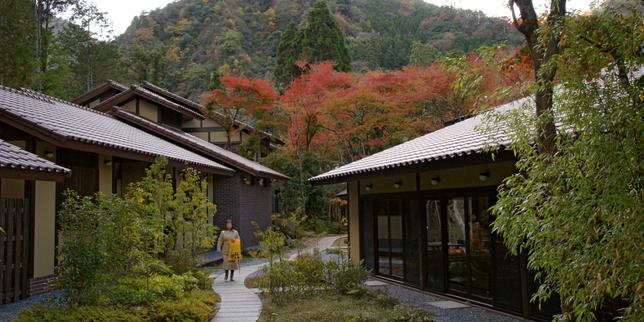
Japan is systematically dismantling the traditional ryokan experience to court wealthy foreign tourists, a desperate gambit that risks destroying the very cultural heritage making these historic inns valuable in the first place. Driven by a massive influx of international capital and record-breaking tourism numbers, multi-generational family owners are trading tatami mats for western beds, stripping away strict dining schedules, and abandoning the deeply institutionalized concept of omotenashi—selfless hospitality—in favor of predictable, frictionless luxury. While this pivot satisfies the immediate demands of global travelers who find traditional Japanese etiquette restrictive, it creates a dangerous cultural homogenization. The modern upscale ryokan is rapidly transforming from a sacred sanctuary of Japanese living into an expensive, Westernized boutique hotel wrapped in faux-traditional architecture.
The Financial Panic Behind the Golden Facade
To understand why century-old institutions are suddenly ripping out their floor bedding and rewriting their rulebooks, one must look past the pristine gardens and into the ledgers. The Japanese countryside is emptying out. For decades, ryokan relied on a steady stream of domestic corporate retreats, massive tour groups, and aging Japanese citizens who understood the implicit, unspoken rules of staying at an inn. That demographic is shrinking rapidly. Domestic bookings have plummeted, and the hyper-inflationary costs of labor, energy, and food ingredients have pushed traditional operations to the brink of insolvency.
International travelers saved the industry from immediate collapse, but they arrived with an entirely different set of expectations.
The traditional ryokan model is notoriously rigid. Historically, a guest arrives at a strict check-in time, changes into a yukata, bathes before dinner, and sits on the floor for a grueling twelve-course kaiseki banquet served precisely at 6:00 PM. For a generation of global luxury travelers accustomed to on-demand room service, custom pillows, and late-night dining options, this rigid itinerary feels less like a vacation and more like an upscale boarding school. Faced with the choice between financial ruin and total cultural adaptation, operators are choosing survival.
Deconstructing Omotenashi for a Global Audience
The most profound casualty of this transformation is the re-engineering of omotenashi. True Japanese hospitality is not about obsequiousness; it is about anticipating a guest’s needs before they even realize them, rooted in a mutual, unspoken understanding of etiquette. When a foreign guest does not know the etiquette, this delicate dance breaks down completely.
Consider the role of the nakai-san, the dedicated room attendant who serves as the emotional anchor of a traditional ryokan stay.
Historically, the nakai-san enters your room multiple times unannounced. She serves tea upon arrival, lays out the futon while you dine, and serves breakfast in your living space. To a Japanese guest, this is the height of attentive care. To an American or European traveler paying $1,500 a night, it can feel like an egregious invasion of privacy.
+-----------------------------------+-----------------------------------+
| Traditional Ryokan Element        | The Modernized Luxury Substitute  |
+-----------------------------------+-----------------------------------+
| Floor-laid futon bedding          | Low-slung Western mattresses      |
| Room served kaiseki dining        | Communal dining rooms or bars     |
| Communal public hot spring baths  | Private in-room plunge pools      |
| Intrusive, highly attentive service| Discretion, privacy-first service |
+-----------------------------------+-----------------------------------+
Foreign guests regularly voice discomfort with having staff enter their rooms while they are relaxing or sleeping. In response, foreign-financed redevelopment funds are redesigning these spaces. They are separating the sleeping quarters from the living areas and moving dining out of the guestrooms entirely, into centralized, chic restaurant lounges. The nakai-san is being replaced by standard hotel concierges. The service is becoming invisible, which is exactly what global travelers want, but it completely erases the historical intimacy that defined the ryokan genre.
The Westernization of the Hot Spring Experience
Modesty standards represent another massive friction point that is being aggressively commoditized. The heart of any authentic ryokan is the onsen, the communal natural hot spring bath. The rules here are ancient and non-negotiable: absolute nudity, meticulous washing before entering the water, and a strict ban on visible tattoos, which are historically associated with organized crime in Japan.
For years, international tourists complained bitterly about these rules. They felt excluded by the tattoo bans and deeply uncomfortable bathing naked with strangers.
Instead of educating foreign visitors on the cultural significance of the communal bath, luxury operators are simply bypassing the issue with money. Modernized high-end ryokan now feature private open-air hot springs attached to every single guest suite. While this solves the comfort issue for the international traveler, it fundamentally shifts the communal, egalitarian spirit of the onsen. The shared bath was a place where all societal barriers dissolved; everyone was equally naked, from CEOs to factory workers. Moving the water into private, isolated luxury balconies transforms a sacred cultural ritual into a mere wealthy amenity, an Instagram backdrop stripped of its communal soul.
The Loss of Culinary Authenticity
The culinary shifts are equally stark. A traditional kaiseki dinner is a hyper-seasonal, hyper-local masterclass in texture and subtle flavors. It relies heavily on ingredients that can be challenging to the uninitiated Western palate: slimy mountain yams, fermented seafood viscera, whole fish with the heads attached, and chewy konjac jellies.
When luxury properties notice that international guests are leaving half of these meticulously prepared dishes untouched, they pivot to safer options.
Across the country, high-end ryokan are quietly replacing traditional seafood-heavy menus with heavily marbled Wagyu beef courses, tempura, and sushi—the holy trinity of easily digestible, globally recognized Japanese cuisine. Some properties have even introduced wine-pairing menus designed by Western sommeliers to replace regional sake pairings. The food is undeniably delicious, but it is no longer reflective of the specific micro-region where the ryokan sits. It is a curated, sanitized version of Japan designed to please everyone while challenging no one.
The Rise of Institutional Real Estate Foreign Capital
This transformation is not just happening organically at the family level; it is being driven by institutional private equity. International hospitality conglomerates and foreign real estate investment trusts are actively buying up distressed, historic properties across Kyoto, Hakone, and Hokkaido. These investment firms look at a ryokan through the cold lens of global yield and scalability.
They see an asset class with incredible brand equity but terrible operational efficiency.
To maximize returns, these corporate owners implement standardized property management systems. They eliminate the labor-intensive practices that made the original inns special. Staffing is streamlined, local artisans are replaced with mass-contracted commercial suppliers, and the physical structures are gutted to fit Western building standards. The result is a highly profitable, beautiful product that looks vaguely Japanese on a website but feels entirely interchangeable with a luxury resort in Napa Valley or the Swiss Alps once you step inside.
The tragedy of the modern ryokan transformation is that the industry is trading its irreplaceable cultural inheritance for temporary financial security. By sanitizing the experience, removing the friction, and accommodating every Western comfort, these properties are erasing the very mystique that drew international travelers to Japan in the first place. When every luxury ryokan has been retrofitted with Western beds, private pools, and steak dinners, the world will have gained a few more excellent boutique hotels, but it will have lost a window into an ancient way of living that can never be rebuilt. Owners must find the courage to establish boundaries, choosing to educate their global guests rather than completely capitulating to them.