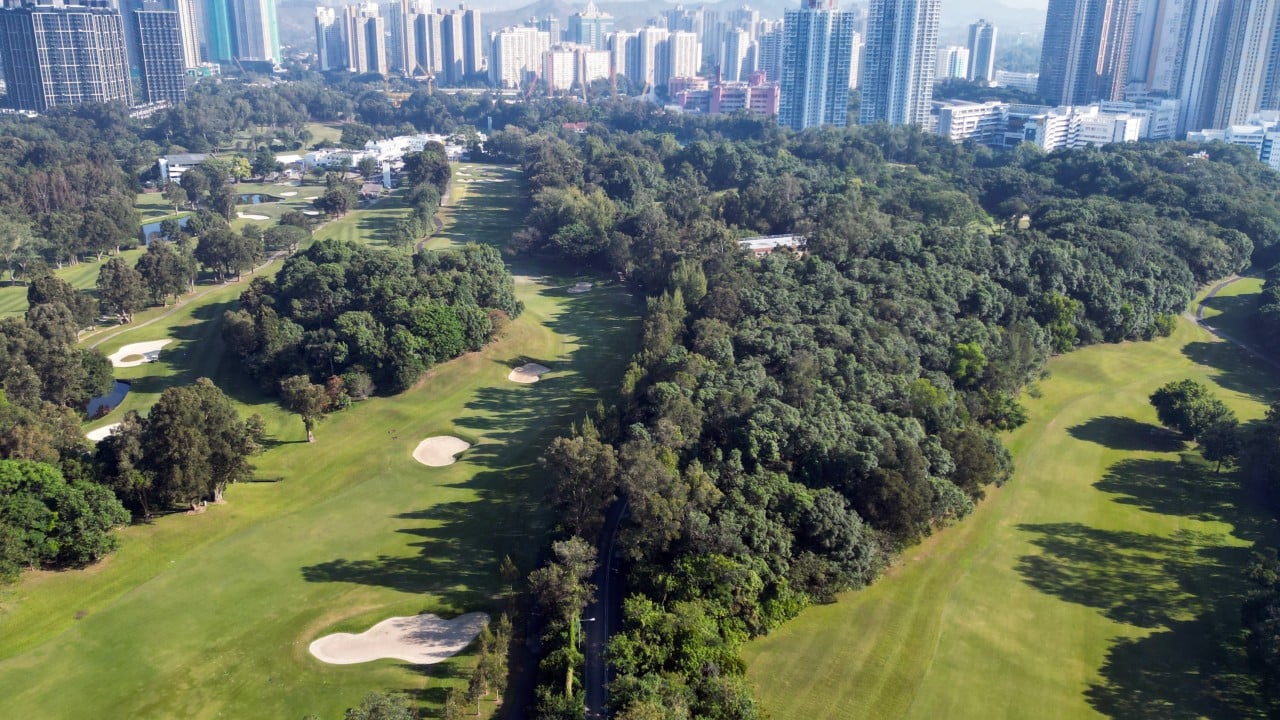
Dawn breaks differently in Fanling.
Before the roar of the MTR wakes the commuters, before the neon glare washes out the stars, there is a quiet moment when the air smells of wet grass, old camphor trees, and centuries of undisturbed earth. Here, tucked away in the New Territories of Hong Kong, lies a patch of green so old and deliberate that it feels almost defiant.
This is the Fanling Golf Course. To some, it is an exclusive playground for the privileged, a sprawling expanse of manicured fairways where diplomats and executives chase dimpled white balls through the humid morning haze. But to anyone who has walked its perimeter under the heavy canopy of mature banyan and eucalyptus trees, it is something entirely different.
It is a sanctuary.
It is also the center of one of the most contentious battles in modern urban planning. As the government eyes this 172-hectare oasis to carve out public housing for a population choking on square footage, a deeper question hangs in the balance. How do you solve a housing crisis without destroying the very soul of the city people are trying to live in?
The Anatomy of Desperation
To understand why a golf course has become the most fought-over turf in the territory, you have to look down at the ground beneath your feet. Or rather, look up at the cage homes, the subdivided flats, the tiny concrete boxes where families of four share spaces the size of a standard American walk-in closet.
Hong Kong is a vertical miracle and a horizontal nightmare. The numbers are staggering. Hundreds of thousands of people wait years for public housing, crammed into subdivided units where kitchen counters sit inches from toilets. In a city where every square inch is priced like gold leaf, the existence of a massive, rolling green space reserved for a recreational sport feels like an insult to the desperate.
Enter the policy proposals. The math seems simple on paper. Carve up a portion of the Fanling Golf Course, build high-density housing blocks, and hand over the keys to thousands of families trapped in housing limbo. It is a politically potent narrative. Give the land back to the people. Dismantle the relics of colonial privilege.
Except, urban geography is rarely that simple.
The Myth of the Easy Swap
Imagine standing in the middle of the Fanling site on a stifling August afternoon. The humidity clings to your skin like a wet wool blanket. The city outside is a cacophony of jackhammers, traffic horns, and the endless hum of air conditioning units. But here, the temperature drops by a couple of degrees. The soundscape is filled with the calls of migratory birds and the rustle of leaves.
This microclimate is not an accident. It is a functioning ecological lung.
When planners talk about utilizing the land, they speak in the sterile language of zoning, plot ratios, and projected yields. They talk about units delivered. But they rarely talk about what happens when you rip out centuries-old trees that take generations to replace. They rarely talk about the destruction of a vital wildlife corridor for endangered species like the Chinese Pangolin and roosting bats.
(Note: When looking at ecological data compiled by environmental groups, the site functions as a rich biodiversity hotspot that cannot simply be transplanted to a concrete rooftop.)
If you pave over Fanling, you gain concrete. But you lose something irreversible. You trade a permanent ecological asset for a temporary housing fix that experts argue could be achieved elsewhere with less environmental devastation.
The Hidden Costs
Consider the alternatives. Across Hong Kong, brownfield sites—abandoned industrial plots, open-air storage yards, and scrap metal lots—sit neglected and underutilized. These areas already lack ecological value. They do not require the destruction of heritage trees or the disruption of established drainage basins.
Why not start there?
The answer usually comes down to politics and speed. Brownfield sites often involve complex land ownership patterns, scattered leases, and messy logistics. The golf course, on the other hand, is largely leased by the government, making it an easy target for a administration eager to show quick results on housing delivery.
It is easier to take the green space because it doesn't fight back with lawyers representing fragmented private landowners. But it fights back in other ways.
When we crowd more people into an area without upgrading the surrounding infrastructure—the roads, the transit lines, the sewage systems—we create a different kind of crisis. Traffic chokes the narrow arteries of the northern districts. Schools and clinics overflow. The promised utopia turns into a concrete bottleneck.
A Different Kind of Vision
There is a middle ground, though it requires a kind of political courage that is vanishingly rare.
Imagine a city that values its breathing spaces as much as its balance sheets. Imagine preserving the ecological core of Fanling while aggressively reclaiming brownfields, redeveloping older urban cores, and streamlining the bureaucratic sludge that delays housing approvals across the board.
We do not have to choose between a roof over our heads and the air in our lungs. That is a false dichotomy manufactured by urgency and a lack of imagination.
The Fanling Golf Course is not sacred because of the game played upon its grass. It is sacred because once you pave paradise, you cannot buy it back. No amount of concrete can replicate the shade of a hundred-year-old banyan tree, and no policy target can restore an ecosystem once the bulldozers finish their work.
The keys to a new apartment should not come at the cost of the very environment that makes living in the city endurable. As the debate rages on and the heavy machinery waits in the wings, the real test is not whether we can build more homes.
The test is whether we will still recognize our city when we are done.



