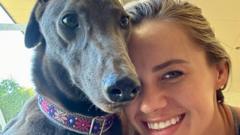
The media loves a soft-hearted animal story. A greyhound named "Danny" refuses to run after the mechanical hare, gets labeled a pacifist pacifing out of a brutal sport, and is whisked away to a cozy couch in suburban America. The narrative is bought wholesale: racing is inherently evil, the dog made a conscious choice to strike, and adoption is a flawless victory for animal welfare.
It is a comforting fairy tale. It is also entirely wrong.
When a racing greyhound refuses to chase, it is not making a moral stand against the commercialization of canine athletics. It is demonstrating a lack of prey drive, a behavioral quirk, or potentially an underlying medical issue that went unnoticed by trainers. By framing these transitions as dramatic escapes from a dystopian system, animal welfare advocates and lazy journalists miss the actual operational reality of modern canine sports and the complex behavioral shifts required of retired working dogs.
We need to stop sentimentalizing canine behavior and start looking at the logistics, economics, and psychology of the retired racer.
The Myth of the Conscientious Objector
Dogs do not possess an internal compass calibrated to human labor politics. A greyhound that stops mid-race or sits down at the starting box is not a rebel; it is an animal experiencing a breakdown in motivation or physical capability.
In canine athletics, the urge to chase is driven by a highly selected predatory motor pattern. Selective breeding over thousands of years amplified the "eye-stalk-chase" sequence while minimizing the "grab-bite-kill" phase. When a dog refuses to run, one of three things is happening:
- Anhedonia or Neurological Fatigue: The high-stress, high-excitement environment no longer triggers the dopamine release required to sustain high-speed pursuit.
- Subclinical Injury: Dogs are masters at masking pain. A micro-tear in the gracilis muscle or early-stage hock soreness will cause a dog to self-limit before human observers detect a limp.
- Environmental Neophobia: A sudden change in track conditions, lighting, or crowd noise can trigger an inhibitory response, overriding the drive to chase.
I have spent years evaluating working dogs, from search-and-rescue K9s to track athletes. When an animal stops performing, the amateur attributes it to "personality." The professional looks at a biomechanical or psychological deficit. Labeling a dog's refusal to work as a "choice to be a pet" ignores the reality that a sudden drop in performance is frequently the first sign of chronic discomfort.
The Real Problem with the Couch Potato Narrative
The competitor article positions the American suburban home as the ultimate paradise for a retired racer. "From the track to the sofa," the headline writers cheer. They rarely mention the profound psychological shock this transition inflicts on the animal.
Consider the baseline reality of a racing greyhound's life versus a suburban home:
| Factor | Racing Kennel Reality | Suburban Home Reality |
|---|---|---|
| Structure | Highly predictable. Fixed feeding, turnout, and training schedules. | Chaotic. Variable work hours, unpredictable guests, random noises. |
| Socialization | Continuous contact with dozens of conspecifics (other greyhounds). | Isolation. Often left alone for 8 to 10 hours as the sole pet. |
| Physical Space | Crate-and-turnout system optimizing rest and explosive energy expenditure. | Free roam of an unstructured environment, often leading to separation anxiety. |
| Visual Stimuli | Familiar, controlled environments with minimal novel objects. | Ceiling fans, glass doors, mirrors, television screens, and stairs. |
When you take a dog that has spent its entire life in a structured, pack-oriented athletic environment and drop it into a quiet living room with a fleece blanket, you do not automatically get a happy pet. You frequently get an incredibly stressed, disoriented animal suffering from severe separation anxiety and environmental trauma.
The industry insiders who facilitate these adoptions know the truth: many of these dogs have never seen a flight of stairs. They do not know how to walk on slick hardwood floors. They have never encountered a dog of a different breed—a pug or a French bulldog can look like an alien predator to a greyhound that has only ever seen its own kind.
To call this transition a "rescue" without acknowledging the massive behavioral rehabilitation required is a disservice to both the dog and the adopter.
Dismantling the PAA Fallacies
Look at the standard questions people ask online regarding greyhound racing and adoption. The premise of almost every query is fundamentally flawed.
"Are racing greyhounds abused to make them run faster?"
No. From a purely cynical, economic standpoint, abuse does not produce speed. A stressed, terrified, or malnourished animal cannot clock 45 miles per hour on a track. The cortisol spikes alone ruin muscle recovery. High-level canine athletes require precise caloric intake, specialized hydrotherapy, physical therapy, and strict rest cycles. The idea that trainers beat dogs into running faster defies the basic principles of animal conditioning and exercise physiology.
"Is it better to adopt a dog that refused to race?"
Not necessarily. A dog that walked away from racing due to an early injury or behavioral instability may carry those exact physical or psychological liabilities into your home. A dog with a low prey drive might still have a high fear response to novel stimuli. You aren't getting a "better" dog; you are getting a dog with a different set of management requirements.
"Why is greyhound racing declining if the dogs are treated well?"
Because the economics of modern gambling have shifted away from live track attendance to digital platforms, sports betting, and online casinos. The decline of the sport is an economic reality driven by changing consumer preferences, not a moral awakening regarding animal treatment.
The Hard Truth of Post-Sport Management
The contrarian reality that no welfare agency wants to put on a fundraising brochure is this: the racing industry funded its own retirement pipeline far more effectively than independent rescues ever could.
When tracks close precipitously due to legislative bans, the sudden influx of thousands of dogs into the adoption ecosystem destabilizes local rescue networks. Independent shelters lack the specialized knowledge required to handle the specific medical quirks of the breed.
For instance, greyhounds have unique hematological profiles:
- Higher Packed Cell Volume (PCV): A normal greyhound PCV ranges from 50% to 65%, whereas a typical dog sits between 35% and 55%. An inexperienced vet seeing this will misdiagnose polycythemia or severe dehydration.
- Lower Platelet Counts: Greyhounds routinely run platelet counts that would signal immune-mediated thrombocytopenia in a golden retriever.
- Creatinine Anomalies: Their massive muscle mass means baseline creatinine levels are significantly higher than standard canine ranges, often leading to false diagnoses of kidney failure.
When we sentimentalize the "refusal to race" and push for the immediate eradication of the sport without maintaining the specialized infrastructure that understands these animals, the dogs suffer the consequences.
The Actionable Guide for the Realist Adopter
If you want to adopt a retired racer—whether it won championships or quit on day one—throw away the narrative of the grateful rescue dog. Treat the animal like a transitioning veteran.
1. Replicate the Kennel Structure
For the first six months, keep the dog on a military schedule. Feed at the exact same times. Use a crate for sleeping and during periods when you are away. The crate is not a punishment; it is the only environment where their nervous system knows how to fully decompress.
2. Expect the "Greyhound Scream"
These dogs have a low tolerance for unexpected physical sensations. If they bump their leg on a coffee table or pinch a toe, they may emit a blood-curdling shriek. Do not rush over and coddle them; this reinforces the panic. Check for actual injury, then move on calmly.
3. De-sensitize to the Mundane
Do not assume the dog understands windows. Many racers will attempt to run straight through sliding glass doors because they have never encountered transparent barriers. Put sticky notes or decals at the dog's eye level until they map the boundaries of your house.
Stop looking for a moral victory in an animal's retirement. Danny the greyhound didn't quit racing because he dreamed of freedom; he quit because he was done with that specific job. Now he has a new one, and it is significantly harder than running left on a dirt track. Treat him like an athlete in transition, not a victim of a system you dislike. Your couch is not a salvation; it is just a different kind of training ground.