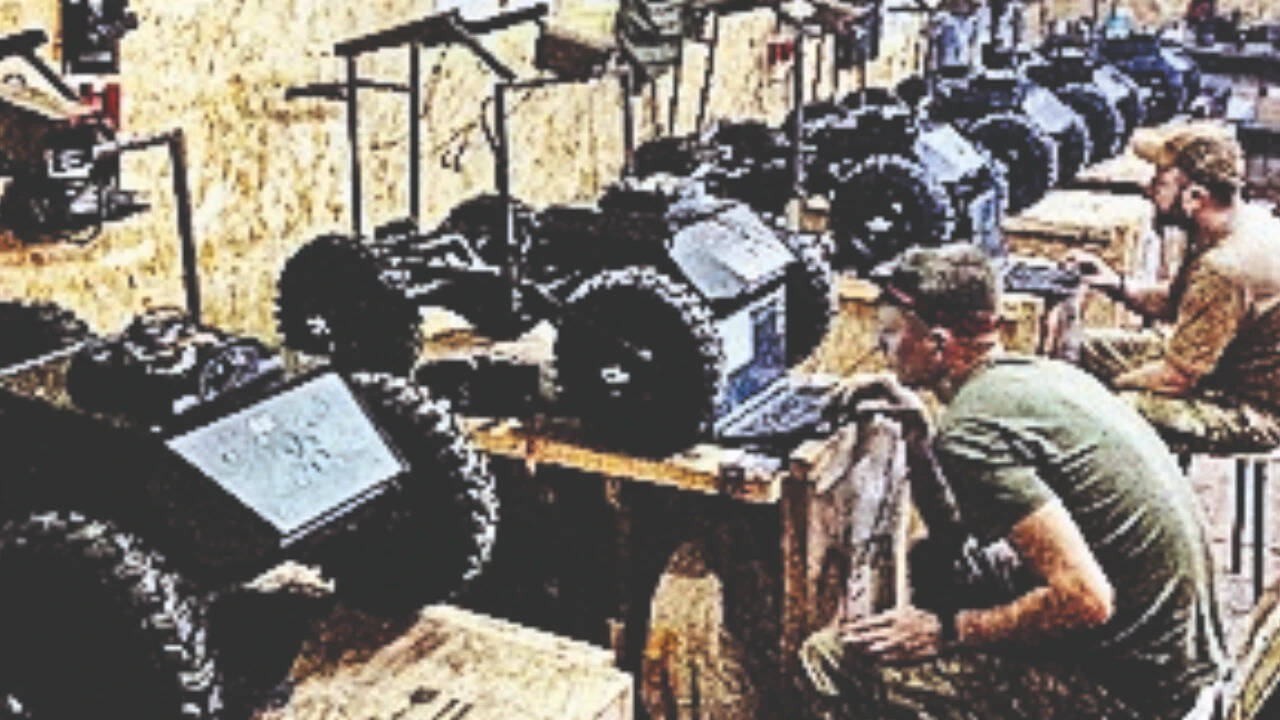
The lazy consensus of armchair defense analysts currently runs on a simple, comforting narrative. Uncrewed ground vehicles are sweeping across the muddy fields of eastern Europe, effortlessly swapping metal treads for flesh and bone, turning the bloodiest infantry meat-grinder of the twenty-first century into a remote-controlled video game.
It is a clean, antiseptic fantasy. And it is entirely wrong.
If you spend your time reading mainstream defense journalism, you would believe that battalions of soldiers are packing up their rucksacks, heading home, and leaving the trenches to autonomous tracked boxes armed with heavy machine guns. Headlines chirp about how ground drones are rendering the grunt obsolete.
I have watched enough hardware burn in the Donbas tree lines to know the reality. Ground drones are not replacing infantry. They are exposing just how irreplaceable, and uniquely fragile, human judgment actually is.
The Physics Of The Mud Do Not Care About Your Silicon
Let us strip away the Silicon Valley techno-optimism and look at the actual physics of the battlefield. The primary constraint in modern land warfare is not computing power or battery density. It is friction.
Mainstream commentary loves to treat the Ukrainian frontlines like an open-air testing ground for Silicon Valley robotics startups. They talk about swarms, autonomous pathfinding, and machine learning navigation as if a muddy trench system in Zaporizhzhia operates with the same predictability as an Amazon fulfillment center.
It does not.
A tracked uncrewed vehicle loaded with three hundred kilograms of anti-tank mines or a heavy machine gun looks terrifying in a controlled promotional video filmed on a dry gravel path in the testing grounds. Put that same platform into a four-foot-deep trench filled with freezing sludge, submerged tree roots, and constant artillery churn, and the engineering reality hits hard. Tracks throw. Final drives shatter. Electronic control units drown in hydraulic fluid and freezing water.
More importantly, every ground drone operating on a tether or wireless link is fighting a brutal, unwinnable war against the electromagnetic spectrum. Electronic warfare is so dense along the contact line that standard control frequencies cough and die within kilometers. Operators are flying blind, fighting high latency, or watching their expensive robotic platforms turn into stationary metal bricks because a cheap Russian jammer swept the local radio frequencies.
Infantry do not suffer from link dropouts. A grunt can slip in the mud, curse, pick themselves up, and crawl under a fallen beam. A robot requires an expensive recovery mission conducted by other humans risking their lives under mortar fire.
The Economics Of Attrition Favor Flesh
Let us talk about the brutal math of cost imposition. Defense commentators often parrot the line that using a machine saves human life, therefore any cost is justified. But military logistics do not run on moral sentiment; they run on unit replacement costs.
A rudimentary FPV quadcopter costs a few hundred dollars. A heavy uncrewed ground vehicle built to withstand small arms fire, carry meaningful payloads, navigate rough terrain, and maintain a secure encrypted link costs tens of thousands, sometimes hundreds of thousands of dollars.
When a cheap artillery shell or a kamikaze drone strikes a trench, it might kill a sandbag and concuss a soldier who will be back on watch in forty-eight hours. When that same shell lands on an uncrewed ground vehicle, you lose an asset that takes weeks to manufacture, ship, and configure.
The industrial base backing Ukraine and its international supporters is already straining to keep up with artillery shell consumption. Imagining that western economies can flood the zone with armored ground robots to replace front-line infantry reveals a fundamental misunderstanding of industrial capacity. We cannot build them fast enough, we cannot armor them heavily enough, and we certainly cannot make them cheap enough to absorb the attrition rate of a peer-to-peer artillery war.
What Ground Drones Actually Do
If ground drones are not replacing infantry, what are they doing? They are performing the dirtiest, most specific subset of infantry logistics: the logistical donkey work.
Look at what is actually succeeding on the front lines. Remote-controlled buggies and small tracked carts are hauling water, ammunition, and rations into cut-off positions. They are dragging wounded soldiers out of zones where an armored evacuation vehicle would instantly attract a swarm of fiber-optic-guided drones.
That is not replacing the infantryman. That is keeping the infantryman alive for twenty-four hours longer so they can continue to hold a hole in the ground.
Logistics is unglamorous. It does not generate viral TikTok clips of robots firing autocannons. But it wins wars. Ground drones are glorified electric wheelbarrows with guns bolted on as an afterthought, not mechanized terminators taking the place of rifle platoons.
The Human In The Loop Is The Bottleneck
The deepest flaw in the replacement narrative is the failure to understand the cognitive load of remote operations.
When an infantry squad moves through a ruined village, their situational awareness is multi-sensory. They smell cordite, hear the distinctive snap of supersonic rounds overhead, feel the concussive thump of mortar fire, and read micro-expressions on civilian faces. Their peripheral vision picks up movement in shattered windows across the street.
An operator sitting in a damp basement three kilometers away, staring at a jittery, low-latency video feed through a pair of virtual reality goggles, is operating with tunnel vision. They have no peripheral vision. They have no spatial awareness. They cannot feel the ground beneath their feet.
This cognitive bottleneck means that a single ground drone requires an entire support ecosystem: an operator, a spotter, a mechanic, and a security detail to protect the control station from counter-battery fire. Instead of removing humans from the battlefield, ground drones often concentrate more high-value personnel into vulnerable static command nodes where a single loitering munition can wipe out the entire crew.
The Dangerous Illusion Of Bloodless War
We cling to the myth of the robotic soldier because it eases our collective conscience. It lets us pretend that we can wage high-intensity industrial warfare without the gruesome human cost that has defined every major conflict in human history.
That illusion is dangerous. It leads to misallocated defense budgets, misplaced tactical doctrine, and catastrophic surprises when the shiny hardware meets the uncompromising reality of combat.
Ground drones are vital tools. They save fingers from frostbite, backs from breaking under heavy mortar baseplates, and lives during casualty evacuations. But they are extensions of the infantryman, not their executioners.
The soldier in the mud remains the ultimate arbiter of violence. Until a robot can spontaneously improvise a solution to a collapsing trench under heavy fire using a shovel, a roll of duct tape, and raw human stubbornness, the infantry will stay right where they are.
Stop waiting for the machines to take over. They aren't coming.