The Cincinnati Zoo has spent a decade trying to outrun a single afternoon in May 2016, and the premature death of its most famous resident has exposed the fragile foundation of modern zoo economics. While the competitor's headline points to a institution "reeling from Fiona's death" ten years after the fatal shooting of Harambe, the deeper story is not merely about grief over a beloved hippopotamus. It is about what happens when an accredited zoological park builds its entire public redemption arc, donor pipeline, and global brand identity around the survival of one medically fragile animal—and how the loss of that animal forces a reckoning with the business of wildlife conservation.
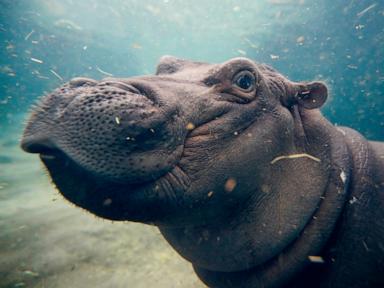
To understand the weight of this moment, you have to look at the timeline. Harambe, a 17-year-old western lowland gorilla, was killed by zoo staff on May 28, 2016, after a three-year-old boy climbed into his enclosure. Eight months later, on January 24, 2017, Fiona the Nile hippopotamus was born six weeks premature, weighing just 29 pounds—roughly half the lowest recorded birth weight for her species. What followed was not just a veterinary triumph, though the medical care was extraordinary. It was an unprecedented media pivot. For an alternative perspective, see: this related article.
The Anatomy of a Brand Resurrection
Zoos do not survive on ticket sales alone. Admission fees rarely cover the staggering overhead of specialized veterinary hospitals, climate-controlled habitats, and international field conservation grants. They survive on philanthropic capital and emotional equity.
In the summer of 2016, the Cincinnati Zoo's emotional equity was bankrupt. Death threats flooded staff inboxes. Protestors gathered outside the gates. Viral internet culture turned a tragic safety decision into an endless, mocking meme that stripped away any nuance regarding emergency response protocols or primate behavior. Further coverage regarding this has been shared by The New York Times.
Then came Fiona.
The zoo's communications team made a brilliant, calculated decision. Instead of hiding behind press releases, they opened the doors to the neonatal intensive care unit. Viewers watched veterinarians collaborate with neonatal nurses from Cincinnati Children's Hospital to place intravenous catheters in a baby hippo's tiny, slippery veins. They watched her learn to walk, swim, and bottle-feed.
The financial impact was immediate and massive. Merchandise sales exploded. Social media engagement metrics rivaled those of major entertainment franchises. Donors who had hesitated in the wake of the Harambe backlash returned with open checkbooks. Within two years, the zoo secured the funding to construct a massive, multi-million-dollar expansion of its Hippo Cove habitat, transforming a crisis of public trust into a record-breaking era of attendance and fundraising.
The Hidden Vulnerability of Celebrity Animals
Every veteran zoo director knows the unspoken rule of animal management. Never let the public fall in love with a single individual at the expense of the species.
Animals die. Even in the finest facilities accredited by the Association of Zoos and Aquariums (AZA), captivity does not grant immortality. In fact, animals saved through extraordinary neonatal intervention often carry underlying physiological vulnerabilities that manifest years later. Premature birth in large mammals can affect organ development, vascular health, and immune resilience in ways veterinary science is only beginning to map.
When an institution ties its identity to a single charismatic animal—whether it was Knut the polar bear in Berlin, Cecil the lion in Zimbabwe, or Fiona in Ohio—it creates a structural single point of failure.
Consider the mechanics of modern zoo marketing:
- Hyper-personalization: Animals are given human narrative arcs—underdog stories, family dramas, milestone birthdays.
- Constant digital intimacy: Daily livestreams and short-form video updates train the public to view the animal as a personal friend rather than a wild ambassador.
- Revenue concentration: Corporate sponsorships, children's books, brewing partnerships, and capital campaigns become tethered to one animal's likeness.
When that animal dies, the public does not process it as a biological reality of wildlife management. They process it as a personal bereavement, often accompanied by anger and suspicion. For a facility already scarred by the memory of 2016, the loss of its greatest symbol reopens wounds that were never truly healed—they were merely bandaged over with viral positivity.
What Actually Happened Inside the Gorilla World Enclosure
To see why the shadow of 2016 still hangs over every crisis in Cincinnati, you have to strip away the internet mythology and look at the cold, hard reality of zoo risk management.
Harambe was not killed because the zoo was careless, nor was he killed because staff panicked. He was killed because a 440-pound silverback gorilla possesses strength roughly six to ten times that of an adult human, and he was dragging a small child through a water moat at high speed. Tranquilizer darts do not work like they do in movies. A dart takes anywhere from five to fifteen minutes to sedate an animal of that mass, and the sharp sting of the needle almost always triggers an immediate, violent adrenaline spike.
The AZA safety protocols are unambiguous on this point. When a human life is in immediate peril inside a Class 1 carnivore or great ape enclosure, lethal force is the mandatory standard of care.
Yet the public rarely accepts the brutal math of captivity. Visitors want zoos to be magic kingdoms where wild apex predators and fragile humans coexist in harmless harmony. When reality intrudes—either through a lethal emergency response or the sudden medical loss of a beloved celebrity animal—the illusion shatters.
The Barrier Problem
Following the 2016 incident, the Cincinnati Zoo raised the height of the Gorilla World barrier from 36 inches to 42 inches and replaced horizontal wires with solid wood beams and vertical rope netting. Regulators from the USDA Animal and Plant Health Inspection Service (APHIS) had cited the zoo prior to the incident for weak spots in the barrier system, proving that even minor architectural oversights can cascade into catastrophic public relations disasters.
Ten years later, barrier engineering across North American zoos has undergone a quiet revolution. Recessed moats, cantilevered glass, and secondary perimeter setbacks are now standard. Still, no physical barrier can fully insulate a zoo from the volatility of public perception.
The Economics of Grief and Conservation
There is an uncomfortable truth sitting at the center of the Cincinnati Zoo's current predicament. Without Fiona, the zoo's massive conservation footprint would look vastly different today.
Revenue generated by the "Team Fiona" phenomenon directly subsidized breeding programs for endangered species that never go viral. It paid for anti-poaching patrols in Africa, botanical research for vanishing plant species, and genetic banking for amphibians on the brink of extinction. Nobody buys a plush toy of an endangered freshwater mussel or a blind cave beetle. They buy plush hippos, and the margins from those sales keep the lights on in the research labs.
This is the central paradox of 21st-century wildlife conservation. To save uncharismatic species from extinction, institutions must monetize the charisma of individual animals. They must turn wildlife into content.
Yet content creation demands a happy ending, and nature rarely provides one on schedule. Nile hippos in the wild live 40 to 50 years; in human care, they frequently surpass 50. When a hippo who became a global symbol of survival dies before reaching a fraction of that lifespan, the narrative collapses. Donors pull back. Casual visitors lose their emotional hook. Critics who oppose keeping large mammals in captivity altogether seize the moment to argue that premature birth and human intervention only prolonged an unnatural existence.
The Burden on the Keepers
Behind the press statements and social media tributes sits a workforce that bears the brunt of both the fame and the fallout.
Zookeeping is one of the lowest-paid, highest-stress professions in the biological sciences. Keepers spend years earning degrees only to clean enclosures, prepare specialized diets, and monitor fecal samples for wages that barely clear the poverty line in major metropolitan areas. When an animal becomes a global sensation, the pressure on those caretakers multiplies exponentially.
Every medical fluctuation becomes a potential PR emergency. Every routine procedure carries the weight of millions of watching eyes. The same staff members who endured death threats in 2016 and worked sleepless 24-hour shifts to keep a 29-pound hippo alive in 2017 are now forced to grieve in public while managing the expectations of an internet audience that feels a sense of ownership over the animals in their care.
Burnout in the zoological industry has reached crisis levels over the last decade, driven largely by this collision between clinical animal husbandry and relentless public scrutiny. You cannot ask veterinary technicians and keepers to act as both elite wildlife clinicians and full-time reality television stars without breaking the people holding the system together.
Where Accredited Zoos Go From Here
The Cincinnati Zoo will not close its gates, nor will it abandon its conservation mission. Institutions with over a century of history—Cincinnati is the second-oldest zoo in the United States, having opened in 1875—possess deep civic roots that outlast any single news cycle.
However, the era of building an entire institutional recovery around a single viral animal is over. The risks are simply too high, and the biological realities are too unpredictable.
Accredited facilities are already shifting toward ecosystem-level storytelling rather than individual animal celebrity. Instead of elevating one creature to mascot status, progressive zoos are spotlighting the human scientists, the field researchers in remote habitats, and the complex ecological networks that sustain wildlife. It is a harder sell on a billboard, and it generates far fewer viral clips on short-form video platforms.
It is also the only honest way forward. Wild animals are not characters designed to redeem human institutions or comfort grieving audiences, and the sooner zoos stop selling them as miracles, the better prepared the public will be when nature inevitably takes its course.